India targets 50 rocket launches/year by 2030. Can ISRO deliver?
What's the story
India has set an ambitious goal of launching 50 rockets a year by 2030. But the road ahead is long and challenging, especially considering that there have been only three Indian orbital launches this year, two by ISRO and one by private firm Skyroot Aerospace. The scale of growth needed over the next four years is massive.
Launch statistics
Two ISRO launches so far this year
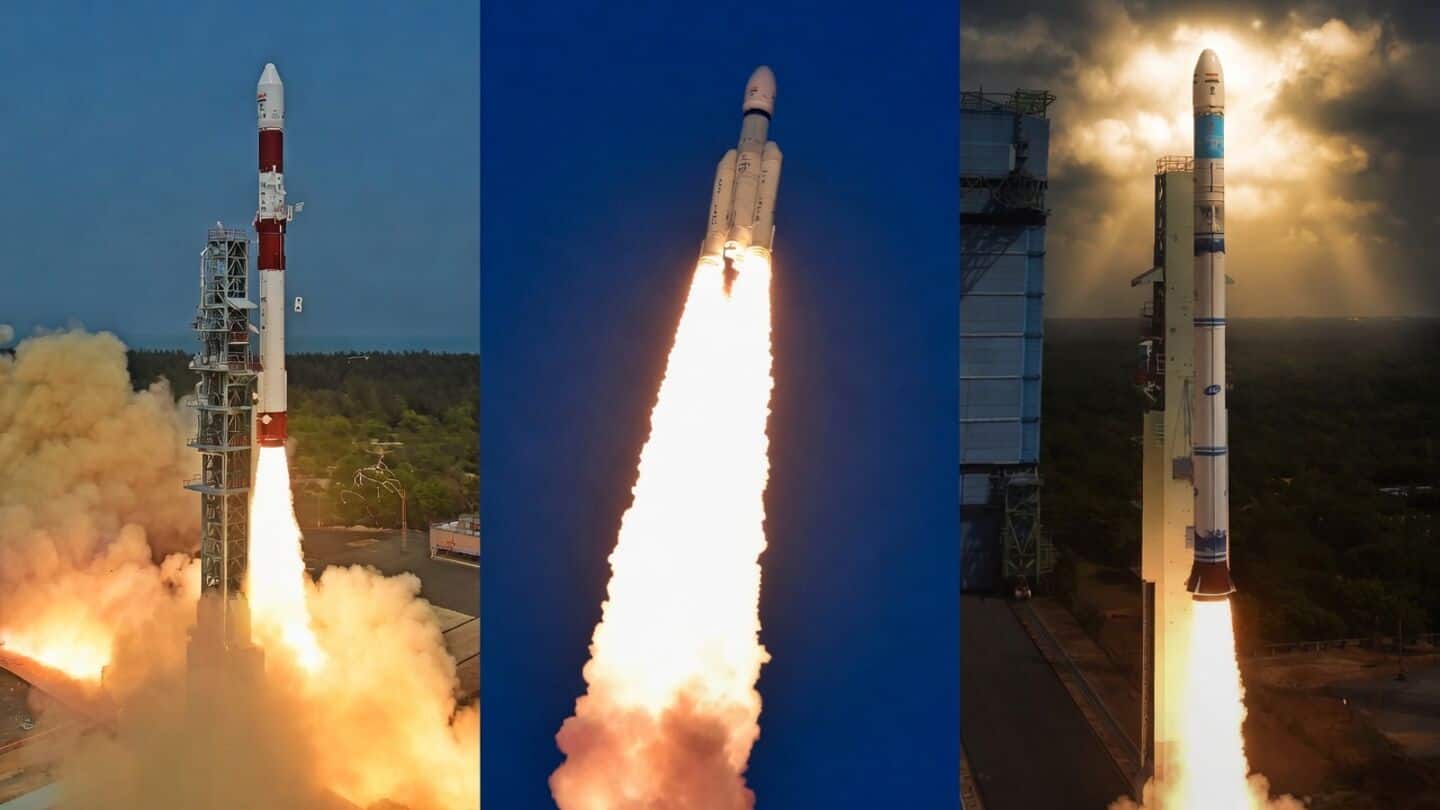
So far in 2026, ISRO has conducted two orbital launches. The first was PSLV-C62 carrying EOS-N1 on January 12, but it encountered an anomaly during the third stage and failed to achieve its mission.
The second launch was GSLV-F17 carrying EOS-05 on September 4, which was successful.
Along with these, private firm Skyroot also contributed to India's launch count with Vikram-I's successful orbit insertion on July 18.
Operational shift
Operational changes needed for rapid launch cadence
Achieving the target of 50 launches a year will require a major shift in how India builds, integrates, authorizes, and launches rockets.
The operational aspect of launches needs to be more seamless.
Currently, every launch involves coordination across multiple agencies dealing with air traffic, maritime traffic, safety issues, logistics, and other clearances.
Production efficiency
Need for multiple rockets at different stages
The production side of launches also needs a similar transformation.
India will need multiple launch vehicles at different stages of readiness instead of building one rocket at a time for each mission.
An industry executive suggested that India could have 10-15 launch vehicles at various stages of production, testing, and integration to ensure missions can flow through the pipeline without waiting for previous rockets to finish their cycle.
Infrastructure growth
Regulatory and infrastructure challenges to overcome
To support this ambitious plan, India will also have to expand its supplier base.
Fuel availability, transportation, safety systems, satellite logistics, testing facilities, and specialized vendors will all have to operate at a much higher frequency.
Currently, India has two major orbital launch pads at Satish Dhawan Space Centre (SDSC) in Sriharikota.
The Indian government has approved a third pad at the same location to boost launch capacity.
Challenges ahead
Need to ensure enough satellites are available
Another potential bottleneck could be the regulatory system.
IN-SPACe is already India's independent agency for authorizing and regulating space activities by non-governmental entities, including launch vehicles and satellites.
But a 50 launches a year target would require authorization processes designed for repetition rather than individual missions.
The challenge also lies in ensuring enough satellites are available to put on these rockets, including government, defense, and commercial spacecraft as well as international customers.