India prepares for 24-hour underwater habitat trial in December
What's the story
India is gearing up for its maiden underwater space mission, scheduled for December 2026. The pioneering project will be led by Indian space start-up Aaka Space, and the first trial will take place in Gujarat. The primary goal of the mission is to study human performance in isolated and confined environments, which could provide valuable insights for future spaceflight and deep-ocean exploration programs.
Simulation details
Underwater setting can replicate some conditions of spaceflight
The upcoming mission will replicate certain conditions that astronauts face during spaceflight, such as isolation, limited mobility, and reliance on life-support systems.
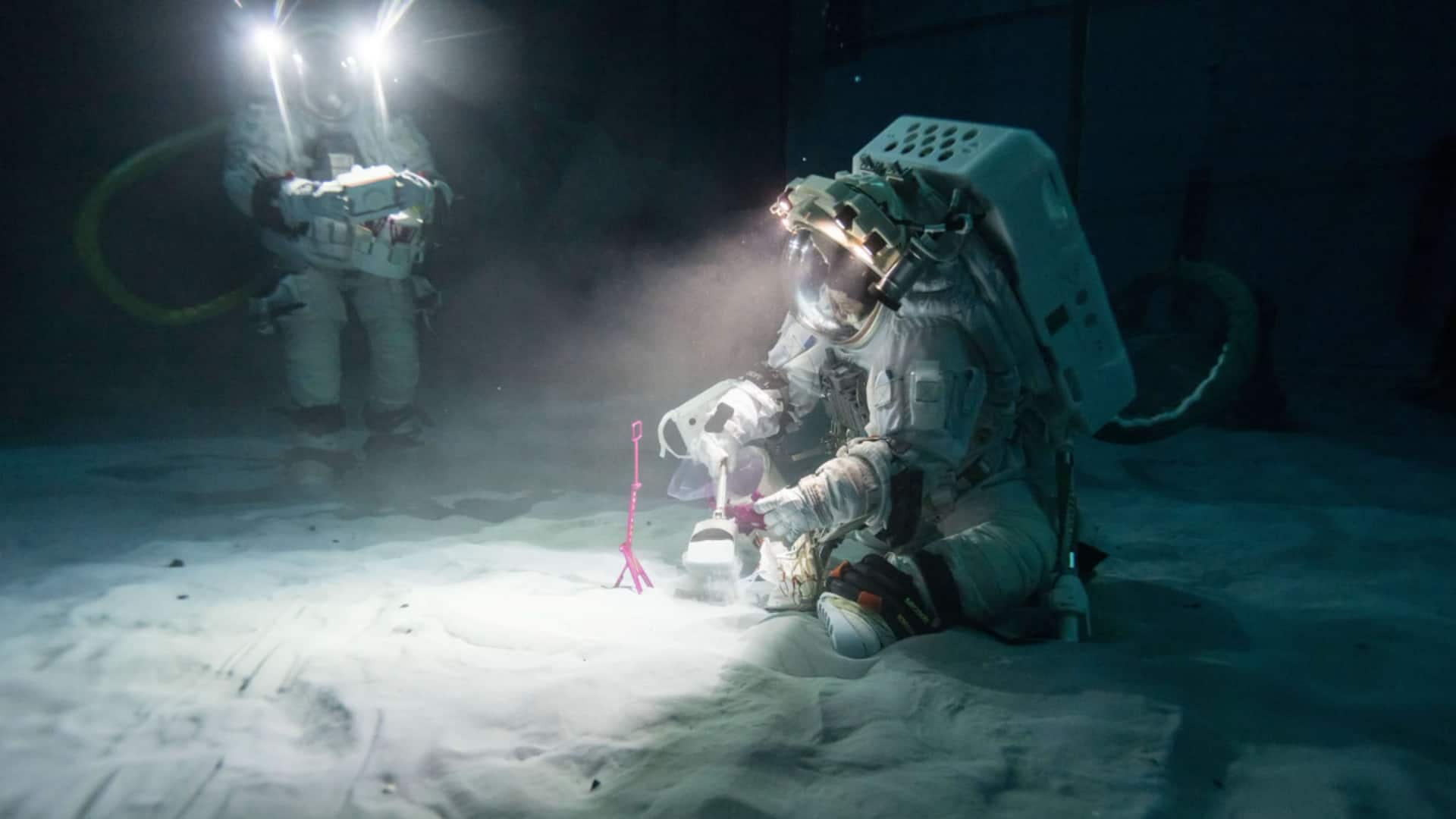
An underwater setting can also be used to recreate some tasks involving neutral buoyancy. However, it should be noted that it cannot fully mimic the microgravity or vacuum of space.
Strategic partnerships
Aaka Space leading the project with potential ISRO collaboration
The underwater human spaceflight analog program is being spearheaded by Aaka Space, with expected collaborations from the Indian Space Research Organization (ISRO) and the Indian Navy.
The project could help develop experience in habitat design, life-support systems, and human monitoring in challenging environments.
These capabilities could help identify challenges that crews may face during future long-duration missions in space or deep-ocean environments.
Trial phases
First trial set for December 2026 in Gujarat
The first trial of the underwater space mission is set for December 2026 in a controlled underwater environment in Gujarat. It will last for 24 hours.
A second, longer trial is scheduled for March 2027, but its location is yet to be decided.
The extended duration of this second trial could give researchers a better understanding of human and equipment performance during prolonged confinement.
Study areas
Research areas include stress levels, fatigue, and sleep patterns
The underwater mission will mainly focus on studying how humans react to confined spaces and challenging operational conditions.
Researchers could look into cardiovascular and respiratory responses, stress levels, fatigue, sleep patterns, and cognitive performance.
Testing habitat operations and life-support systems are also major research areas.
This work could help identify potential challenges crews may face during future long-duration missions in space or deep-ocean environments.