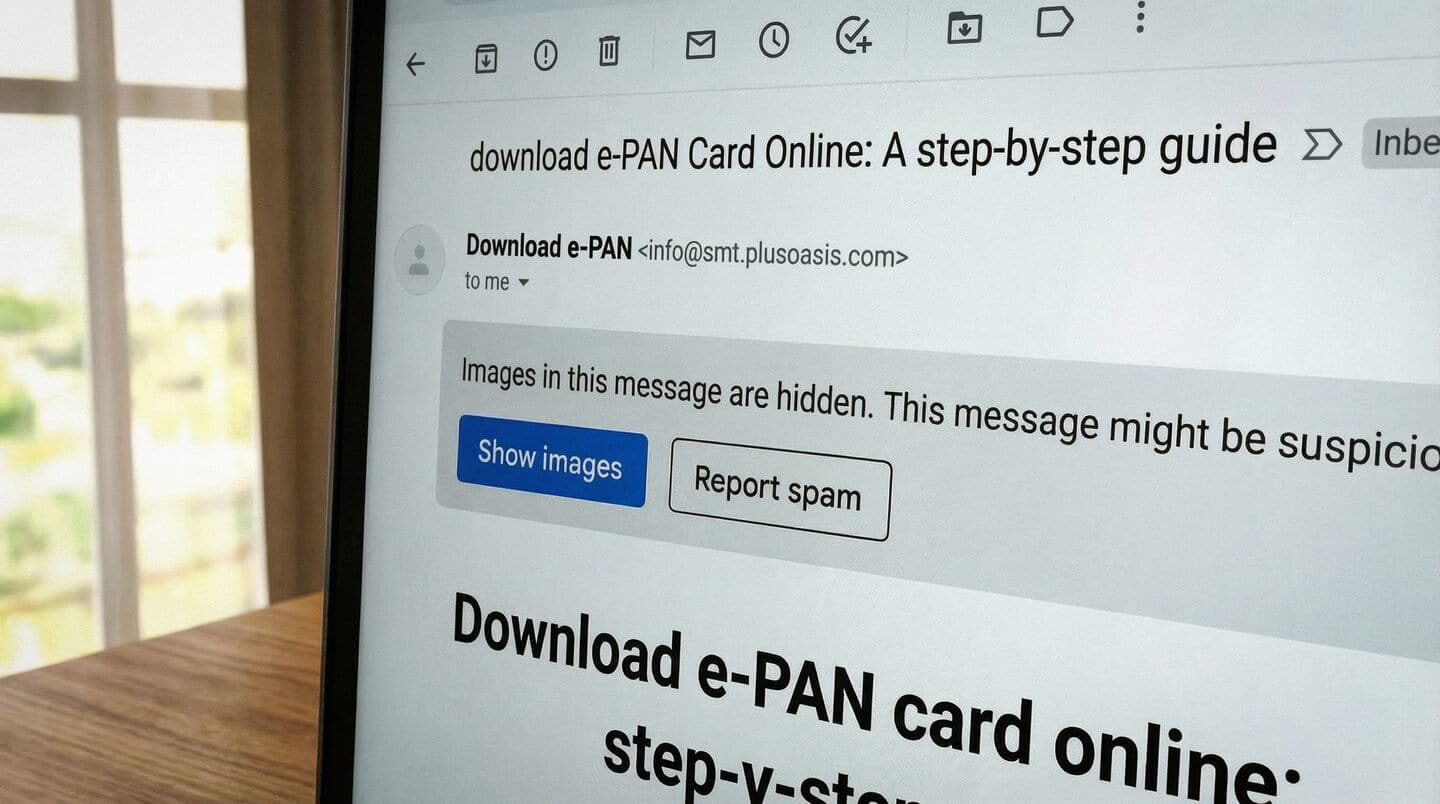
Alert! Govt flags fake 'e-PAN card' phishing email circulating online
What's the story
The Indian government has issued a warning about a fake email that is being circulated in the name of the Press Information Bureau (PIB). The fraudulent message asks recipients to download an "e-PAN card," and is part of a phishing attempt aimed at stealing sensitive financial information. The government has confirmed that this email is not genuine and advised people to be cautious.
Email safety
Fake emails asking to download e-PAN card
The government has issued a warning to people who receive emails asking them to download an e-PAN card.
The government has confirmed that this email is fake and advised recipients not to respond to any such communications.
They have also shared information on how to report phishing emails, which can be found here.
Scam details
Cybercriminals using PIB logo to look legitimate
The fake email bears the PIB logo in a bid to look legitimate and credible.
It asks recipients to download an electronic PAN card, a common trick used by cybercriminals to entice users into clicking on malicious links or downloading malware-infected files.
These emails are designed to steal personal and financial information from unsuspecting users.
IT department's position
Income Tax Department clarifies on phishing emails
The Income Tax Department has reiterated that it never asks for confidential financial details via email.
The department clarified, "The Income Tax Department does not request detailed personal information through e-mail."
It further clarified that it doesn't send emails asking for PIN numbers, passwords or similar access information for credit cards, banks or other financial accounts.
Phishing explained
What is phishing?
Phishing is a type of cyber fraud where attackers pose as trusted institutions to steal sensitive information such as usernames, passwords, and credit card details.
These attacks usually come through emails or instant messages that look like they're from legitimate organizations.
Victims are often directed to a fake website mimicking an official portal, where they are tricked into entering personal information.
Email precautions
Government issues advisory for suspicious emails
The government has given clear instructions for people who receive emails pretending to be from the Income Tax Department or directing them to a tax-related website.
Citizens are advised not to respond, open attachments (which may contain malware), or click on links in such emails.
They should also avoid copying/pasting suspicious links into a web browser as phishing links can look genuine but lead to fake websites.
Reporting process
How to report fake emails?
The government has urged recipients of suspicious tax-related emails to report them immediately.
If an email looks like it is from the Income Tax Department, it can be forwarded to webmanager@incometax.gov.in.
The authorities also recommend sending a copy to incident@cert-in.org.in, the national cyber incident response center.
After forwarding the email or its internet header information, users should delete it from their inbox.