ISRO, ESA expand space partnership to 2032
What's the story
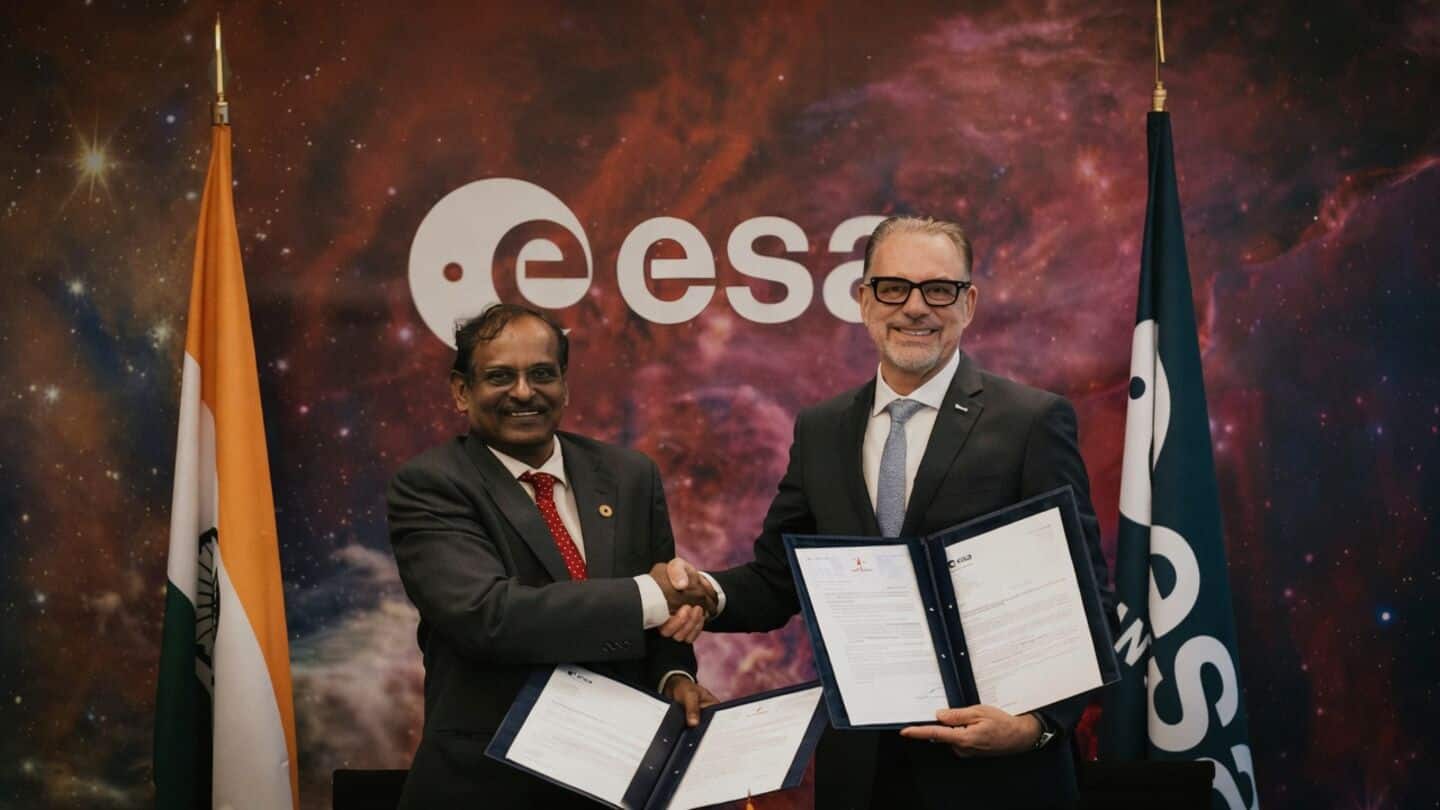
The Indian Space Research Organisation (ISRO) and the European Space Agency (ESA) have extended their cooperation agreement until January 8, 2032. The deal was signed in Paris on September 10, 2026, on the sidelines of the International Space Summit. The partnership, which started in 2002, has now been expanded to include human and robotic exploration, space weather monitoring, and sustainable space activities.
New frontiers
Expanded scope for future joint work
The renewed agreement not only maintains existing areas of cooperation such as Earth observation, space science, satellite navigation, and mission operations but also widens the scope for future joint work.
This expansion is particularly important as both ISRO and ESA look to go beyond traditional satellite missions.
The new framework builds on a 2025 Joint Statement of Intent on human space exploration and lays the groundwork for potential collaboration in future exploration activities.
Safety measures
Focus on space weather and sustainability
The renewed agreement also emphasizes the importance of space weather, which can disrupt satellites, communications, and other space-based infrastructure. Enhanced collaboration in monitoring these events could make space operations safer.
Another major addition to the deal is the focus on sustainable use of outer space amid rising satellite numbers.
ESA has already stressed international cooperation as key to ensuring long-term safety and sustainability in outer space activities.
Global impact
A new frontier in ISRO-ESA collaboration
The 2032 extension is more than just a routine renewal. It extends a partnership that has been going on for over two decades into areas that will define the next phase of space exploration and operations.
For ISRO and ESA, the coming years could see collaboration not just in Earth observation but also in space exploration, solar studies, and maintaining Earth's orbital environment for future missions.