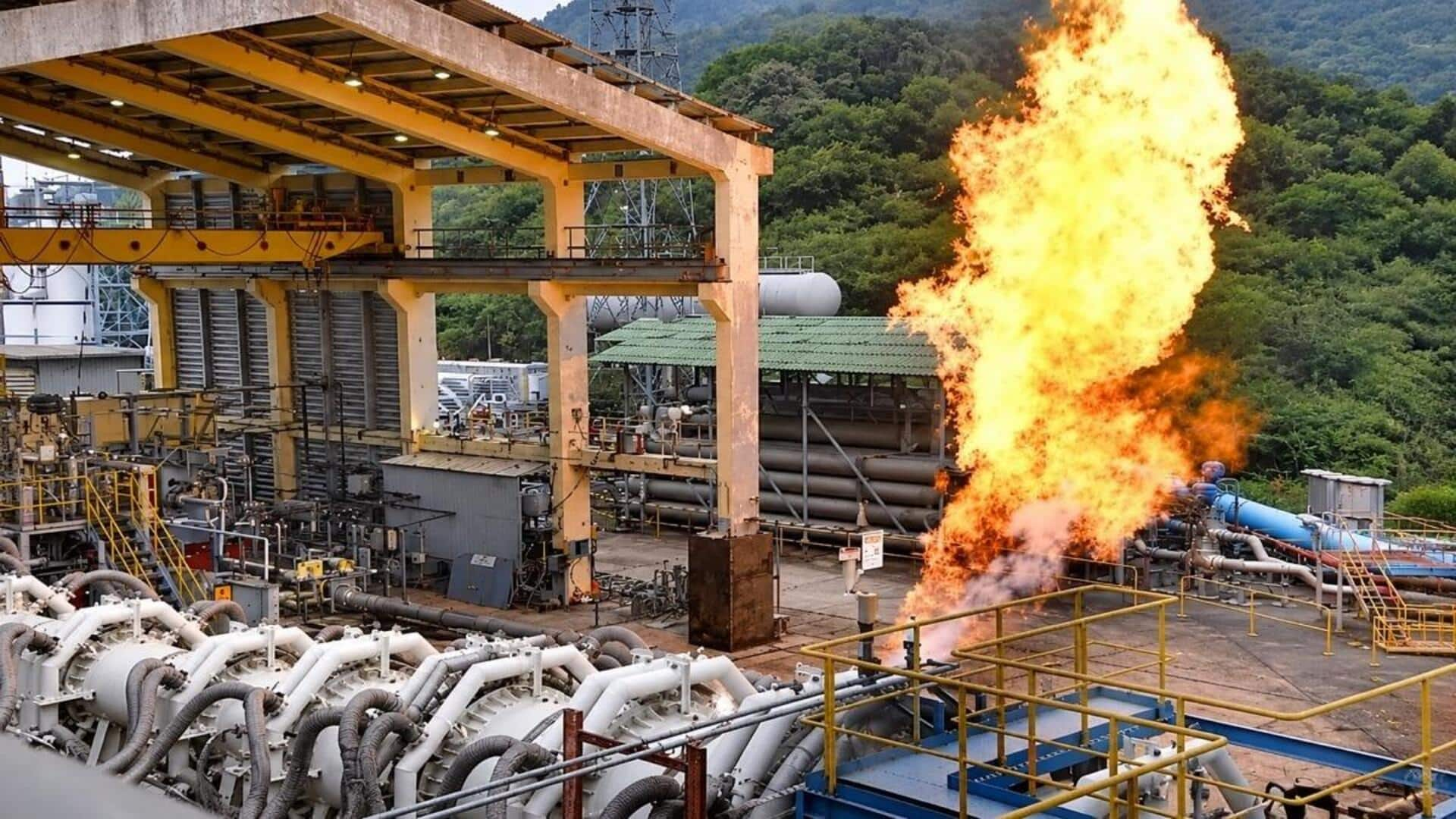
ISRO successfully tests ignition of new methane-powered rocket engine
What's the story
The Indian Space Research Organization (ISRO) has taken a major leap in the race for advanced rocket technology. The agency has successfully ignited a critical component of its new methane-powered engine, marking a significant milestone in India's space exploration journey. This engine, called the LME-1100, is targeted to be ready by mid-2027, when it will undergo a series of hot-fire qualification tests.
Engine details
Methane is becoming an important rocket fuel
The LME-1100 is a 1,100-kilonewton methane engine that uses a gas generator cycle.
Methane is increasingly becoming an important rocket fuel due to its relatively clean combustion and potential for in-situ production on Mars.
More than 70% of the LME-1100's components have been produced using additive manufacturing or 3D printing technology in collaboration with Indian industrial partners.
Technological advancement
ISRO's advanced LOX-methane engine
ISRO has also developed a more powerful 2,400-kilonewton liquid oxygen-methane engine using a full-flow staged combustion cycle.
This advanced propulsion technology is similar to what SpaceX uses for its Starship.
The new engine is intended for a future heavy-lift launch vehicle that would support India's planned crewed lunar landing mission.
Strategic importance
Next Generation Launch Vehicle
ISRO's methane propulsion technology is crucial for the Next Generation Launch Vehicle (NGLV) and heavy-lift vehicle needed for India's planned human lunar landing around 2040.
The agency had started exploring methane propulsion in 2019 with a smaller technology demonstrator that successfully passed cold-flow and hot-fire tests in 2019-2020.
This paved the way for the LME-1100 program, which was formally initiated in 2023.