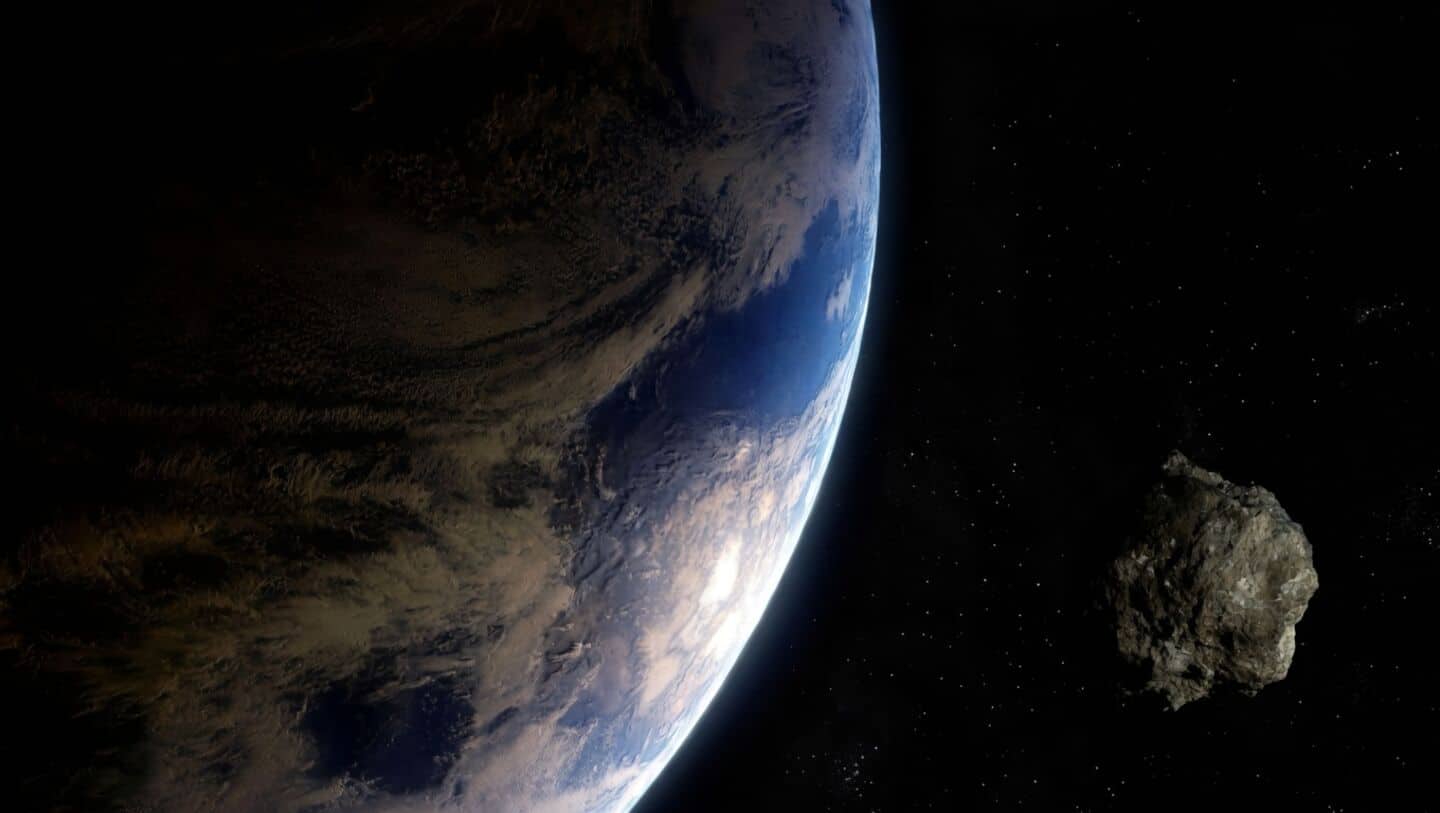
2 asteroids to pass Earth today, NASA says
What's the story
NASA has confirmed that two asteroids, 2026 FN1 and 2026 FA4, will make a close encounter with Earth today. However, the space agency has assured that both these celestial bodies pose no threat to our planet. They are being closely monitored as part of NASA's ongoing efforts to track near-Earth objects (NEOs). The first asteroid is about the size of a house while the second one is as big as an airplane.
Size and distance
2026 FN1 estimated to be about 56-feet long
The first asteroid, 2026 FN1, is estimated to be about 56-feet long, roughly the size of a house.
It will make its closest approach within 2.02 million miles from Earth.
To put this in perspective, that's nearly eight times farther than the Moon's distance from our planet. So there's no need to worry about this one.
Size and distance
2026 FA4 estimated 67 feet
The second asteroid, 2026 FA4, is a bit bigger at about 67 feet long, roughly the size of an airplane.
However, it will pass even farther than 2026 FN1 due to its larger size.
NASA predicts its closest fly-by will be at some 3.89 million miles away from Earth, about 16 times the distance between our planet and Moon.
Safety assurance
Orbits keep asteroids at safe distances
While "close approach" sounds alarming, in space, millions of miles can still be considered a close encounter.
The calculated orbits of both asteroids keep them at a safe distance from Earth.
Even if such large objects were to enter Earth's atmosphere, they would likely burn up or explode in the air without leaving much (if any) trace on the ground.
Monitoring process
NASA monitors thousands of near-Earth objects
NASA employs terrestrial satellites and radars to keep an eye on thousands of near-Earth objects.
The constant monitoring is part of a global planetary defense effort, allowing potential threats to be detected years in advance.
The two asteroids, 2026 FN1 and 2026 FA4, are no exception to this rule, they're being closely monitored as well.