NASA's Artemis II crew returns safely after historic Moon flyby
What's the story
NASA's Artemis II mission has successfully concluded with the safe return of its four astronauts. The mission was a major milestone in human space exploration, marking the first crewed flight to the Moon in over 50 years. The Orion spacecraft carried Reid Wiseman, Victor Glover, Christina Koch, and Canada's Jeremy Hansen on this historic journey. They traveled more than 4 lakh kilometers away from Earth, breaking Apollo-era records by over 6,600km.
Reentry details
Orion spacecraft returns after historic Moon mission
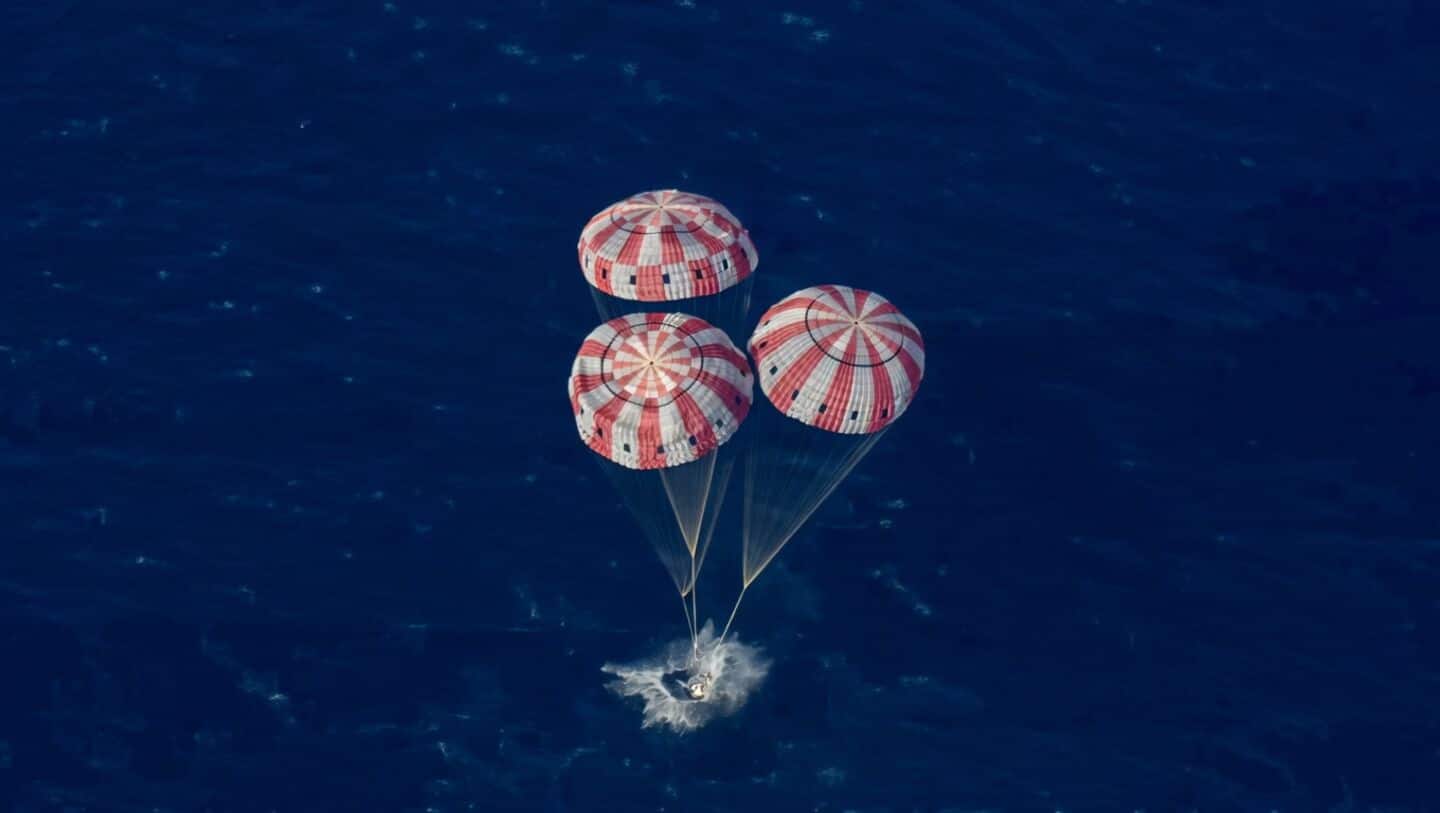
The Orion spacecraft completed its mission with a splashdown in the Pacific Ocean off southern California at 5:37am IST on Saturday.
The landing followed a complex reentry process after nearly 10 days in deep space.
At its farthest point, Orion traveled nearly 4,06,778km away from Earth, setting a new record for the farthest distance traveled by humans.
Post-landing procedures
Recovery teams moved in to secure the capsule
Recovery teams stationed in the Pacific quickly moved in to secure the capsule and assist the astronauts.
They will be transported for medical checks before being flown to Johnson Space Center for post-mission evaluation.
The mission launched from Kennedy Space Center with a 10-day journey to test deep-space capabilities. It circled the Moon's far side, giving crew members a view of areas not seen by humans in decades.
Future implications
Significance of Artemis II mission for future space exploration
The Artemis II mission is a key milestone in NASA's long-term plan to return humans to the Moon and eventually Mars.
By successfully completing a crewed deep-space mission, the program has validated critical technologies needed for more ambitious exploration.
The success of this mission not only marks a technical achievement but also heralds a new era in human spaceflight with more Artemis missions already on the horizon.