NASA's Artemis II mission sparks global interest in space exploration
What's the story
NASA's Artemis II mission has sparked global interest in space exploration, thanks to improved live streaming and astronaut accounts. The US space agency's flight director Zebulon Scoville was determined to engage the public more effectively during these new Moon missions. His efforts led to the addition of an optical communications system on the Orion spacecraft, which enabled high-resolution video streaming from space.
Mission details
Global engagement during splashdown
The Artemis II mission, which ended with a splashdown off California's coast, was live-streamed on NASA's own platform as well as social media.
This coverage, along with third-party streamers and broadcast news, has garnered millions of views.
Institutions such as museums hosted splashdown parties while some teachers even incorporated the launch into their lessons to engage students.
Crew contributions
Artemis II crew's role in public engagement
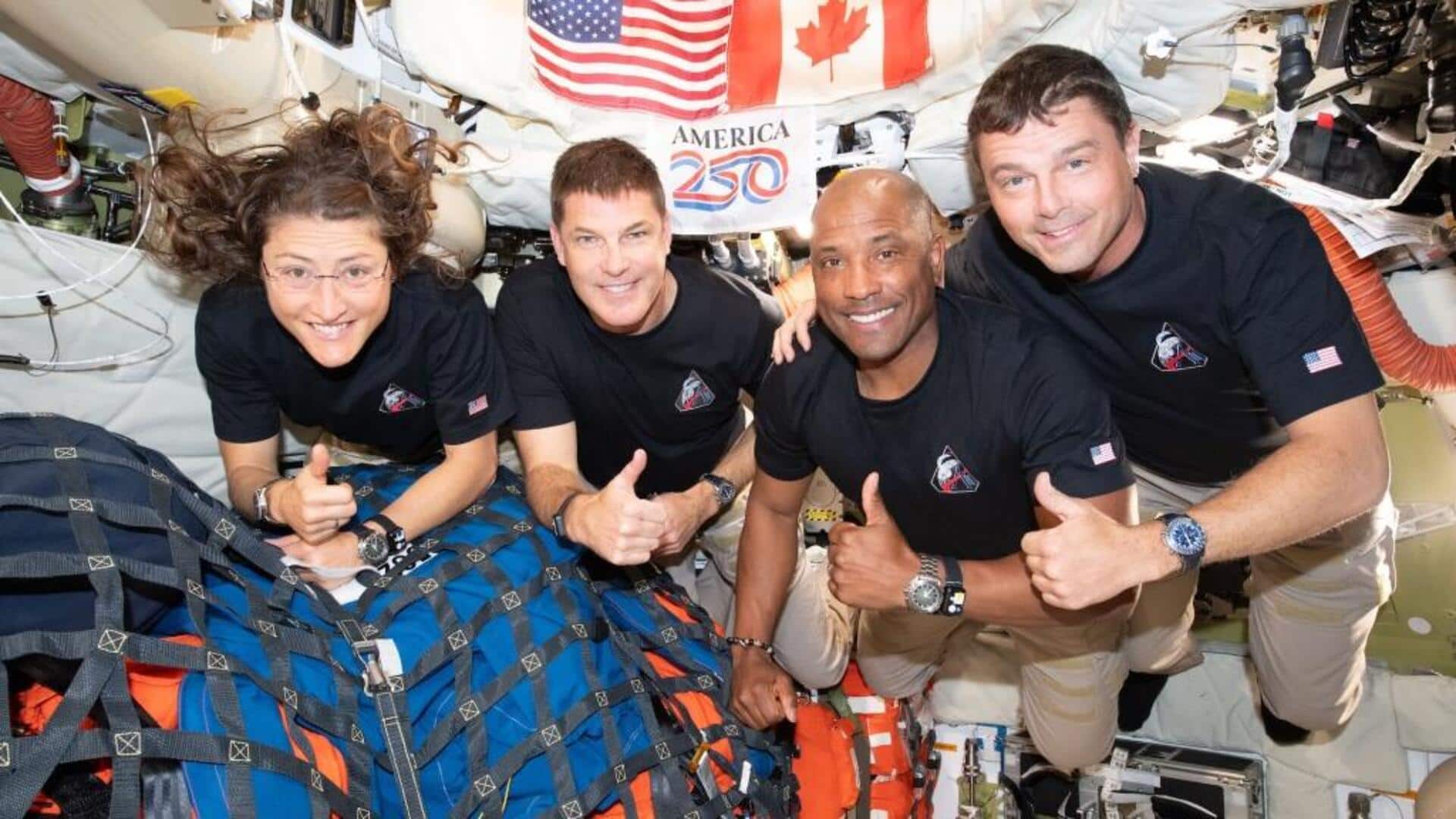
The crew of Artemis II, which included Christina Koch, Victor Glover, Jeremy Hansen, and Reid Wiseman, played a key role in engaging the public.
They provided detailed descriptions of lunar surface features during their nearly seven-hour flyby.
Scoville noted that this mission was different from previous ones as it showed more emotion from NASA's side. "It's okay to jump up and down and howl at the moon," he said.
Space enthusiasm
Scoville's thoughts on renewed interest in space exploration
Before Artemis II, the US hadn't sent astronauts around the Moon since Apollo 17 in 1972.
Scoville had discussions with mission commander Reid Wiseman about similarities between this mission and Apollo 8's lunar flight.
Despite a divided media landscape, Scoville is hopeful that people are starting to connect with space exploration again.
"People are wanting to reach out to their inner rocket nerds," he said.