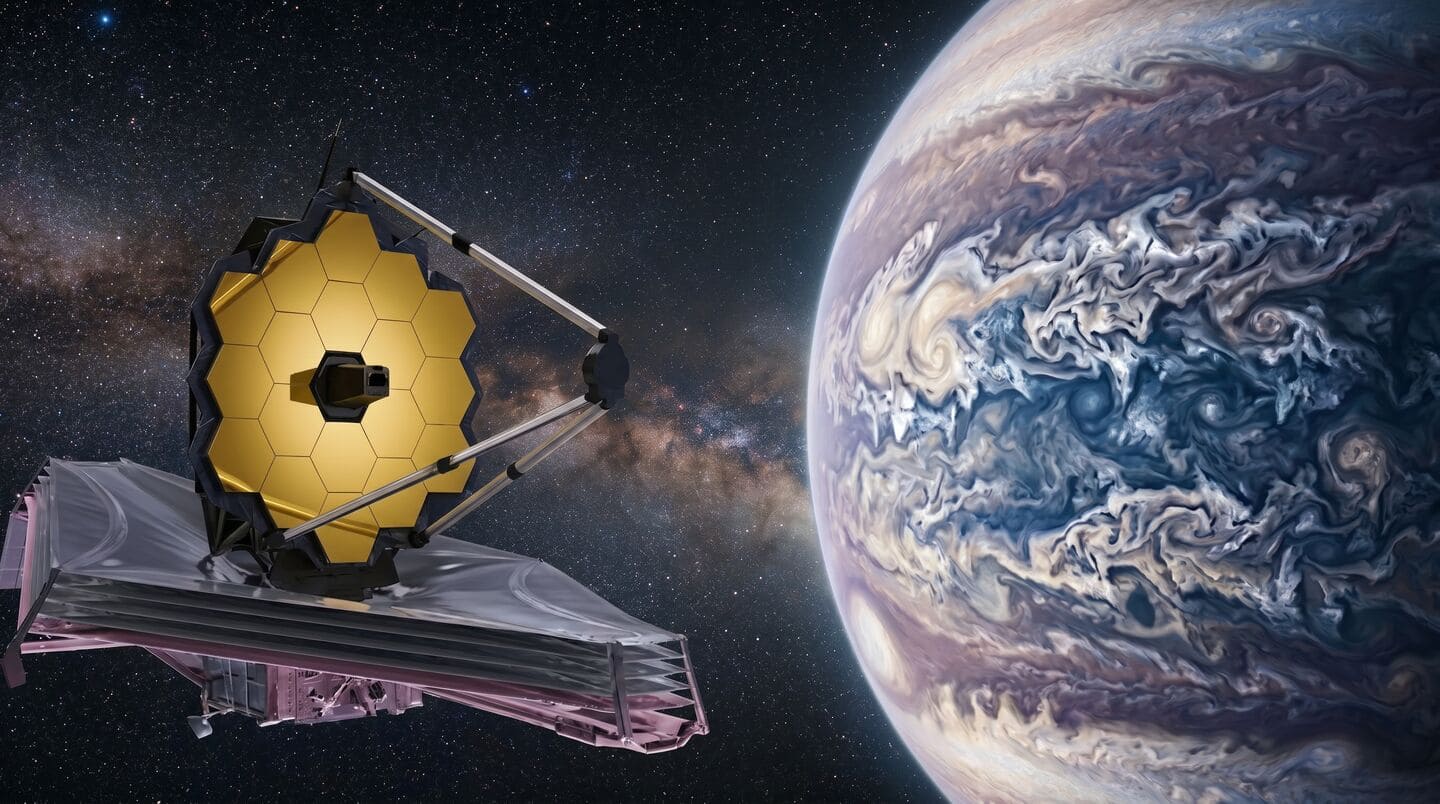
NASA's Webb images Epsilon Indi Ab and suggests water-ice clouds
NASA's James Webb Space Telescope just snapped a direct image of Epsilon Indi Ab, a Super-Jupiter hanging out 12 light-years from Earth.
Using its Mid-Infrared Instrument (MIRI), Webb found signs that strongly suggest patchy water-ice clouds in the planet's atmosphere: something totally different from Jupiter's usual ammonia clouds.
This gives scientists fresh clues about how giant planets work.
Coronagraph shows heat and faint ammonia
By blocking the star's glare with a special tool called a coronagraph, Webb could actually see the planet's heat and faint ammonia signs.
Epsilon Indi Ab is huge, about 7.6 times Jupiter's mass, and cold enough (think 200 Kelvin to 300 Kelvin) for water-ice crystals to form in its patchy, high-altitude clouds.
These weird conditions are making scientists rethink what they know about exoplanet weather and atmospheres.