NVIDIA launches AI chip for data centers in space
What's the story
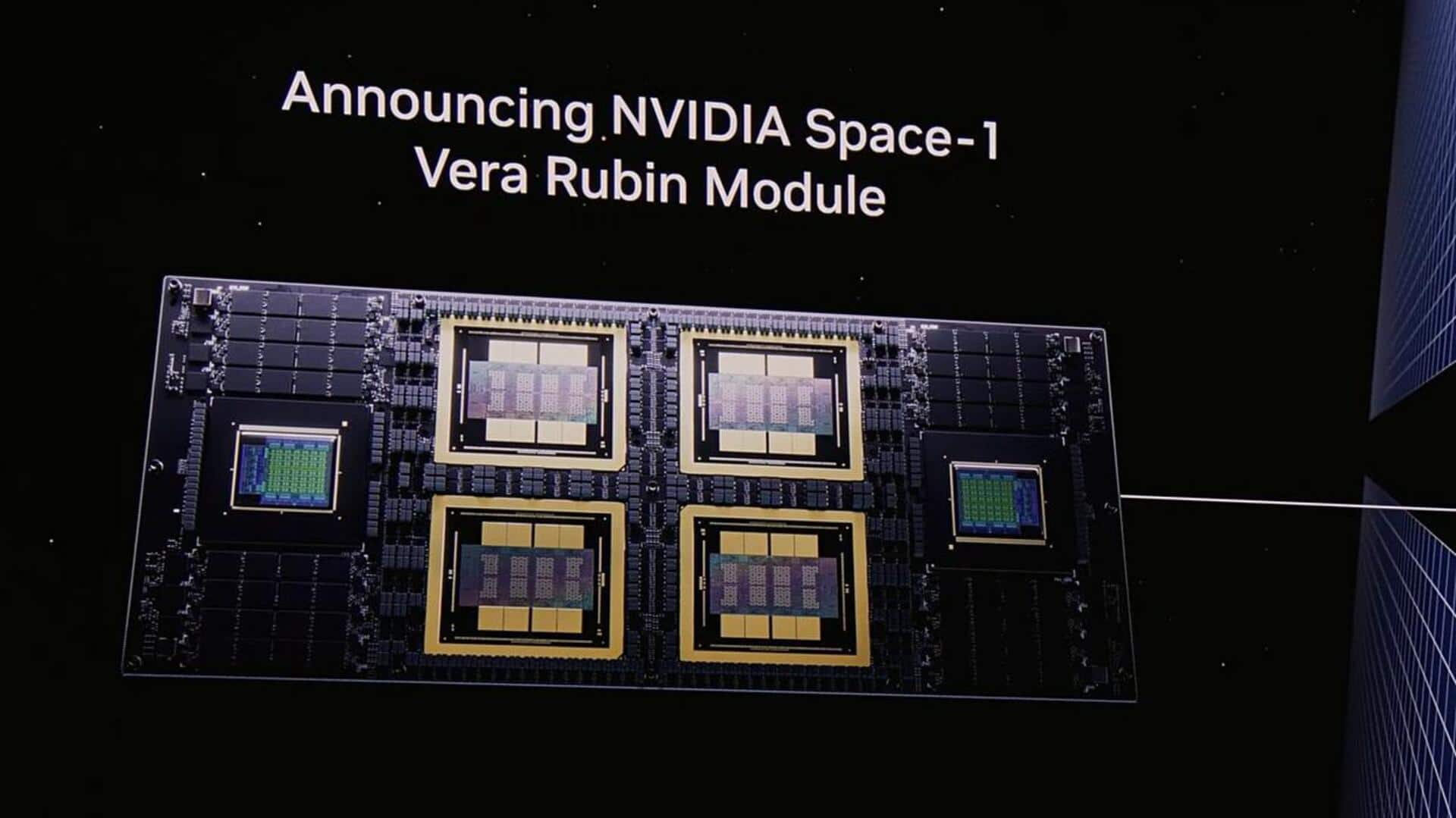
NVIDIA, the leading artificial intelligence (AI) chipmaker, is venturing into space with plans to power orbiting data centers. At the company's annual developers conference in Silicon Valley, CEO Jensen Huang announced their collaboration with Starcloud on a new computer called Space-1 Vera Rubin Module. The module will serve as a building block for future space-based data centers.
Cosmic debut
Starcloud-1 satellite to launch in November
Starcloud, a key partner in the project, plans to launch a satellite in November that will mark the "cosmic debut" of NVIDIA's new module.
The Starcloud-1 satellite, which is about the size of a small refrigerator, is expected to be packed with 100 times more computing power than any previous space-based operation.
This ambitious project aims to demonstrate that large language models can run in outer space using Google AI powered by NVIDIA GPUs.
AI optimization
Vera Rubin module optimized for AI
The Vera Rubin module, as described by NVIDIA, is optimized for AI. It enables real-time sensing, decision making, and autonomous functioning.
Huang emphasized the significance of this development by saying "Space computing, the final frontier, has arrived,"
The move comes as tech firms explore the idea of building data centers in space and harnessing solar energy to meet their power needs amid an intense AI race.
Power supply
Challenges and advantages of space-based data centers
The main attraction of space for data centers is its power supply. Companies can synchronize satellites with the Sun's orbit to ensure constant sunlight on solar panels.
This would eliminate the need to acquire land and deal with local regulations or community resistance to projects.
However, critical technical aspects such as protection from radiation, extreme temperatures, and space junk remain unresolved for these operations.