OpenAI's new Jalapeno chip beats NVIDIA in key AI tests
What's the story
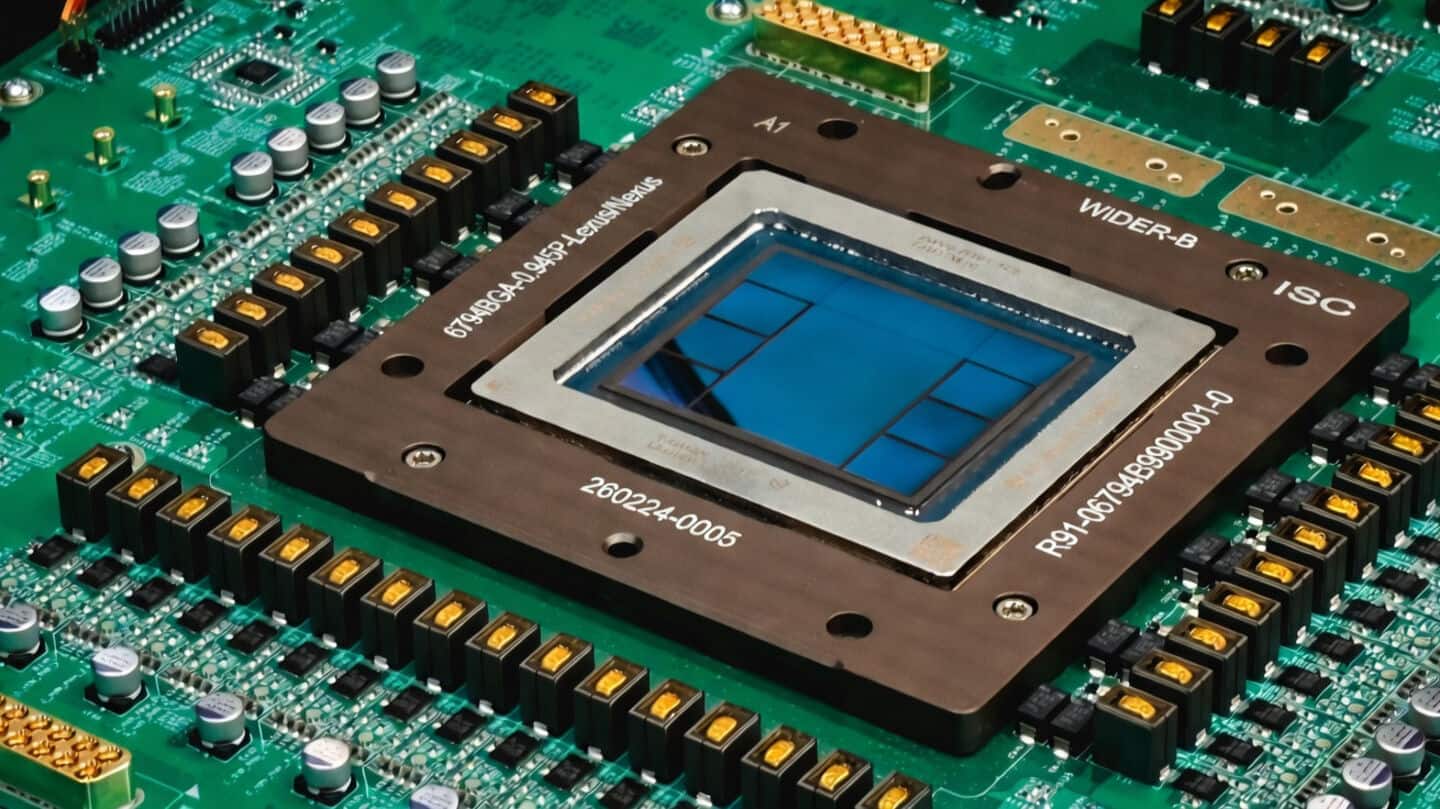
OpenAI has unveiled its latest AI chip, Jalapeno, which promises to deliver faster and more efficient results than other systems. The company made the announcement in a blog post on Tuesday. Richard Ho, VP of hardware at OpenAI, said that Jalapeno provides the "best of both worlds" with lower latency and higher throughput. This is especially important as AI systems usually have to choose between these two factors.
Chip details
Jalapeno is an application-specific integrated circuit (ASIC)
Announced in June, Jalapeno is an Application-Specific Integrated Circuit (ASIC) developed in collaboration with Broadcom.
The chip is specifically designed for AI inference, the stage where a trained AI model is run to perform a task or deploy an agent.
OpenAI tested Jalapeno's performance using InferenceX, a benchmarking platform that evaluates how well AI systems handle inference tasks.
Performance comparison
Jalapeno outperformed NVIDIA's superchips
In the tests, Jalapeno outperformed NVIDIA's GB200 and GB300 superchips, delivering 1.5 to 1.9 times more AI work per watt across GPT-OSS 120B, DeepSeek R1, and Kimi K2.5 1T models.
The chip also offered a lower end-to-end latency by a factor of between 1.7 and 3.6 across these models.
Ho said this means users can expect "faster responses, more responsive agents, and more reliable access as the demand grows."
Deployment strategy
Chip to be deployed in 'small volumes' by year-end
OpenAI plans to deploy Jalapeno in "small volumes" by the end of this year, with plans to increase production into 2027.
Ho clarified that the company doesn't plan to replace its entire chip lineup with Jalapeno.
Instead, it will continue working on second and third generations of this new chip as part of its overall compute strategy.
Design innovation
AI tools helped engineers explore different implementations
Jalapeno was designed around different phases of AI inference, with the goal of generating more useful AI output using less electricity and reducing response times.
OpenAI claims that AI tools helped engineers explore different implementations, shorten design and verification cycles, and optimize arithmetic circuits.