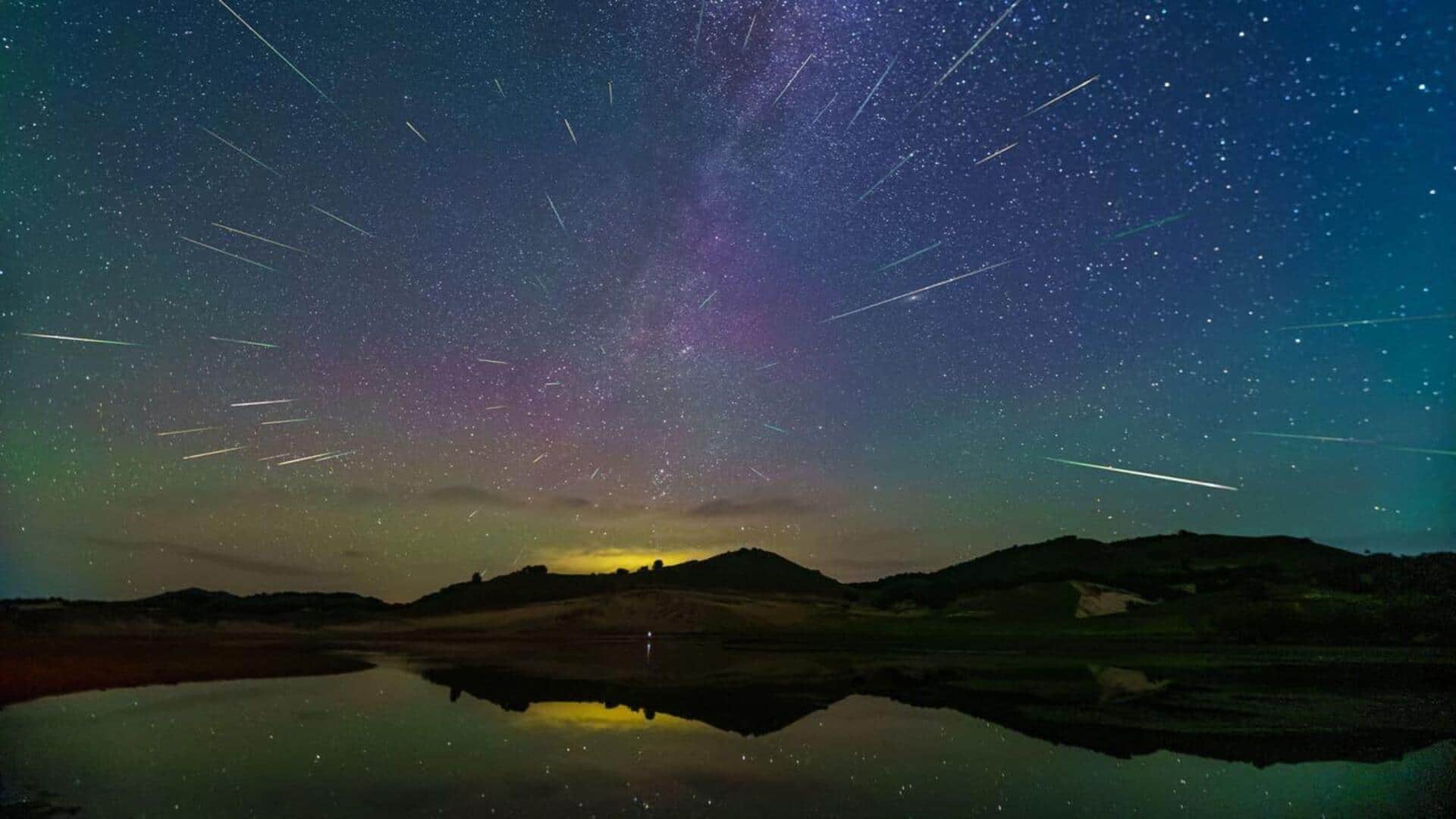
Orionid meteor shower begins on October 2: How to watch
What's the story
The Orionid meteor shower, one of the most popular celestial events of the year, is set to grace our skies from October 2 to November 7. The spectacle occurs every year as Earth passes through a trail of dust and debris left by Halley's Comet. This year, it will peak overnight from October 21-22, providing stargazers with an opportunity to witness this cosmic display at its best.
Meteor details
Meteor shower named after constellation of Orion
The Orionids are known for their speed, entering Earth's atmosphere at around 66km/second.
This high velocity causes the particles to heat up and create bright streaks of light across the night sky.
The meteors appear to radiate from the constellation of Orion, hence their name.
Under ideal conditions, stargazers can see about 10-20 meteors per hour at peak times during this shower.
Viewing conditions
Viewing prospects may be mixed due to weather conditions
To catch a glimpse of these meteors, find a dark place away from street lights with as wide a view of the sky as possible.
Give your eyes 15-20 minutes to adjust.
You won't need binoculars or a telescope; the shower is best viewed with the naked eye.
However, viewing prospects may be mixed due to weather conditions across different regions during this period.