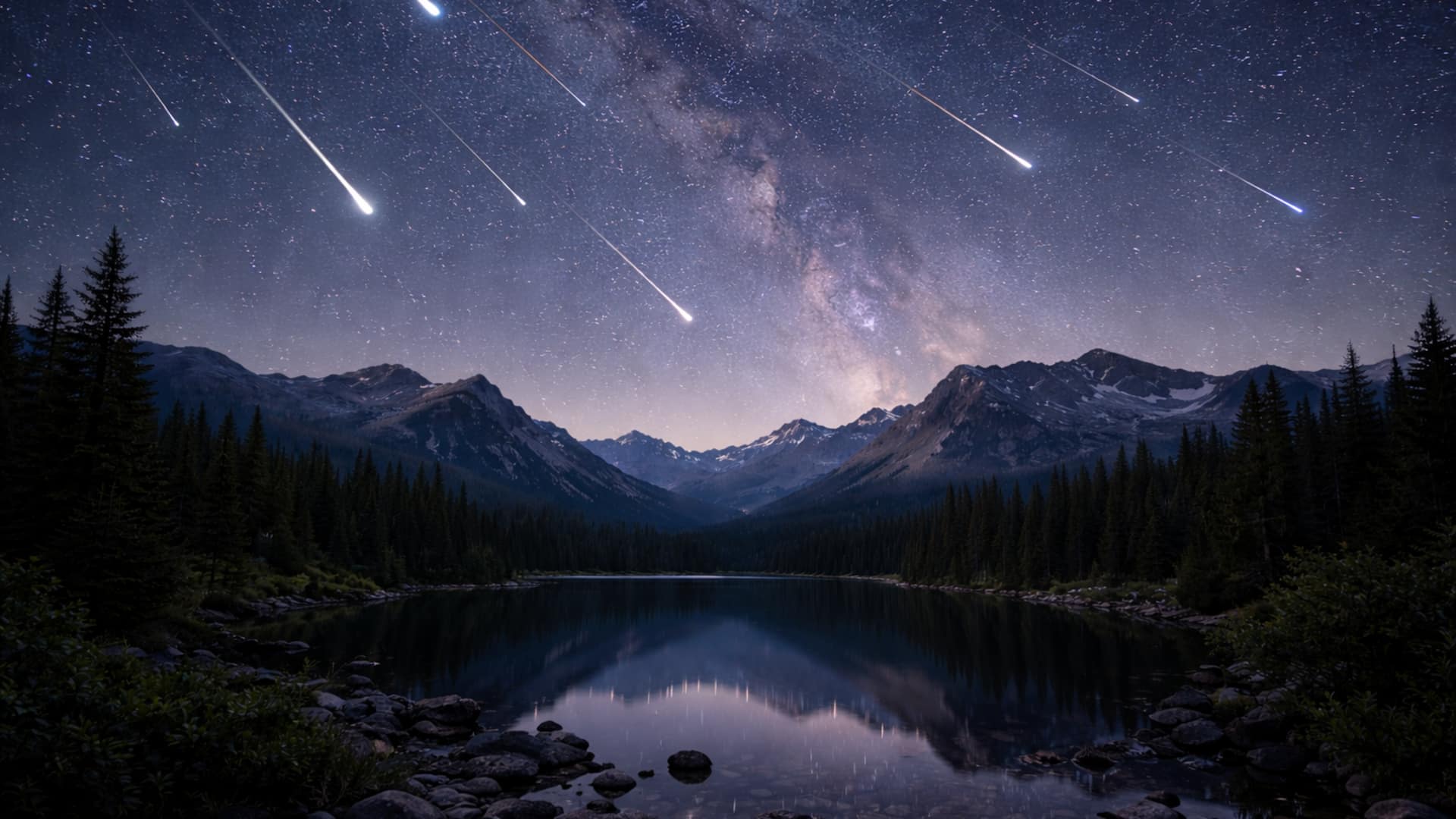
Quadrantids meteor shower peaks next week: How to see it
What's the story
Skywatchers around the world are gearing up for a spectacular celestial show as the annual Quadrantid meteor shower peaks next week. The event will be at its most intense between January 3 and January 4, 2026. Despite bright moonlight affecting visibility, experts say the shower is still worth watching due to its frequent bright fireballs.
Meteor details
Quadrantids: A brief yet powerful meteor shower
The Quadrantids are one of the most powerful meteor showers every year. During its sharp peak, as many as 120 meteors per hour may streak across the sky.
However, astronomers warn that this peak only lasts for about six hours. This short duration makes timing especially important for those hoping to witness this celestial event.
Viewing conditions
Quadrantids's annual cycle and visibility
The Quadrantid meteor shower occurs annually from late December to mid-January.
In 2026, its peak activity will be overnight on January 3 and early hours of January 4.
Under ideal dark conditions, observers might see around 25 meteors per hour. However, due to moonlight interference, this number could drop to about 10 meteors hourly.
Meteor source
Quadrantids's origin and viewing tips
The meteors from the Quadrantid shower come from debris left by asteroid 2003 EH, which was discovered in 2003. The asteroid is about three kilometers wide.
As Earth passes through this debris stream, particles burn up in the atmosphere, creating bright streaks of light.
Unlike other showers that last longer, the Quadrantids rise and fall quickly, requiring careful planning for observation.
Viewing strategy
Quadrantids's radiant point and observation tips
Unlike other meteor showers that are named after nearby constellations, the Quadrantids are named after Quadrans Muralis, a constellation no longer officially recognized.
NASA says the radiant point now lies near the constellation Bootes, close to the Big Dipper's handle.
For optimal sightings, observers should face northward. This year, because moonlight will dominate the sky, dark rural locations aren't as important as a clear horizon and open northern view for short viewing sessions during peak hours.