Rare planetary parade to light up skies in February
What's the story
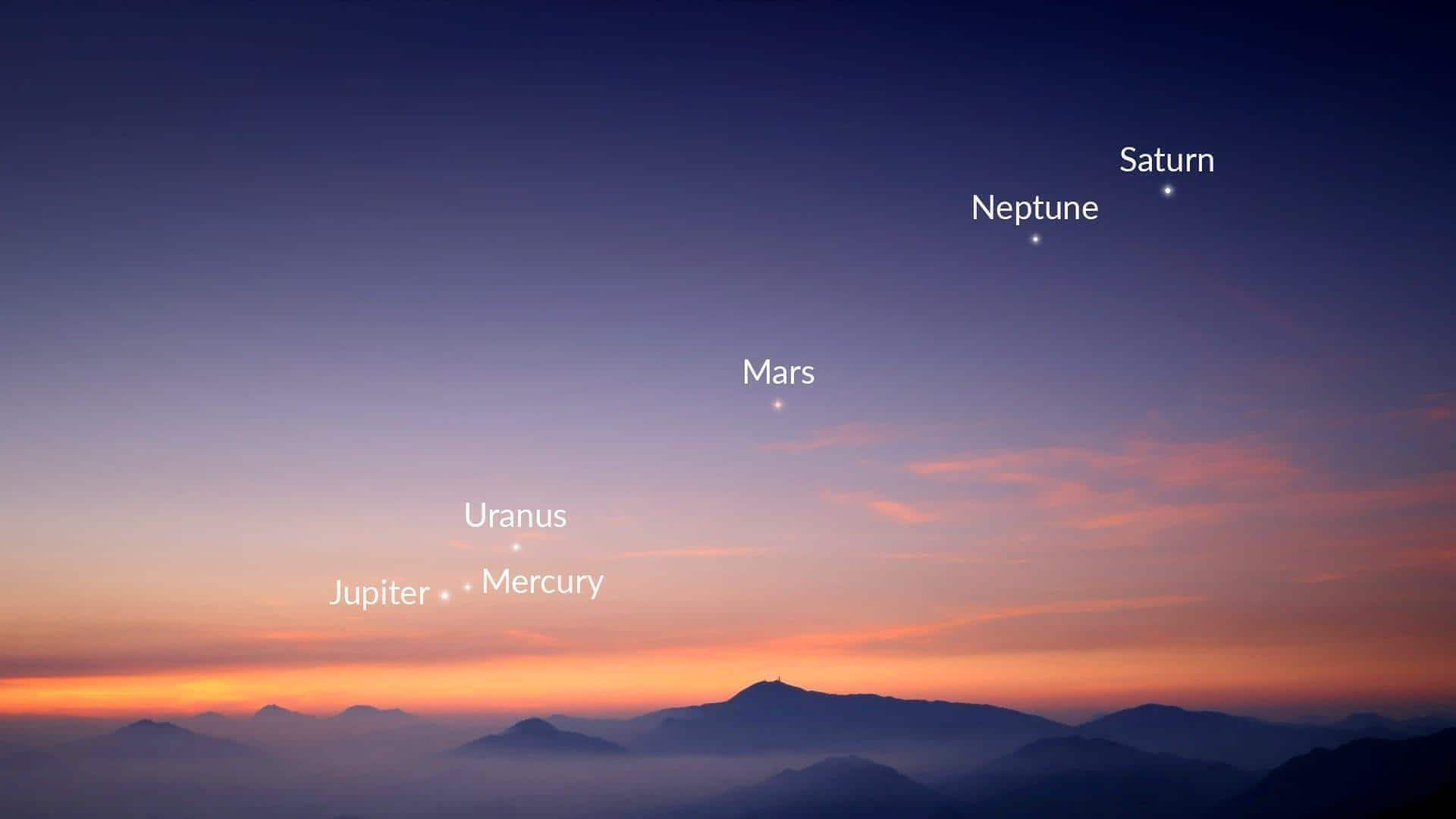
Skywatchers are in for a treat as a rare planetary parade is set to take place on February 28, 2026. The event will see six planets—Mercury, Venus, Jupiter, Saturn, Uranus, and Neptune—appear clustered in the evening sky. This unique celestial display will be visible shortly after sunset and can be viewed from Earth with the right tools and conditions.
Observation guide
Viewing tips for the planetary parade
The best time to view this planetary parade will be about an hour after sunset, when the sky gets dark enough for fainter objects to become visible.
The planets will appear in a curve from Earth, following the ecliptic—the path of the Sun and Moon across the sky.
However, it's important to note that these planets aren't actually aligned in space but are millions of kilometers apart, each on its own orbit.
Planetary visibility
Visibility of planets during the parade
Under clear conditions, Mercury, Venus, Jupiter, and Saturn should be visible to the naked eye.
Venus will be the brightest, followed by Jupiter. However, Saturn and Mercury may be lower and closer to the horizon.
Uranus and Neptune are much fainter and spotting them will require binoculars or a small telescope as they reflect very little sunlight.
Viewing tools
Tools and location for optimal viewing
Astronomy apps can help locate each planet's position as they rise after sunset.
To improve visibility, find a spot with a clear western horizon and minimal light pollution.
No special preparation is needed for this event—just clear skies, patience, and the right timing will do the trick.
While smaller groupings of two or three planets are common, seeing six planets in one part of the sky is rare. It depends on precise orbital timing that only aligns every few years.