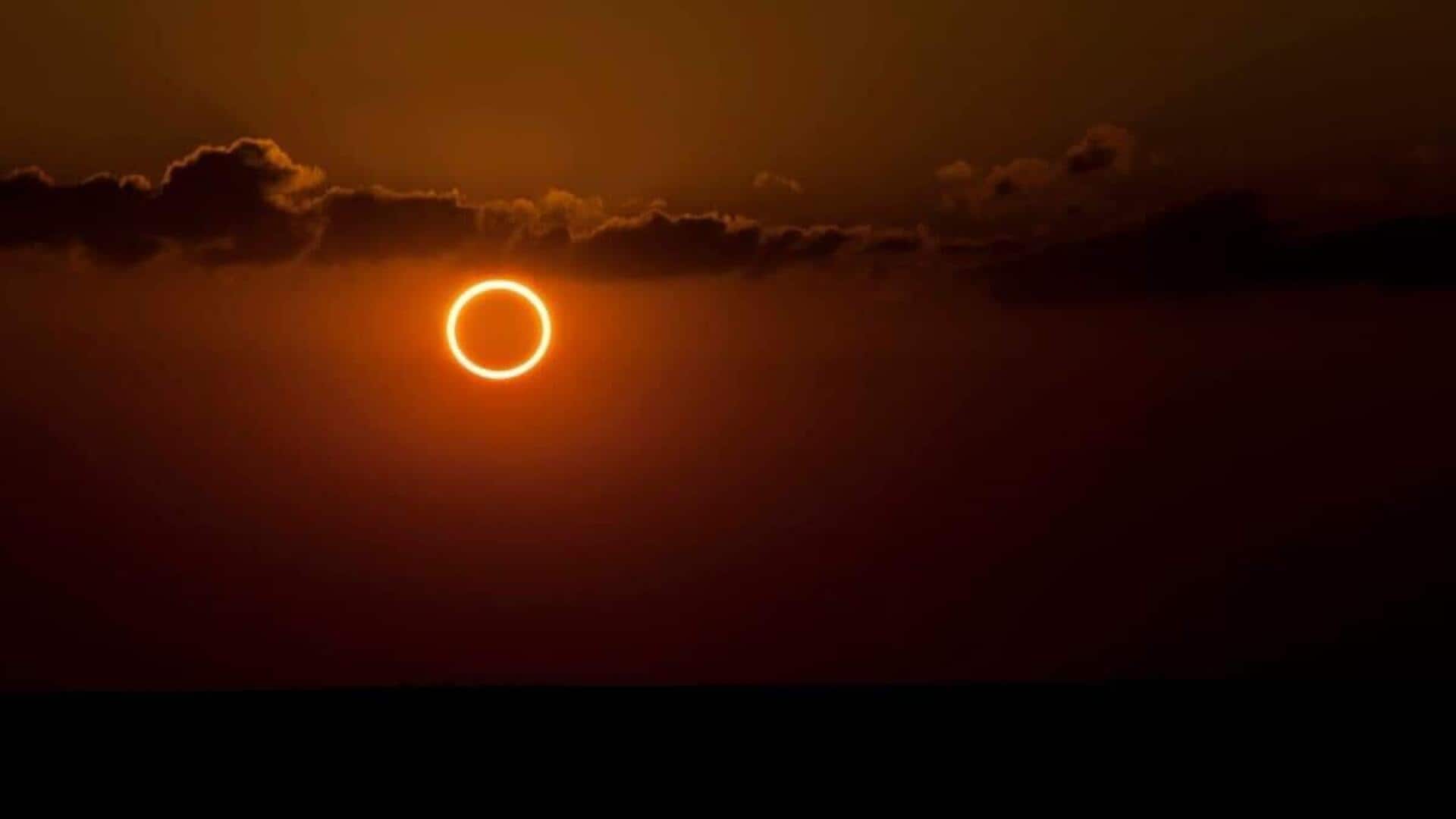
'Ring of fire' solar eclipse next week: How to watch
What's the story
In 2026, skywatchers will be treated to two spectacular solar eclipses. The first will be an annular solar eclipse on February 17, also known as a "ring of fire." This phenomenon occurs when the Moon passes directly between Earth and the Sun but doesn't completely cover it. The result is a bright ring of sunlight around the dark silhouette of the Moon.
Visibility
Where will the annular eclipse be visible?
The full ring effect of this annular solar eclipse will be visible mainly over Antarctica and parts of the Southern Ocean. However, people in southern South America and Southern Africa can catch a partial view of it. Unfortunately for Indian skywatchers, this particular eclipse won't be visible from India or most parts of the Northern Hemisphere.
Second eclipse
Total solar eclipse on August 12
The second major solar eclipse of 2026 will be a total solar eclipse on August 12. This happens when the Moon completely covers the Sun, turning day into night for those along its path. The path of totality for this event will cross Greenland, Iceland, and parts of northern Spain. A partial view will be visible from larger parts of Europe, Canada, and Portugal.
Online viewing
How to watch the eclipses safely
Never view a solar eclipse with the naked eye or regular sunglasses. To prevent permanent eye damage, use only ISO-certified solar viewers or professional-grade solar filters. For those who won't be in the visibility zones, live streams offered by space agencies, observatories, and science websites are the best way to watch. Solar eclipses are not just visual spectacles but also provide scientists with an opportunity to study the outer layers of the Sun and Earth's atmosphere.