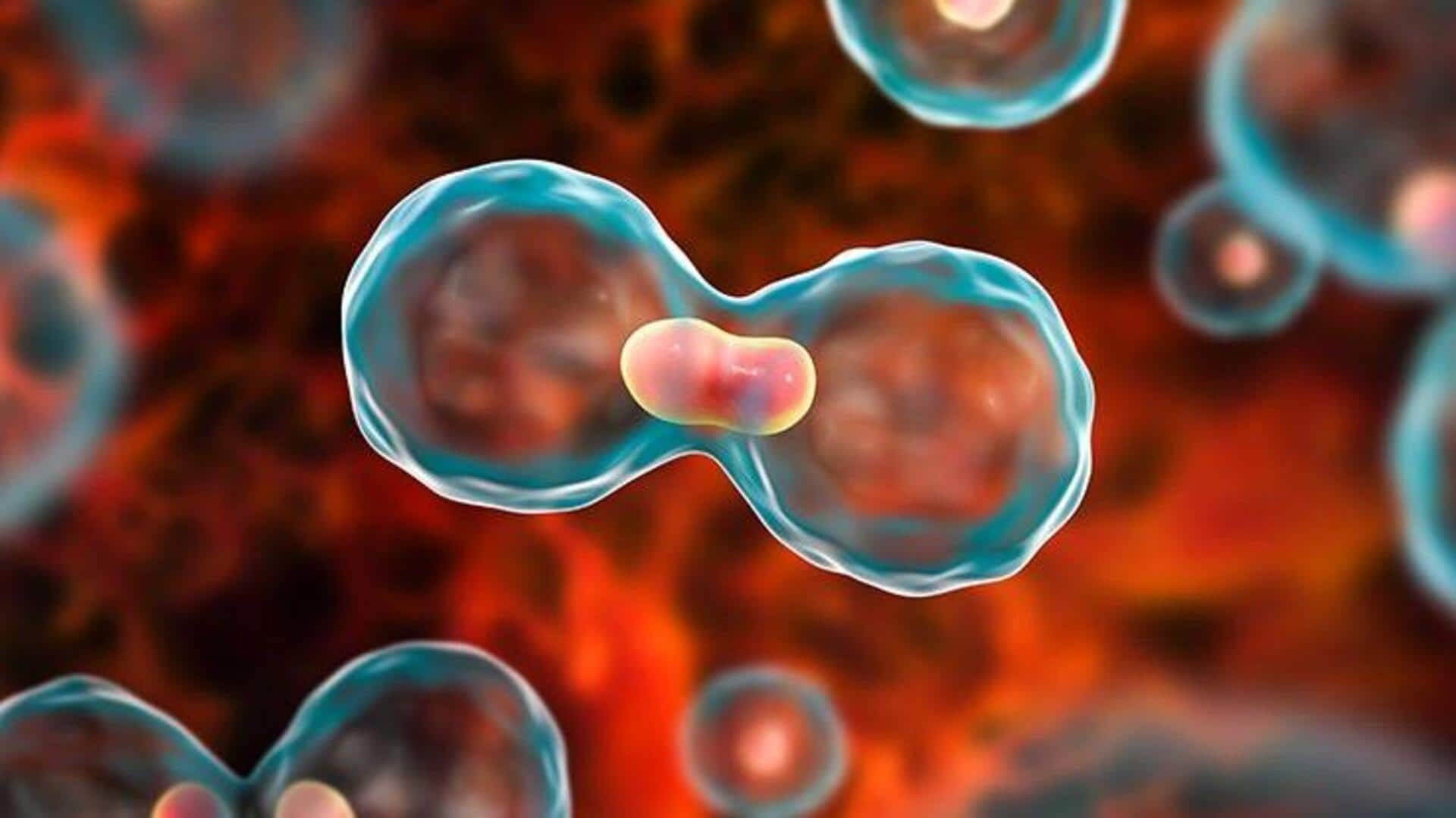
Immune cells in tumors can be used to fight cancer
What's the story
In a groundbreaking study, scientists from the Korea Advanced Institute of Science and Technology (KAIST) have developed a novel cancer treatment. The innovative approach involves reprogramming immune cells already present in tumors into cancer-fighting agents. The process is initiated by injecting a drug directly into the tumor, which is absorbed by macrophages. They are immune cells that can engulf and destroy harmful pathogens or dead/dying cells.
Transformation process
Macrophages transformed into 'CAR-macrophages'
The injected drug triggers the macrophages to produce CAR (a cancer-recognizing device) proteins, effectively transforming them into anticancer immune cells called "CAR-macrophages."
This revolutionary method does away with the need for lab-based cell extraction and modification.
In animal models, this strategy has been shown to significantly slow down tumor growth and trigger strong anticancer immune responses.
Treatment hurdles
Solid tumors pose treatment challenges
Solid tumors, like gastric, lung, and liver cancers, are notoriously difficult to treat.
Their dense structures create physical and biological barriers that prevent immune cells from entering or functioning effectively.
This is why many existing immune cell therapies struggle against these types of cancers.
However, CAR-macrophages have emerged as a promising next-generation immunotherapy due to their ability to directly engulf and destroy cancer cells.
Therapy challenges
Current CAR-macrophage therapies and their limitations
Current CAR-macrophage therapies involve extracting the immune cells from a patient's blood, growing them in the lab, and genetically modifying them before reinfusion.
This process is slow, expensive, and difficult to scale.
To overcome these challenges, the KAIST team focused on "tumor-associated macrophages" that naturally gather around tumors.
They developed a method to reprogram these cells directly inside the body rather than modifying them outside it.
Reprogramming technique
Lipid nanoparticles used for reprogramming
The KAIST team's approach uses lipid nanoparticles, which are engineered to be easily taken up by macrophages.
These particles carry mRNA with cancer-recognition instructions and an immune-activating compound.
When injected into tumors, the nanoparticles are quickly absorbed by macrophages that start producing proteins identifying cancer cells.
This process activates immune signaling, resulting in "enhanced CAR-macrophages" with much stronger cancer-killing abilities and a powerful anticancer response.
Study findings
Study shows potential for broader immune protection
In animal models of melanoma (the most dangerous form of skin cancer), tumor growth was significantly reduced.
The researchers also saw evidence that the immune response could extend beyond the treated tumor, suggesting the potential for broader, body-wide immune protection.
Professor Ji-Ho Park from KAIST said, "This study presents a new concept of immune cell therapy that generates anticancer immune cells directly inside the patient's body."