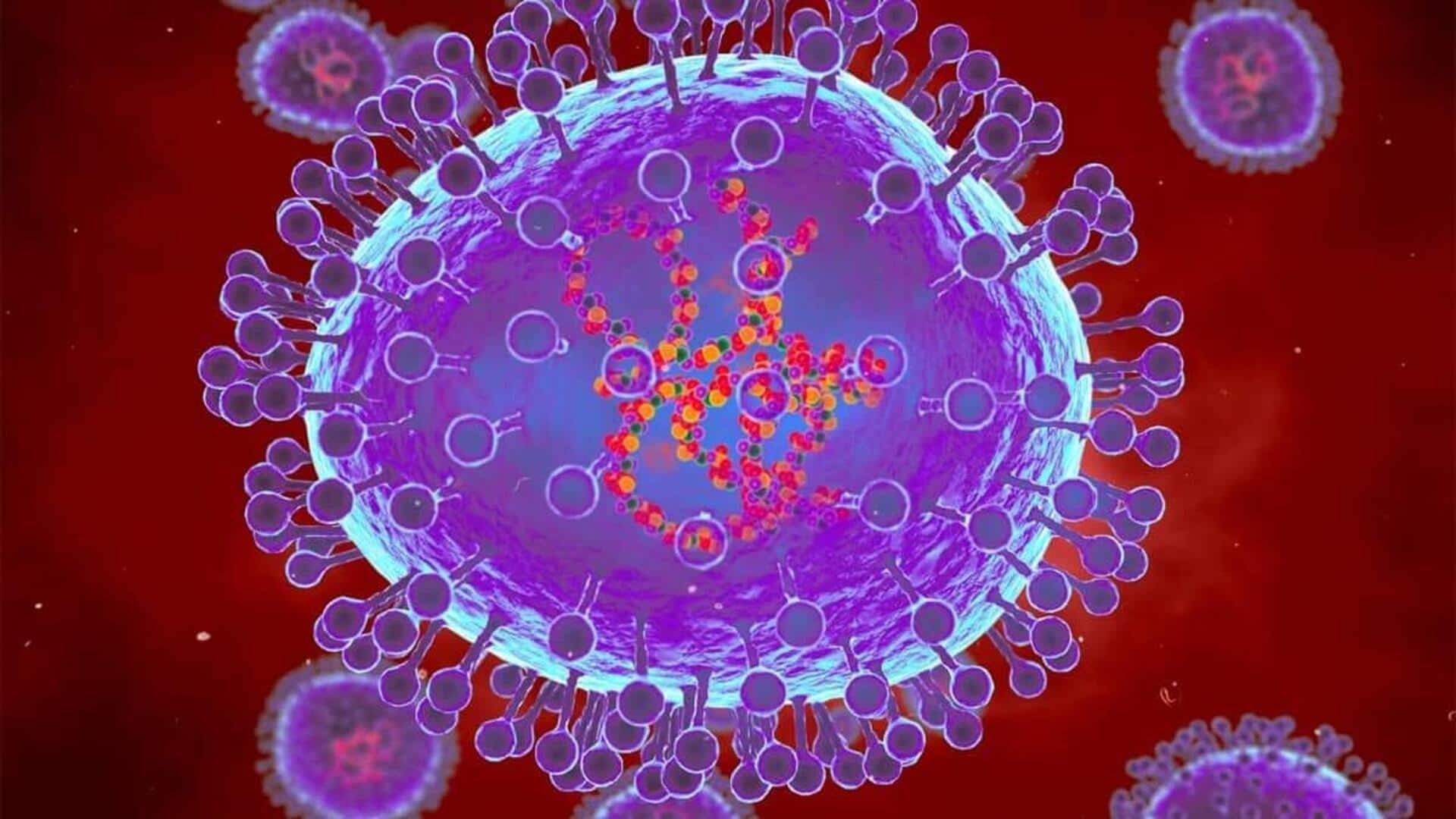
Scientists use AI to create viruses never seen in nature
What's the story
In a groundbreaking development, US researchers have successfully used artificial intelligence (AI) to design fully functional viruses that can replicate in a laboratory. This is the first time an entire genome has been created using AI technology. The team created 16 novel bacteriophages, viruses that infect bacteria and are harmless to humans. However, this breakthrough has also sparked safety and security concerns due to the potential misuse of such technology.
Technological advancement
How AI designed the viruses
The AI models, Evo1 and Evo2, were trained on genetic codes from various life forms including viruses, bacteria, plants, and humans.
They were then fine-tuned to create a specific type of virus called bacteriophage which only infects certain species of bacteria.
The Stanford researchers synthesized the most promising 302 AI designs in their lab and found that 16 of them were effective at killing E. coli bacteria.
Future prospects
Potential benefits and risks of the breakthrough
This breakthrough not only highlights AI's capability to create new biological entities but also opens up possibilities for synthetic biology.
Brian Hie, an assistant professor at Stanford University, believes this technology could "massively improve human health" by developing new drugs and therapies.
However, there are concerns that the same technology could be misused to create new diseases.
Cautionary steps
Researchers took precautions to ensure safety
The researchers took precautions to ensure safety by excluding viruses that could infect complex organisms from their training database.
They also conducted their research on phage instead of human-infecting viruses in a secure laboratory.
Despite the potential risks, Hie is optimistic about the existing safeguards ensuring "that the technology is used for good."
He also hinted at the possibility of using this tech to create simple organisms in the future.