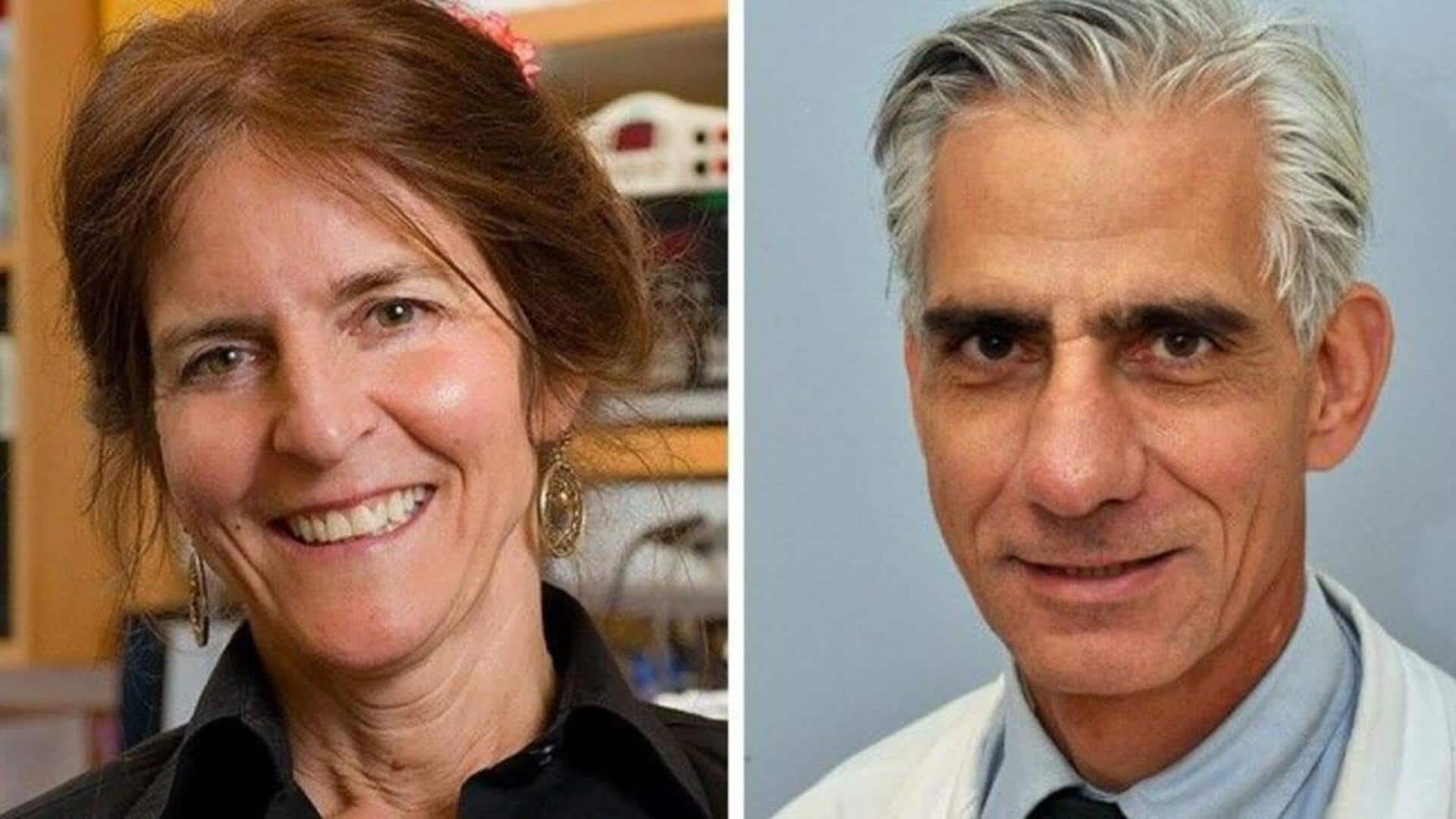
Breakthrough Prize awarded for gene therapy to reverse blindness
What's the story
Jean Bennett, a molecular biologist, and her husband Albert Maguire, an ophthalmologist, have been awarded the prestigious Breakthrough Prize in Life Sciences. The couple shares the $3 million prize with physician Katherine High for their groundbreaking work on Luxturna, the first approved gene therapy for blindness. The award ceremony took place at a glitzy event in Los Angeles yesterday.
Therapy details
Life-changing treatment for LCA patients
Luxturna, the revolutionary gene therapy developed by Bennett and Maguire, was approved in the US in 2017.
It has changed the lives of people suffering from Leber congenital amaurosis (LCA), a genetic disorder that usually leads to complete blindness by early adulthood.
The success of this therapy was demonstrated during a clinical trial where one patient described seeing their child's face for the first time after treatment.
Development process
How Bennett and Maguire developed the gene therapy
Bennett and Maguire met at Harvard Medical School while dissecting a brain.
They later worked on LCA at the University of Pennsylvania, where the faults in a gene called RPE65 were linked to the disease.
Despite initial setbacks, they persevered and finally developed a gene therapy that delivered a working version of the faulty gene into retinal cells.
This groundbreaking work was conducted in collaboration with High during animal tests and human trials.
Other winners
Other Breakthrough Prizes in science awarded this year
The Breakthrough prizes also recognized other major contributions to science.
Swee Lay Thein from the US National Institutes of Health and Stuart Orkin from Harvard Medical School were honored for their work on gene therapy for sickle cell disease and beta thalassemia.
Their groundbreaking therapy, Casgevy, "edits" patients' blood stem cells and reinfuses them back into the body.