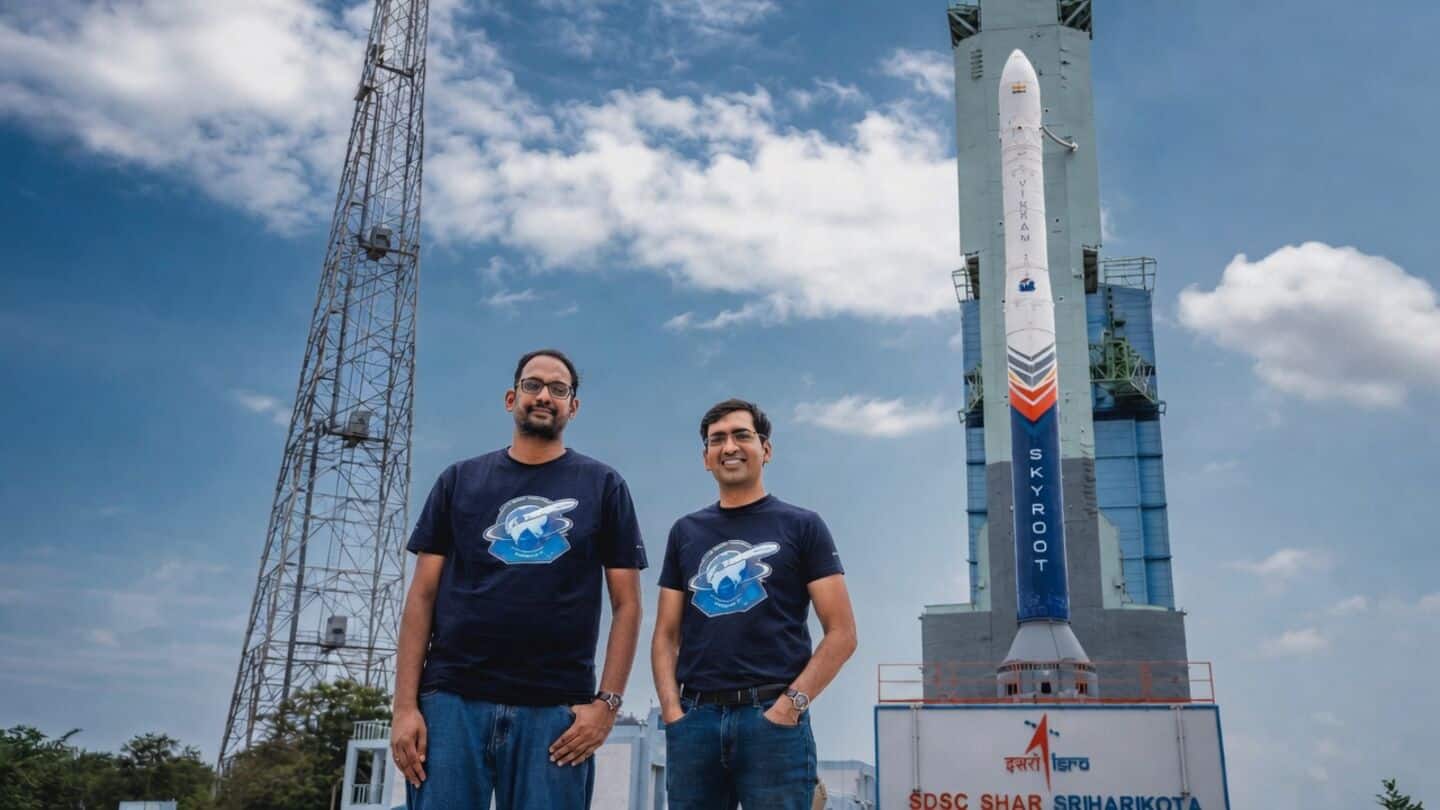
Skyroot to build its own launch pad after historic mission
What's the story
Indian space start-up Skyroot Aerospace has announced plans to construct its own launch pad. The announcement comes on the heels of their first orbital mission, Vikram-1 'Aagaman,' successfully placing multiple payloads into orbit. This makes Vikram-1 the first privately developed Indian rocket to reach orbit. The company intends to continue using ISRO's facilities for initial missions but is already working on an independent launch complex.
Strategic move
Plans for independent launch complex
Skyroot co-founder and CEO Pawan Chandana said, "We have worked with ISRO for a long period of time. The initial missions will be conducted from its facilities, but we have plans to build our own launch pad."
Although he didn't reveal the location or timeline for this new facility, he emphasized that it's a priority as the company gears up for more frequent launches in the coming years.
Enhanced capabilities
Operational flexibility and growth of private space sector
Having its own launch pad would give Skyroot greater operational flexibility.
The company would be able to schedule launches independently instead of relying solely on shared infrastructure at ISRO's Satish Dhawan Space Centre (SDSC) in Sriharikota.
This move also highlights the rapid evolution of India's private space sector after the country's space reforms.
Future prospects
Implications for Skyroot and India's private space sector
As Skyroot gears up for future Vikram missions and commercial launch operations, a dedicated launch complex could become a key piece of infrastructure.
It would help the company scale its services and compete in the fast-growing global small satellite launch market.
The move marks a major step forward for India's private space sector and Skyroot Aerospace's ambitious plans within it.