SoftBank CEO questions feasibility of Musk's orbital data center proposal
What's the story
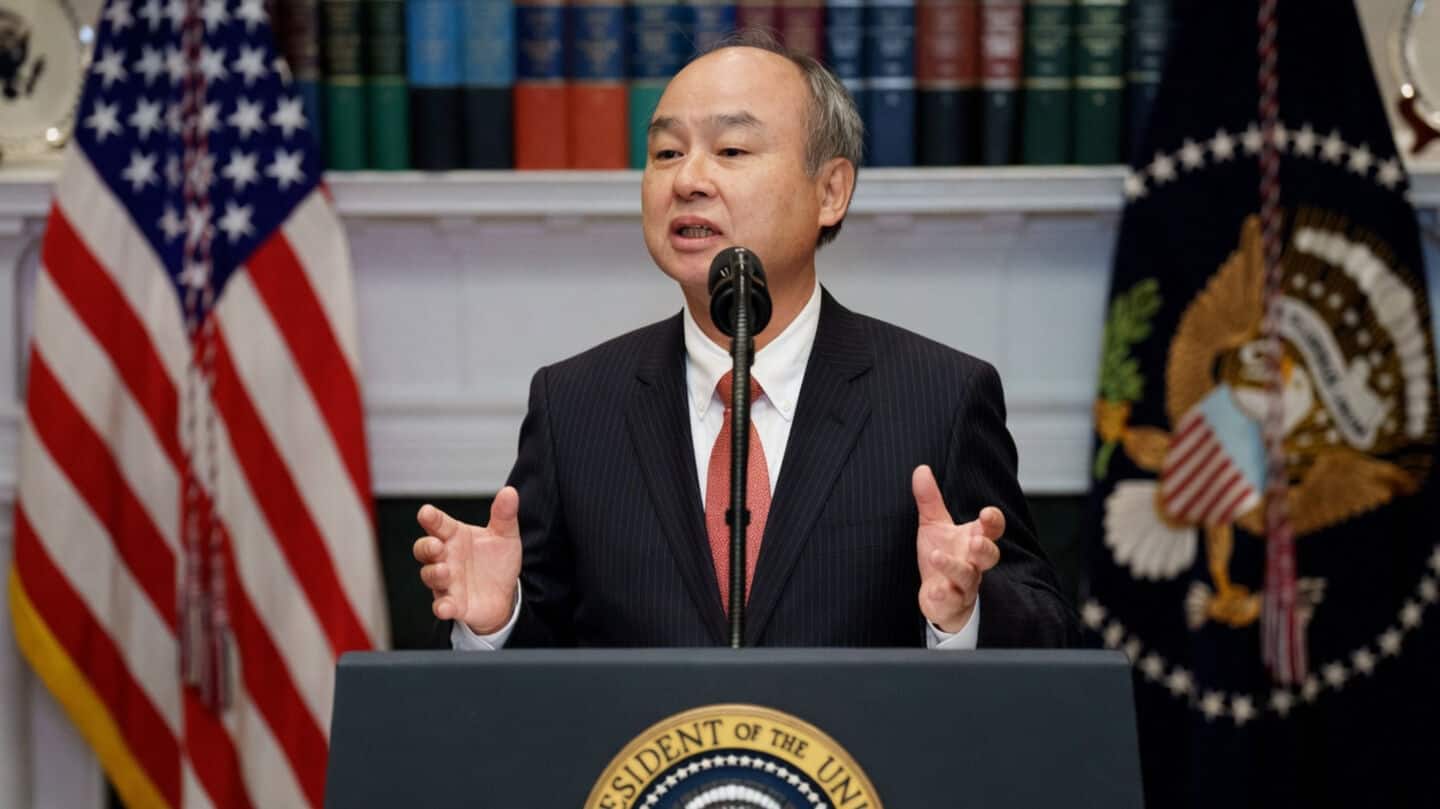
Softbank CEO Masayuki Son has dismissed Elon Musk's ambitious plan of setting up orbital data centers. Speaking at the annual shareholder meeting for Softbank's wireless and broadband division, Son said, "In the battle for AI, the next few years will be far more important than what might happen a decade or so from now." He argued that building AI data centers in space would take years and cost a lot of money.
Strategic focus
Son emphasizes immediate action in AI race
Son emphasized that Softbank is focusing on building data centers on Earth instead of in space.
He said, "He who strikes first wins," implying that immediate action is key to success in the AI race.
Although he acknowledged Musk as a "remarkable agent of change," Son criticized the idea of orbital data centers for their main goal being reducing electricity costs, something he considers a minor expense in running a data center.
Stargate initiative
Softbank's Stargate investment reflects commitment to earth-based data centers
Softbank is a major investor in the Stargate project led by OpenAI, which aims to build AI infrastructure across the US.
In January last year, Son announced Softbank's initial $19 billion commitment for this $500 billion effort over four years.
He reiterated his belief that building more Earth-based data centers now is better than planning for future space-based ones.
Cost concerns
Cost-effectiveness of space-based data centers questioned
Son also questioned the cost-effectiveness of space-based data centers. He said any savings from solar power in space would be offset by the costs of transporting materials and maintaining facilities.
Communication delays between Earth and space could also be a problem.
Despite these challenges, Musk has made orbital data centers central to SpaceX's investment strategy.
Investor interest
Investor interest in Musk's orbital data center vision
Musk's vision for orbital data centers has garnered significant investor interest.
After SpaceX went public earlier this month in history's largest IPO, Morningstar analyst Nicolas Owens noted investors were paying a $72 premium on SpaceX's initial share price to get in on its ambitious plans.
The debate between Son and Musk over orbital data centers highlights their differing approaches to AI infrastructure development.