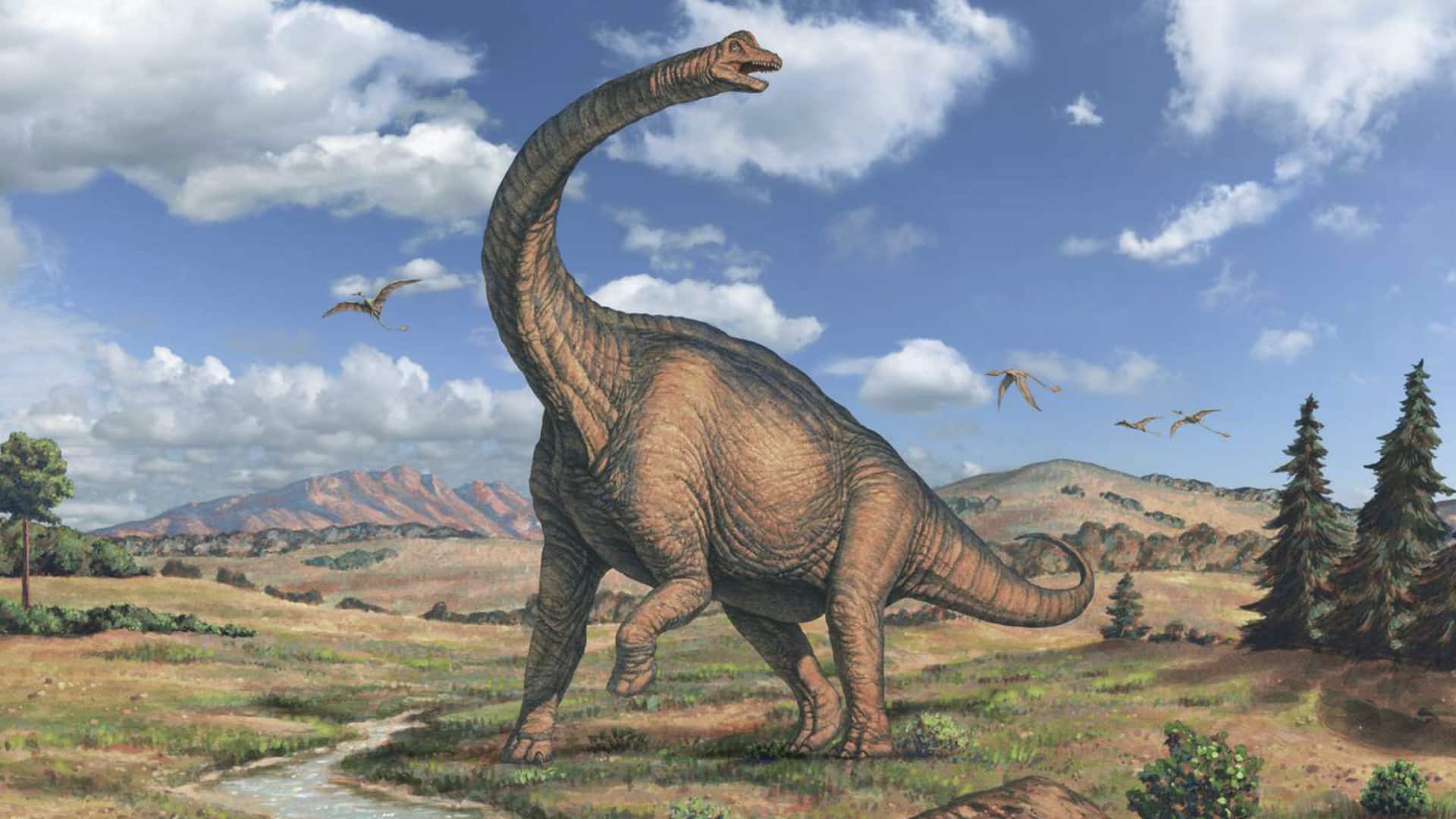
27m long, 27-tons heavy: Southeast Asia's largest dinosaur discovered
What's the story
Scientists have identified a new species of giant long-necked dinosaur from fossils unearthed in Thailand. Named Nagatitan chaiyaphumensis, the prehistoric creature is the largest dinosaur ever found in Southeast Asia. It weighed around 27 tons and stretched up to 27m long, making it longer than a Diplodocus. The discovery sheds light on how ancient climatic conditions helped these gigantic creatures evolve.
Name origin
Creature lived between 100 and 120 million years ago
In the name Nagatitan chaiyaphumensis, "naga" means serpent in Southeast Asian mythology; "titan" refers to the gods in Greek mythology; and chaiyaphumensis indicates its place of discovery (from Chaiyaphum).
The creature lived between 100 and 120 million years ago, well before the time of Tyrannosaurus rex.
It was a herbivore belonging to the sauropod family known for their long necks.
Fossil find
Team of UK and Thai researchers identified species
A team of UK and Thai researchers identified the species from fossils discovered next to a pond in northeastern Thailand over a decade ago.
The team was led by Thitiwoot Sethapanichsakul, a Thai doctoral student at University College London (UCL).
He described the Nagatitan as "the last titan" of Thailand since its fossils were found in the country's youngest dinosaur-bearing rock formation.
Ecological impact
Nagatitan lived in subtropical climate with forests
The Nagatitan lived in a subtropical climate with forests, savanna-like habitats, and shrublands.
It coexisted with other dinosaurs and flying reptiles called pterosaurs.
The largest predator of its ecosystem was a relative of the giant African meat-eating dinosaur Carcharodontosaurus.
However, at full size, the creature would have had very little to fear from predation due to its massive size.
Diet details
What did it eat?
Though the fossils of Nagatitan's head and teeth weren't found, its diet can be inferred from other sauropods.
It was likely a bulk browser feeding on large volumes of vegetation that required little to no chewing such as conifers and possibly seed ferns.
The species belonged to a subgroup of sauropods with bones containing many internal air sacs and thin walls, making their skeletons lighter.
Diversity insight
Discovery offers insight into climatic conditions of ancient world
The discovery of nagatitan offers insight into the diversity of sauropods in Southeast Asia. Not many sauropods are known from this region, and nagatitan is the largest and geologically youngest among them.
The species lived during a time when Earth's atmospheric carbon dioxide levels were rising with high global temperatures.
This possible relationship between large body size and high climatic temperatures is not fully understood but could have influenced plant fodder crucial for these herbivores.