Why SpaceX's new Starship might be lost at sea
What's the story
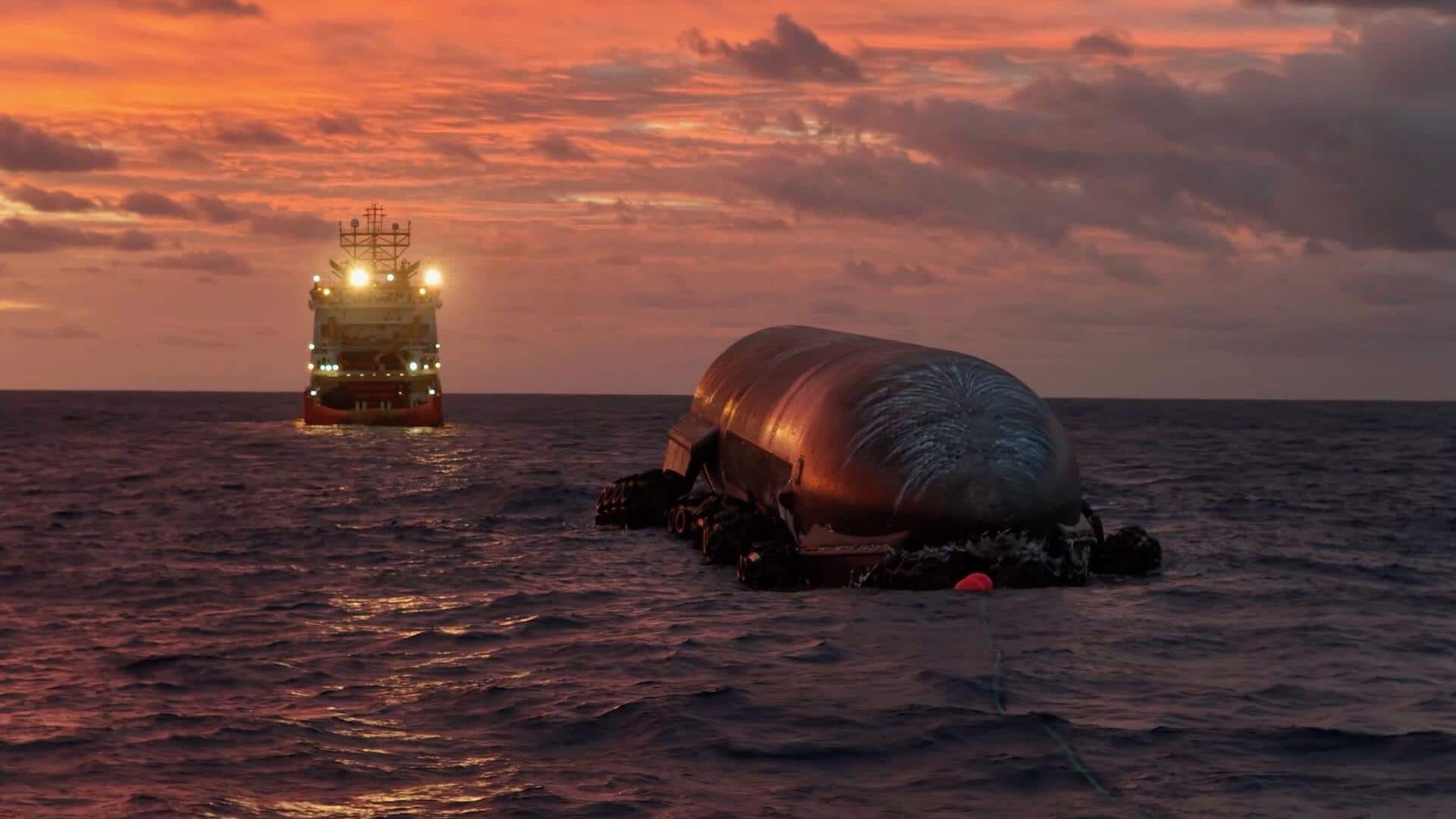
SpaceX's ambitious Starship project is facing a major setback. The megarocket's 13th test flight on July 24 was largely successful, with its upper stage (Ship) splashing down as planned in the Indian Ocean off Western Australia's coast. However, despite surviving the return journey and remaining intact after toppling over and hitting the waves, Ship's recovery efforts are not going as planned.
Recovery challenges
Recovery not looking good: Musk
SpaceX founder and CEO Elon Musk took to X to share his thoughts on the recovery efforts for Ship.
He said, "Unfortunately, ship recovery is not looking good right now," but added that they were able to capture close-up images of critical areas of the heat shield and engines for future upgrades.
This was in response to a SpaceX post giving an update on the recovery effort along with two photos and a video of the activities.
Adverse weather
Musk remains optimistic about heat shield development
The recovery team is facing tough conditions and increasingly rough seas while trying to navigate the 52m long spacecraft to port.
Despite these challenges, Musk remains optimistic about the heat shield development for Starship.
He had previously said on August 4 during SpaceX's first-ever quarterly earnings call, "I don't want to jinx it or anything, but I think I'd consider the heat shield problem solved at this point."
Strategic importance
Starship's July test flight and its significance
The Starship project is a key component of SpaceX's ambitious future plans, including building and operating a million-satellite AI constellation in Earth's orbit.
The 13th test flight was similar to previous ones, with Super Heavy landing in the Gulf of Mexico and Ship landing in the Indian Ocean.
However, this time around, during its time in space, the upper stage deployed 20 functional Starlink V3 satellites, the bigger, next-generation variant of SpaceX's broadband spacecraft.