SpaceX to launch 1st 'Starfall' capsule today: What is it?
What's the story
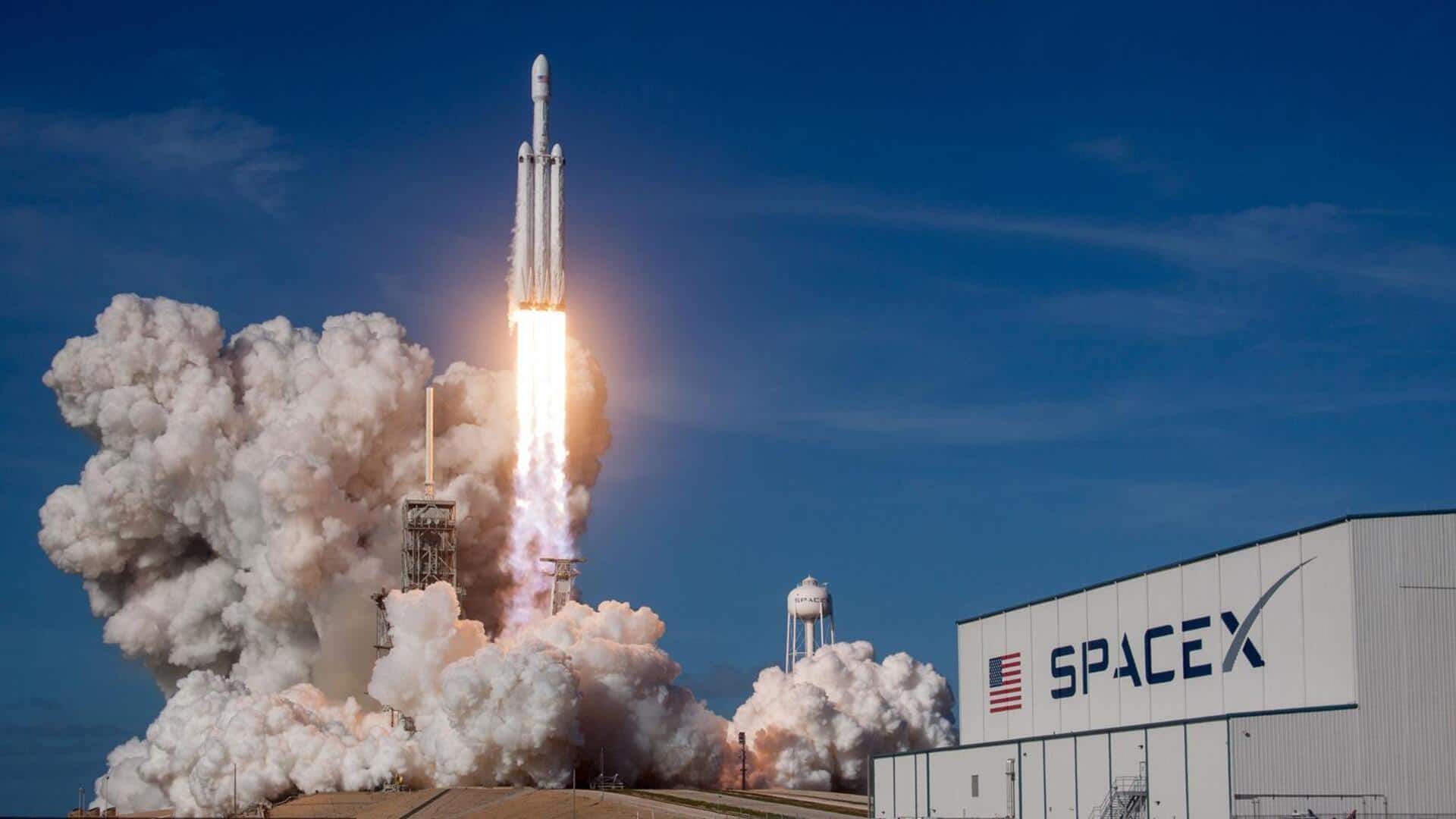
SpaceX is all set to launch its latest spaceflight technology, the 'Starfall' capsule, into space for the first time. The mission comes after SpaceX applied with the US Federal Aviation Administration (FAA) for two re-entry vehicle landings. The event will take place from Cape Canaveral Space Force Station in Florida today, June 23, during a one-hour window starting at 6:43am EDT (4:13pm IST).
Capsule details
What is the Starfall capsule?
The Starfall capsule is a cargo transport vehicle, designed to carry payloads to low Earth orbit (LEO) and beyond.
It will be launched on SpaceX's Falcon 9 and Falcon Heavy rockets, and also bring materials back safely to Earth.
The platform isn't meant for human passengers but supports research or other payloads needing retrieval after a space stint, like pharmaceuticals and orbital manufacturing products.
Capsule specifications
Size and design of the capsule
The Starfall capsule is more than three times bigger than Varda Space's 3-foot-wide "W-series" capsules. It measures 10 feet wide and 2.5 feet tall, with a payload capacity of up to 1,000kg.
The capsule has two main sections that separate after re-entry: a top plate for payload storage and attitude control components, and a carbon fiber heat shield storing compressed gas for attitude control maneuvers required for precise re-entries/landings.
Return strategy
Safety features of the spacecraft
SpaceX plans to use the Starfall capsule for suborbital missions, in addition to long-term stays in LEO.
The capsule doesn't have a propulsion system and can't deorbit itself.
However, SpaceX has designed the spacecraft for safe expendability in case of any issues during its space or reentry journey.
It uses nonhazardous inert cold gas (nitrogen) for attitude control and has no liquid propellants or hazardous substances on board.
Splashdown plan
Splashdown in Pacific Ocean
SpaceX hasn't revealed how long it plans to keep the test Starfall vehicle in orbit on this debut mission.
However, when it returns, SpaceX is targeting a splashdown area in the Pacific Ocean, about 1,300km off the US West Coast.
If today's launch gets delayed for any reason, SpaceX has a backup opportunity on June 24 with an identical launch window.