SpaceX unveils NVIDIA-powered AI data centers in space
What's the story
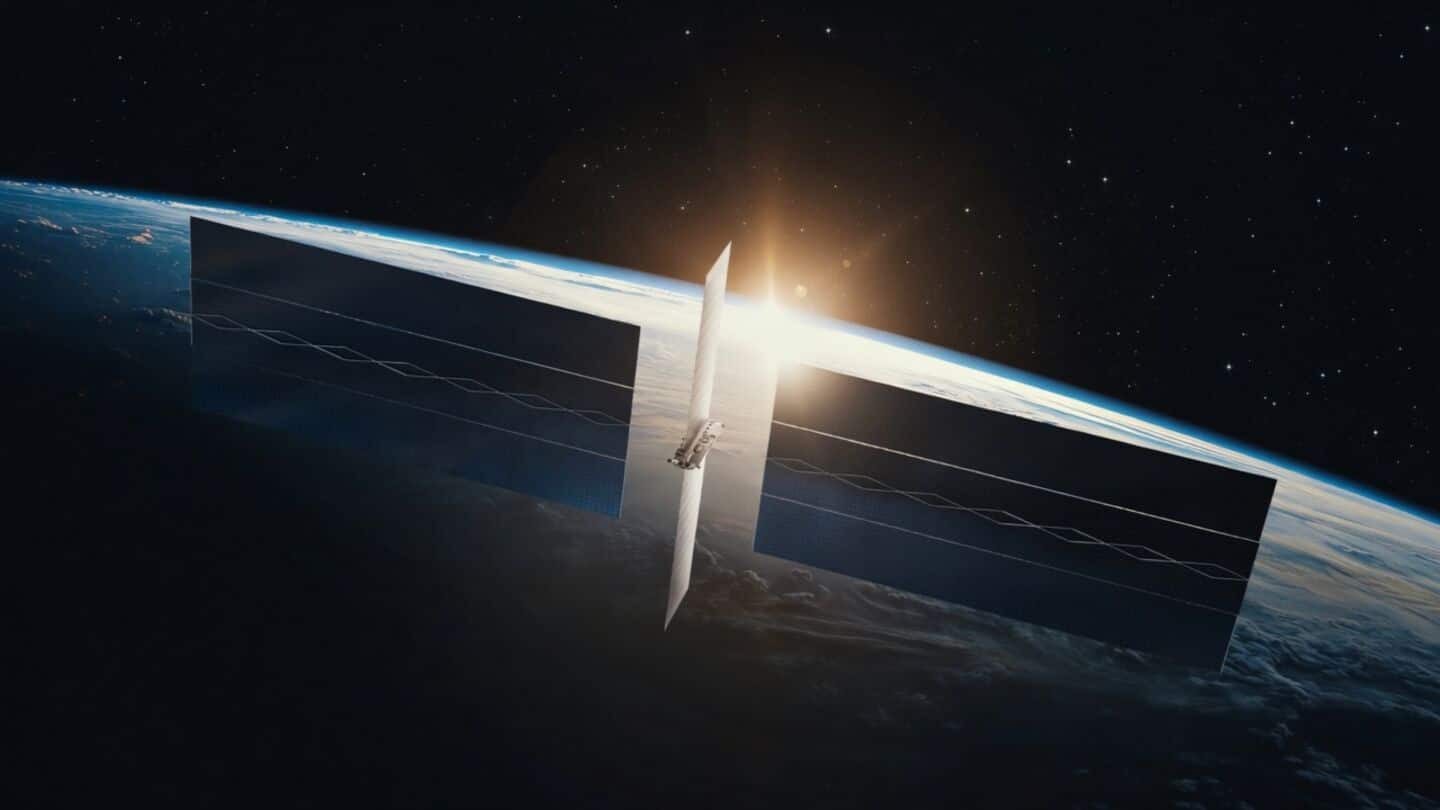
SpaceX and NVIDIA have announced a groundbreaking partnership to develop an artificial intelligence (AI) satellite. The project, called Starmind AI1, will be capable of advanced AI computing in low Earth orbit. The companies revealed their plans on August 4, with the aim of revolutionizing space-based data processing and communication.
Project details
NVIDIA's hardware in low Earth orbit
The Starmind AI1 satellite will use NVIDIA's latest computing hardware to process AI workloads in low Earth orbit.
SpaceX plans to power the first Starmind satellites with NVIDIA's Vera CPUs and Rubin GPUs, hardware the chipmaker recently positioned as part of its emerging space computing portfolio.
Elon Musk has also endorsed this partnership, saying that SpaceX is committed to using NVIDIA GPUs exclusively because "they are the best."
Future plans
A million satellites forming a distributed AI supercomputer
The Starmind project is just the beginning. SpaceX envisions an orbital network that could eventually grow to one million satellites.
This would create a distributed AI supercomputer in space, vastly expanding computing capacity beyond Earth's data centers.
The constellation would use laser links to transfer data between satellites at extremely high speeds, revolutionizing the way we think about data processing and communication in space.
Technological advancement
Starmind architecture will be hardware-flexible
NVIDIA claims its Space-1 Vera Rubin module delivers up to 25 times the AI processing performance of an H100 GPU.
Commercial shipments of this platform are expected to start later this year.
The Starmind architecture has also been designed to be hardware-flexible, allowing future satellites to replace onboard processors with newer chips from different suppliers without redesigning the entire spacecraft.
Expansion strategy
Petabit-scale optical communications network
Earlier this year, SpaceX sought FCC approval to deploy up to one million orbital data center satellites between 500 and 2,000km above Earth.
The company has described a petabit-scale optical communications network that would enable high-speed laser links for data exchange between satellites.
If approved, this constellation would be one of the largest space infrastructure projects ever attempted, dwarfing today's orbital population of around 15,000 active satellites.
Testing timeline
Prototype testing and regulatory hurdles
Prototype testing for the Starmind AI1 satellite is scheduled for early 2027, with mass production expected to begin later that year if development stays on track.
However, the regulatory process is still ongoing. The FCC granted an initial application earlier this year but has not yet made a final decision on the broader satellite deployment plan.