This Chinese robot is a better surgeon than humans
What's the story
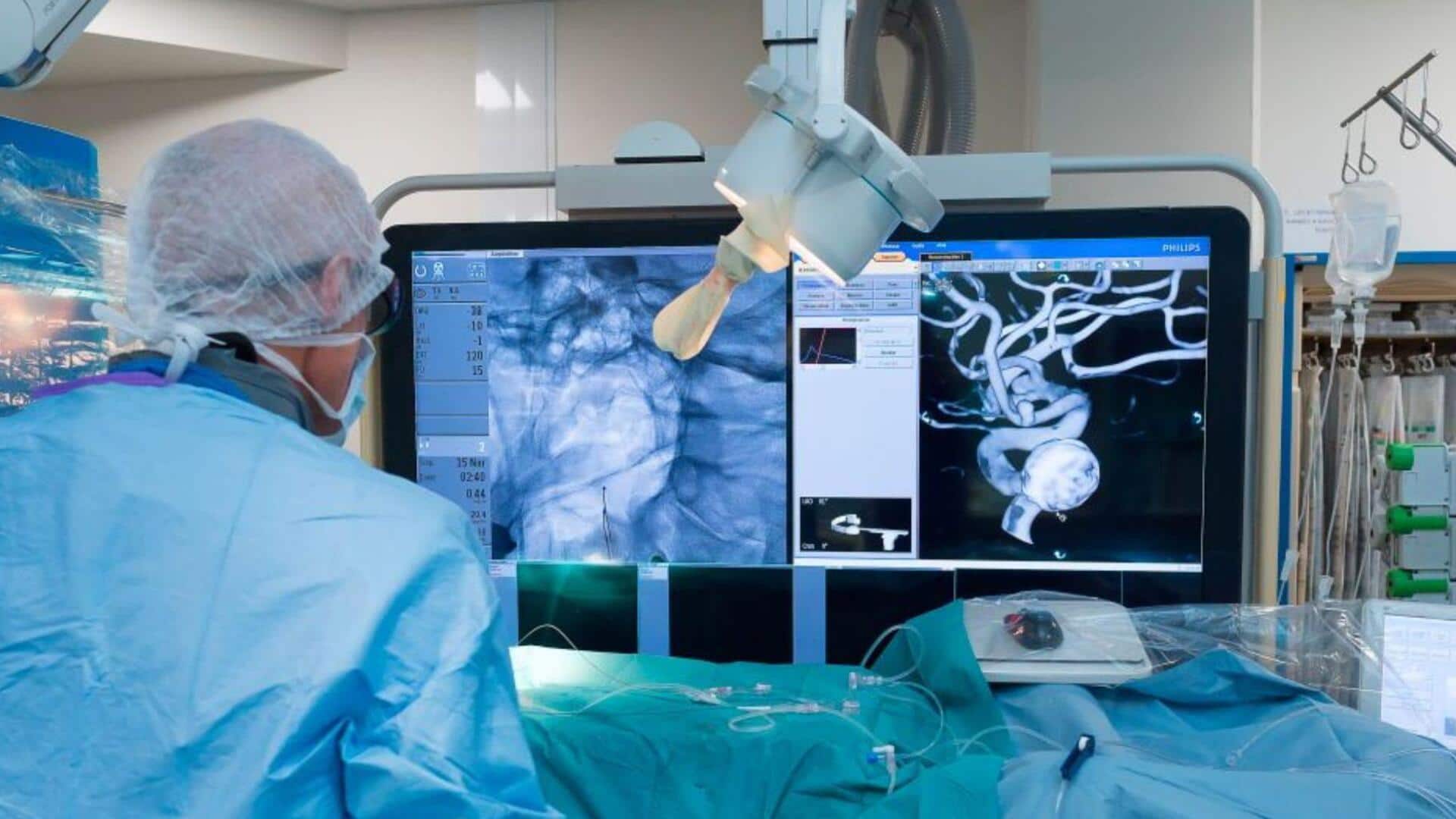
Chinese researchers have developed a revolutionary surgical robot that can perform complex brain imaging procedures, almost 30% faster than traditional manual techniques. The breakthrough was highlighted in a study published earlier this year, marking a major milestone for the world's first approved cerebrovascular intervention system. The innovative technology is expected to improve the efficiency and safety of cerebral vascular imaging, a crucial process in treating various brain diseases.
Performance comparison
How the new robotic system was tested
In a head-to-head comparison at the prestigious Peking Union Medical College Hospital (PUMCH), a young surgeon using the new robotic system was able to reduce the time taken for a standard manual procedure by nine minutes.
"Preliminary clinical application shows that the YDHB-NS01 robot-assisted system is feasible for diagnostic cerebral angiography and shows early indications of safety and comparable procedural performance to conventional manual methods," lead author Dr. Zhao Yuanli wrote in the study published in Chinese Neurosurgical Journal.
Procedure
What is cerebral vascular imaging?
Cerebral vascular imaging is a critical step in treating many brain diseases, but it is also a complex and challenging process for both the patient and the doctor.
In conventional methods, neurologists have to manually guide a thin wire from a patient's thigh to the blood vessels in their brain under X-ray fluoroscopy.
This manual approach has its own limitations such as hand tremors and physical strain due to heavy lead gowns worn for radiation protection.
Plus
Benefits of the new robotic system
The long-term exposure to radiation during these procedures also poses potential health risks for doctors.
The introduction of this new robotic system could help mitigate some of these issues by reducing the time taken for such procedures and minimizing the physical strain on surgeons.
This is a major step forward in making cerebral vascular imaging safer and more efficient, especially considering its importance in treating various brain diseases.