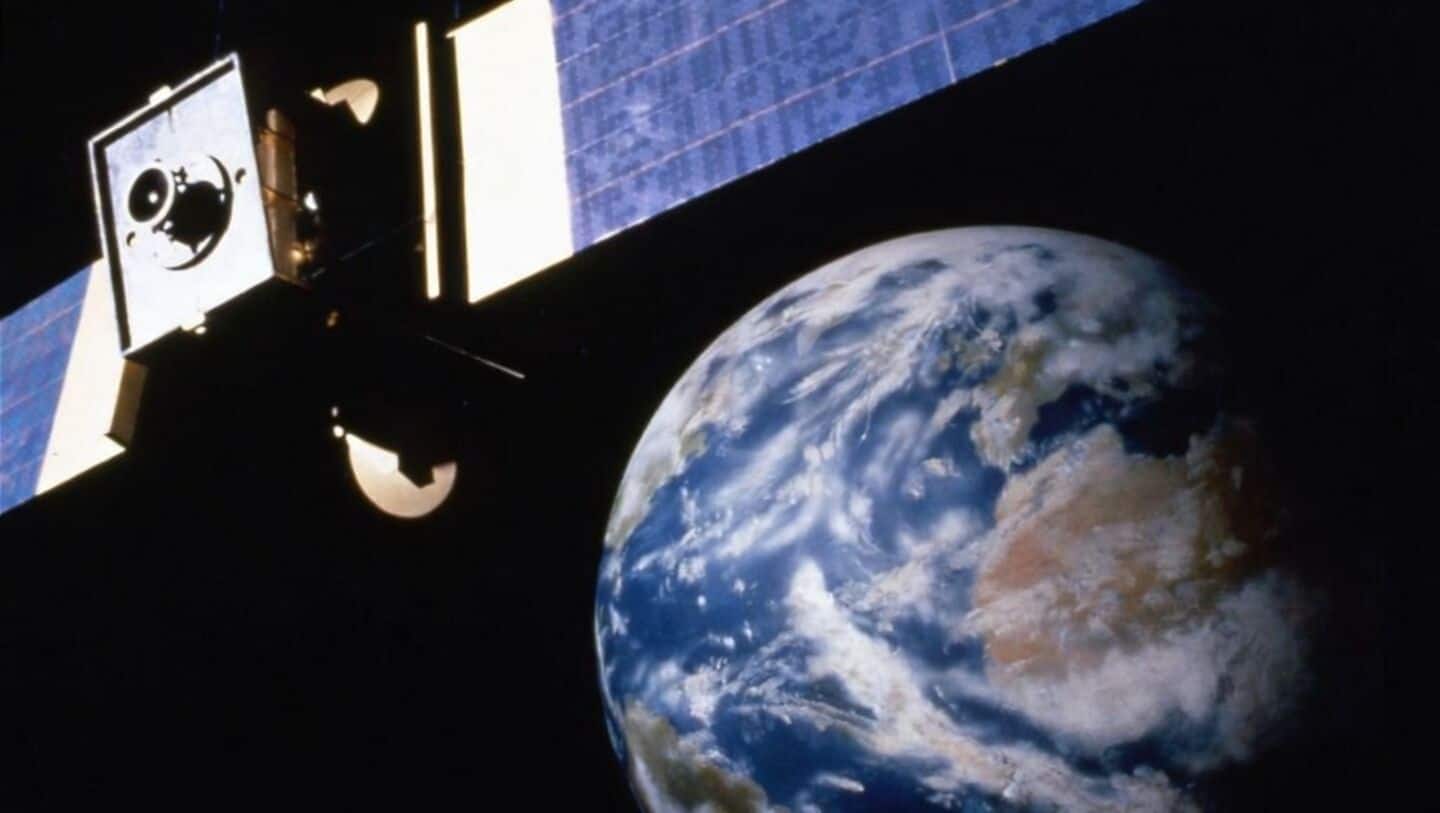
This tool can help prevent satellite collisions in Earth's orbit
What's the story
Researchers at the University of Manchester have developed a groundbreaking system aimed at preventing satellite collisions in Earth's increasingly crowded orbits. The innovative tool connects mission performance requirements, like capturing high-resolution images, with collision risks associated with different satellite sizes and altitudes. This way, designers can identify potential hazards much earlier in the planning process.
Safety assurance
Tool connects mission performance requirements with collision risk
With a staggering 11,800 active satellites already orbiting Earth and the number expected to rise sharply, this new approach could make future space missions safer and more sustainable.
Dr. Ciara McGrath from the University of Manchester stressed that this tool would help keep space "usable for future generations."
The system is a modeling framework that integrates mission performance requirements with collision risk in different orbital environments.
Trade-offs
Tool helps mission designers understand trade-offs
By combining mission performance requirements with collision risk in a single system, the tool helps mission designers understand the trade-offs between data quality and orbital safety.
This is particularly important as Earth-observation satellites are increasingly relied upon to meet the United Nations's 17 Sustainable Development Goals (SDGs).
The new approach will link mission requirements for image resolution and coverage with satellite size and number in orbit to better prevent collisions and debris.
Impact analysis
Research tackles 'space sustainability paradox'
The size of each satellite plays a major role in determining likelihood of collisions, the researchers found.
Although higher orbits require fewer satellites for coverage, those satellites pose a greater individual collision risk due to their larger size.
Lead author John Mackintosh, a PhD researcher at University of Manchester, said their research tackles a "space sustainability paradox."
This paradox refers to potential threat posed by using satellites to solve environmental and social problems on Earth while compromising long-term space sustainability.