This technique might help preserve fertility of cancer patients
What's the story
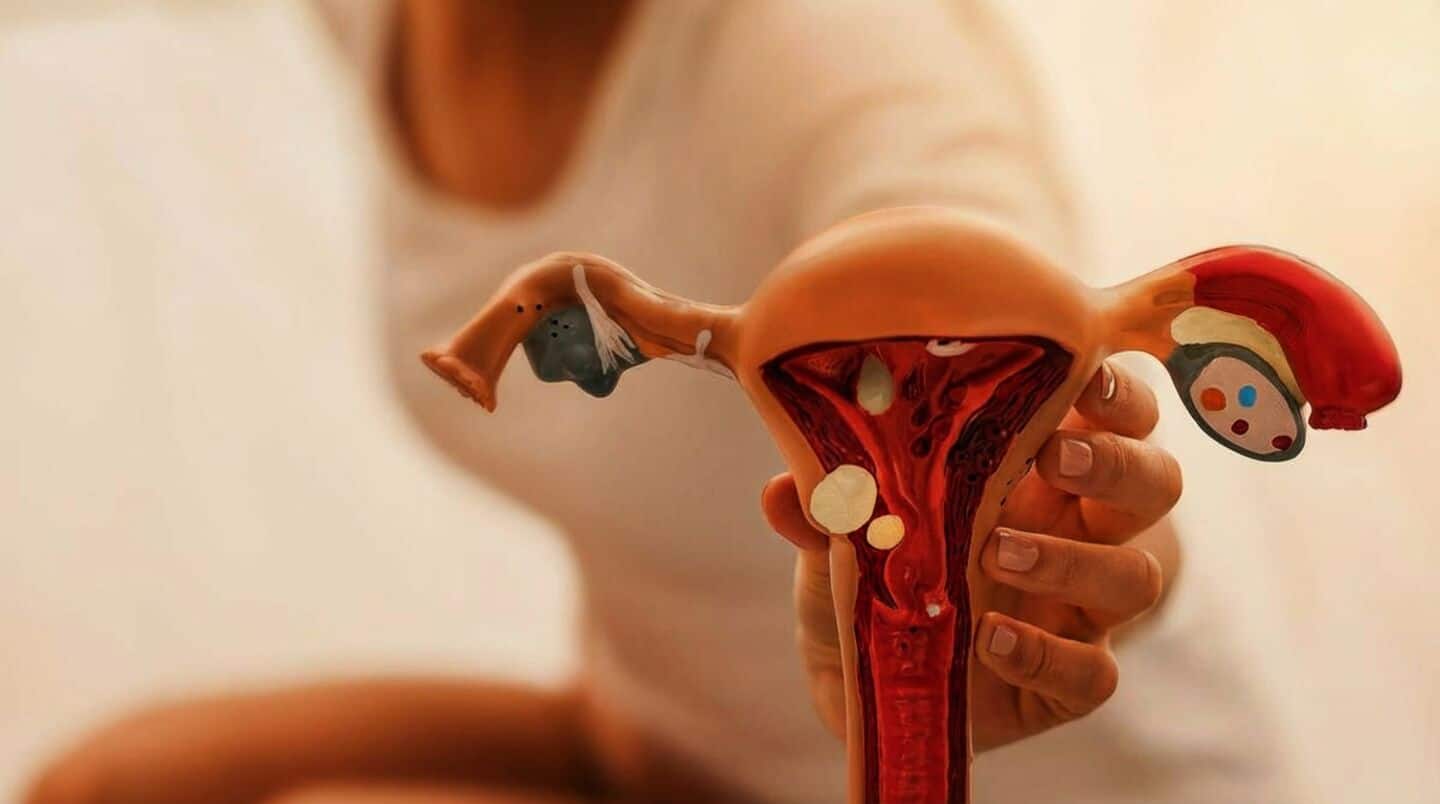
Scientists at the Indian Council of Agricultural Research (ICAR) and National Institute of Animal Nutrition and Physiology (NIANP) are working on an important technique to save eggs that are naturally lost inside the ovary at an early stage. The research focuses on preantral follicles, tiny structures in the ovary that contain immature eggs. These eggs usually get lost as part of a natural process and never reach maturity.
Potential applications
Potential impact on cancer treatment and livestock breeding
The new technique, if successful, could represent a significant advancement for cancer patients.
It could help preserve their fertility by safeguarding eggs before the treatment damages the ovaries.
The same technology could also be used in animal breeding to create more embryos from genetically valuable livestock.
Dr. Artabandhu Sahoo, Director of ICAR-NIANP, said scientists are now trying to retrieve these immature eggs early and grow them under lab conditions for embryo production.
Research
Expanding the possibilities of assisted reproduction techniques
Currently, assisted reproduction techniques (ART) rely mainly on mature eggs or already formed embryos.
This limits the number of embryos that can be produced from a single animal.
However, Dr. Sahoo explained that more than 99.9% of eggs inside the ovary degenerate naturally.
By tapping into this early-stage reserve of the eggs, researchers could increase the number of eggs available for technologies like IVF and cloning, which require them to develop embryos.
Livestock advancements
Progress in livestock embryo production
NIANP researchers have already made strides in applying this technology to livestock.
A team led by Dr. P.S.P. Gupta has produced the first buffalo embryo using eggs grown from preantral follicles.
The institute has also developed freezing techniques for such follicles in sheep as part of a DST-sponsored Indo-Hungary collaborative project, and is currently working on preserving embryos produced using this method.
Broader implications
Broader implications for conservation and research
The preantral follicle technology has so far produced live offspring only in mice, with adaptation for large domestic animals still a work in progress.
Scientists believe producing a large number of embryos is important to extending this success to domestic animals.
Beyond animal breeding, the technology might also help create embryo banks, support conservation efforts for endangered species, and provide a reliable way to study environmental pollutants and medicines on female fertility.