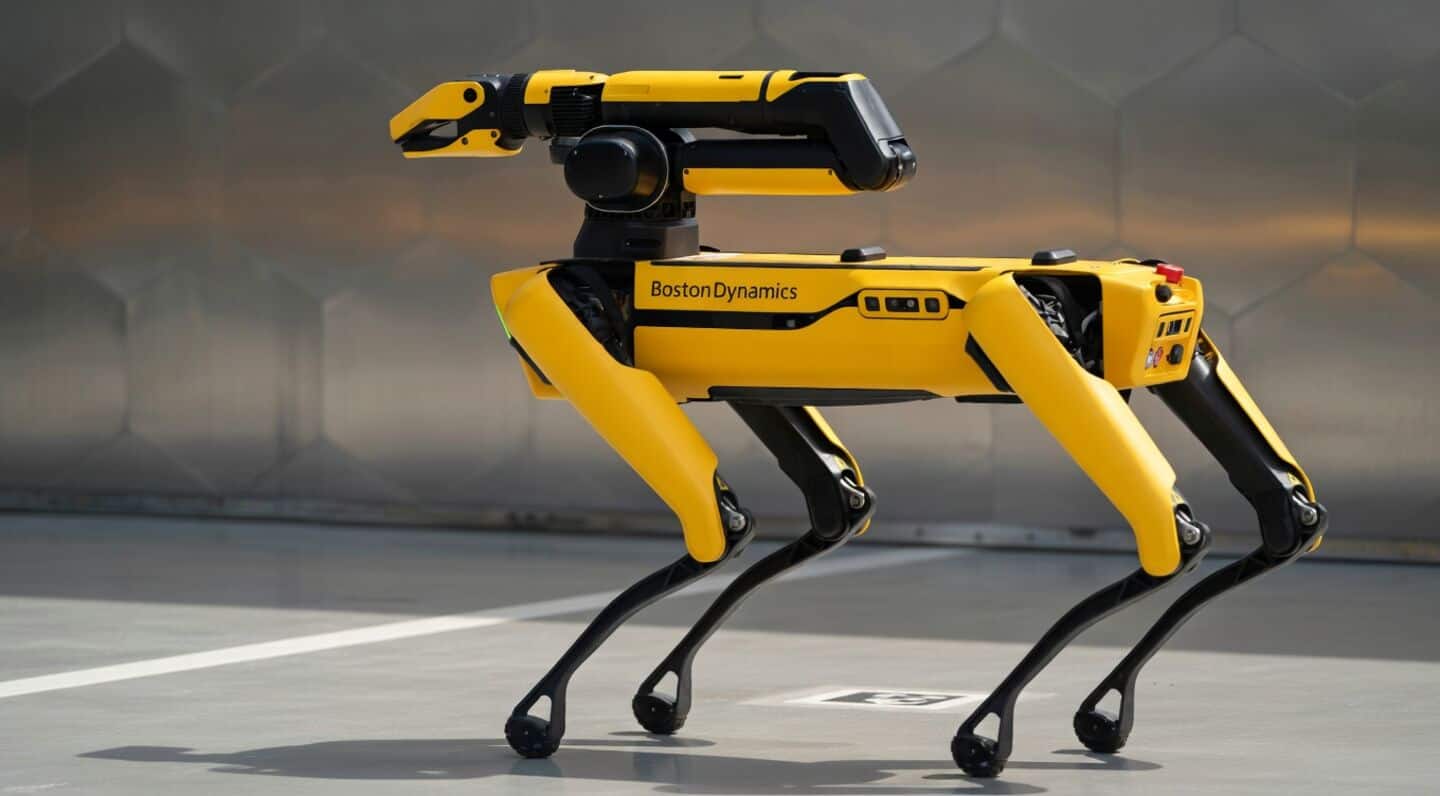
US enforcement agency plans to spend $2M on robotic dogs
What's the story
The US Immigration and Customs Enforcement (ICE) is planning to invest up to $2 million in robotic dogs from Boston Dynamics. The move is part of a broader effort to improve officer safety during law enforcement operations. The proposed purchase comes as ICE expands its use of specialized equipment for enforcement operations.
Safety enhancement
The robotic dogs are equipped with cameras and sensors
The robotic dogs, also known as Spot robots, are four-legged platforms equipped with cameras and sensors.
They can detect hazards like gas, radiation, and vibrations while traversing uneven terrains.
The machines will be used to remotely assess potentially dangerous or hard-to-reach areas before officers enter them. This is mainly aimed at improving officer safety during enforcement operations.
Operational clarity
Robots will not be used to make arrests
The procurement documents clarify that the robots are not meant to be used to make arrests.
Instead, they would assist ICE personnel by providing information about potentially dangerous environments during operations.
The technology would improve officer safety and help respond to incidents involving dangerous, confined, unstable, or difficult-to-access areas.
Technological prowess
Tech has been used by other government organizations
Boston Dynamics' Spot robots can be fitted with an extendable robotic arm that can interact with objects and open certain doors.
The platform is designed to gather information from locations where sending a person could be dangerous.
The technology has been used by law enforcement agencies and other government organizations in the US, including the US Secret Service at President Donald Trump's Mar-a-Lago property in Florida.
Controversial acquisition
The purchase follows ICE's controversial decision to buy shock gloves
The proposed purchase of robotic dogs comes after ICE's controversial decision to buy electric shock gloves for officers.
The $20 million worth of gloves are meant to be used during immigration operations.
Despite criticism from civil rights organizations and some Democratic lawmakers, White House border czar Tom Homan defended the move, arguing that these gloves would prevent agents from having to use deadly force.