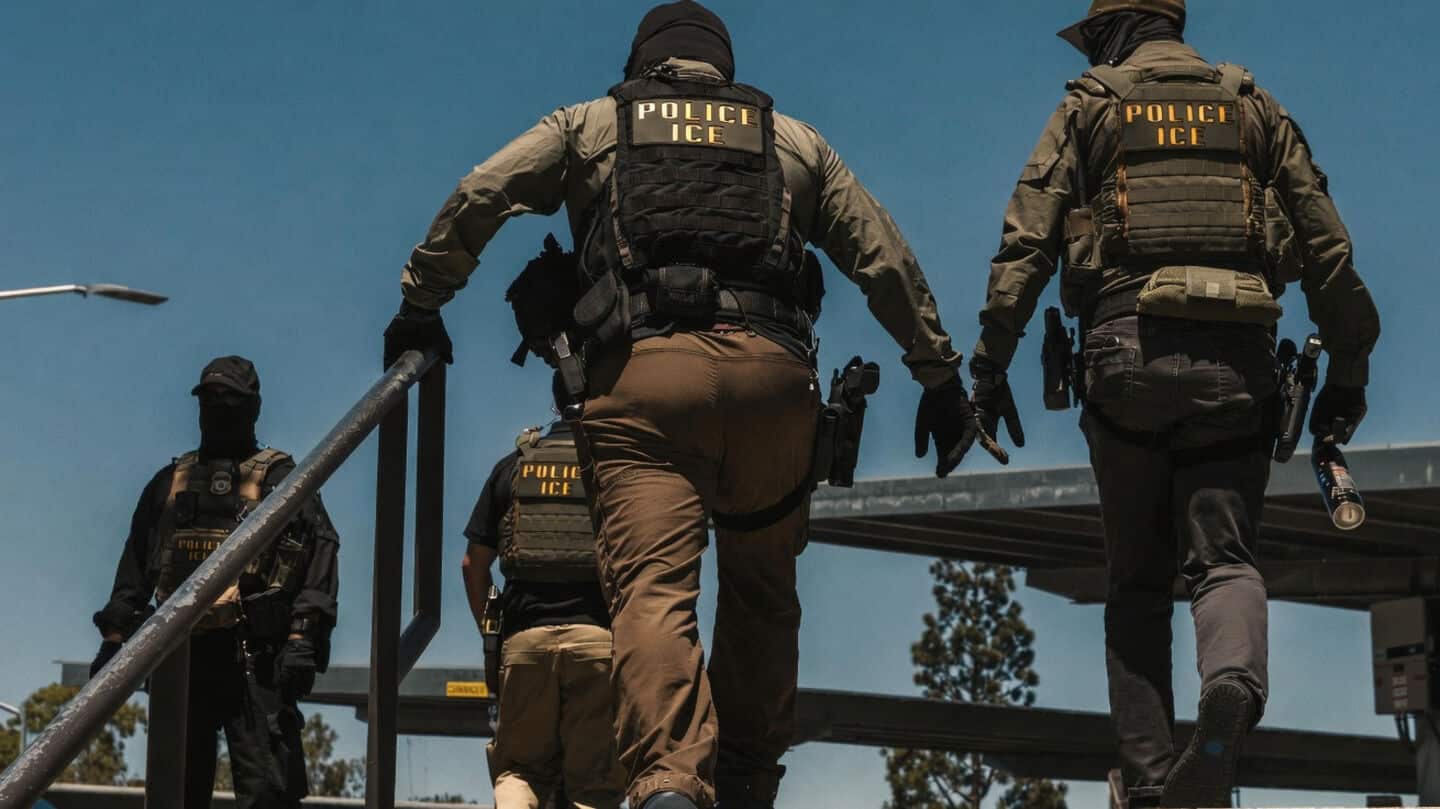
US immigration officers may get electric gloves to force compliance
What's the story
The US Immigration and Customs Enforcement (ICE) is planning to spend up to $20 million on high-tech gloves that can deliver electric shocks. The plan was revealed in a notice by the Department of Homeland Security on Monday. The contract for these devices, which are intended for use by ICE officers and agents, is expected to be fulfilled by March 2027.
Device details
The gloves deliver up to 380V on skin contact
The gloves in question are the CTG 5 GLOVE (Generated Low Output Voltage Emitter), manufactured by Compliant Technologies.
The company calls it a CD3 (Conductive Distraction and De-escalation) device, which is "usually effective in bringing individuals into compliance in less than three seconds."
The shock feature can be activated with a switch on the glove and delivers up to 380V on skin contact.
Safety concerns
The use of these gloves raises serious ethical concerns
The gloves are designed not to be immediately recognizable as a weapon, enhancing established tactics and procedures. However, their use raises serious ethical concerns.
The user guide warns against using more than one pair on a single individual or shocking people for over 15 seconds.
It also advises against use on high-risk populations such as children, the elderly, pregnant people, or disabled individuals.
Past incidents
Similar gloves have been used by police departments and jails
Similar gloves have been used by some police departments and jails in the past.
In 2022, two corrections officers were charged for beating and shocking an inmate with these devices.
The American Civil Liberties Union (ACLU)'s Jenn Rolnick Borchetta questioned the need for such tools in civil immigration enforcement, saying ICE has shown a tendency to use force too quickly.
ACLU's stance
Questions on whether ICE officers have been properly trained
Naureen Shah from the ACLU questioned whether ICE officers have been properly trained to use such a tool.
She said, "My immediate reaction was, why would you give this kind of novel, dangerous technology that's hard to train people on to agency personnel who have a track record of abuse and even cruelty?"