Chang'e-7 mission: Why touching lunar ice could be a problem
What's the story
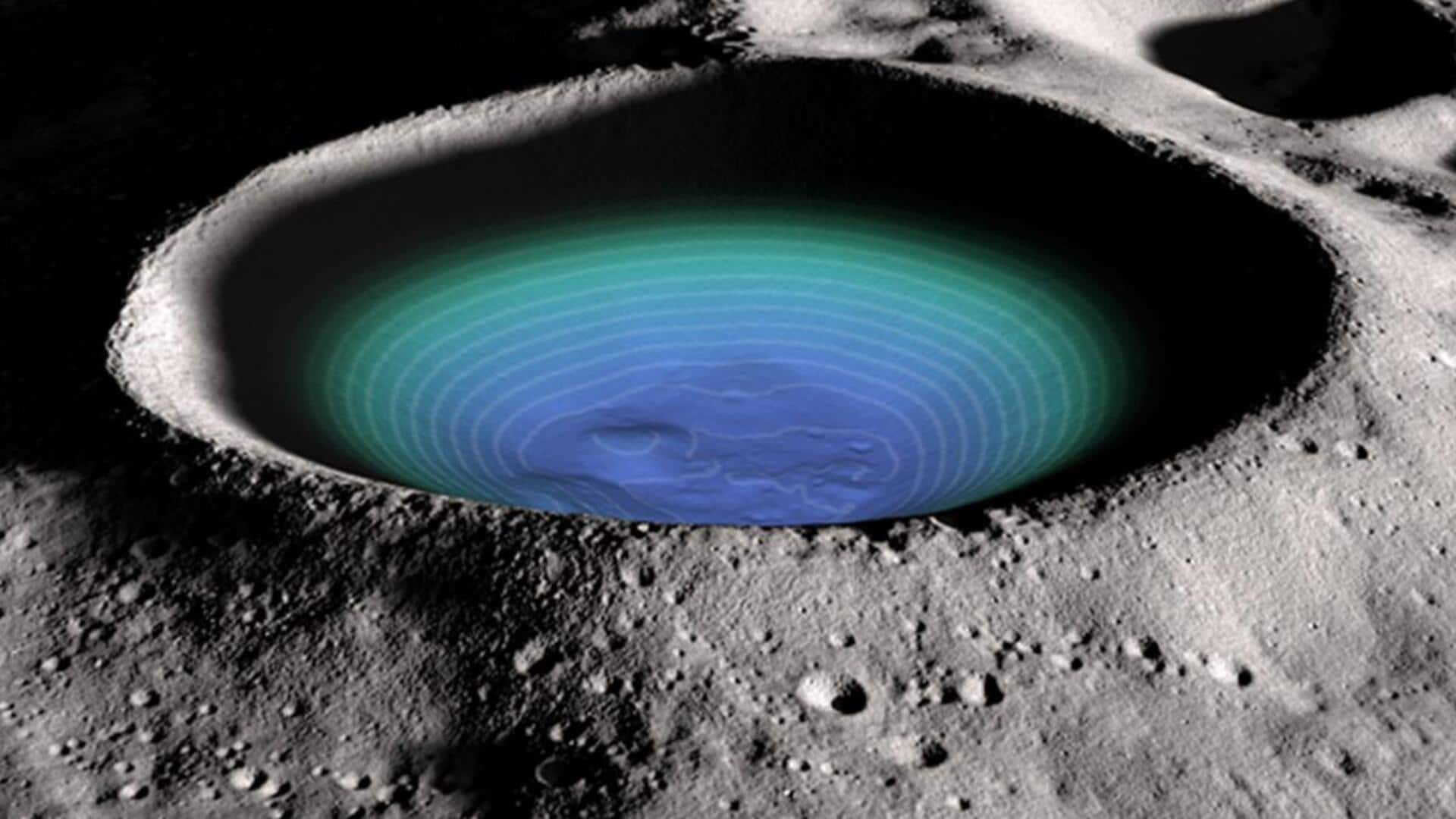
China's Chang'e-7 mission, scheduled for this year, will be the first attempt by China to directly sample and measure water on the Moon. However, a team of scientists has warned that even touching lunar ice could lead to its loss. The spacecraft is expected to land near the rim of Shackleton crater at the Moon's south pole and deploy a rover and hopper in search of ice.
Complexities
Lunar water's unique behavior
Lunar water is not like the water we know on Earth. It is trapped in frozen soil, away from the air and held by cold and vacuum.
Collecting this lunar ice could be much more difficult than measuring it, a team from Harbin Institute of Technology and the Chinese Academy of Sciences has said.
They are working to prepare for this unique mission to collect and test lunar water samples.
Risk factors
Potential risks during collection
As the Chang'e-7 sampler on the rover's robotic arm scrapes into icy soil, even minor warming from contact and friction could loosen water molecules.
This was highlighted by the researchers in a paper published in the Chinese Journal of Space Science this month.
The study emphasizes that any disturbance during this process could potentially lead to loss of valuable lunar ice samples.