Humanity might go extinct on this date
What's the story
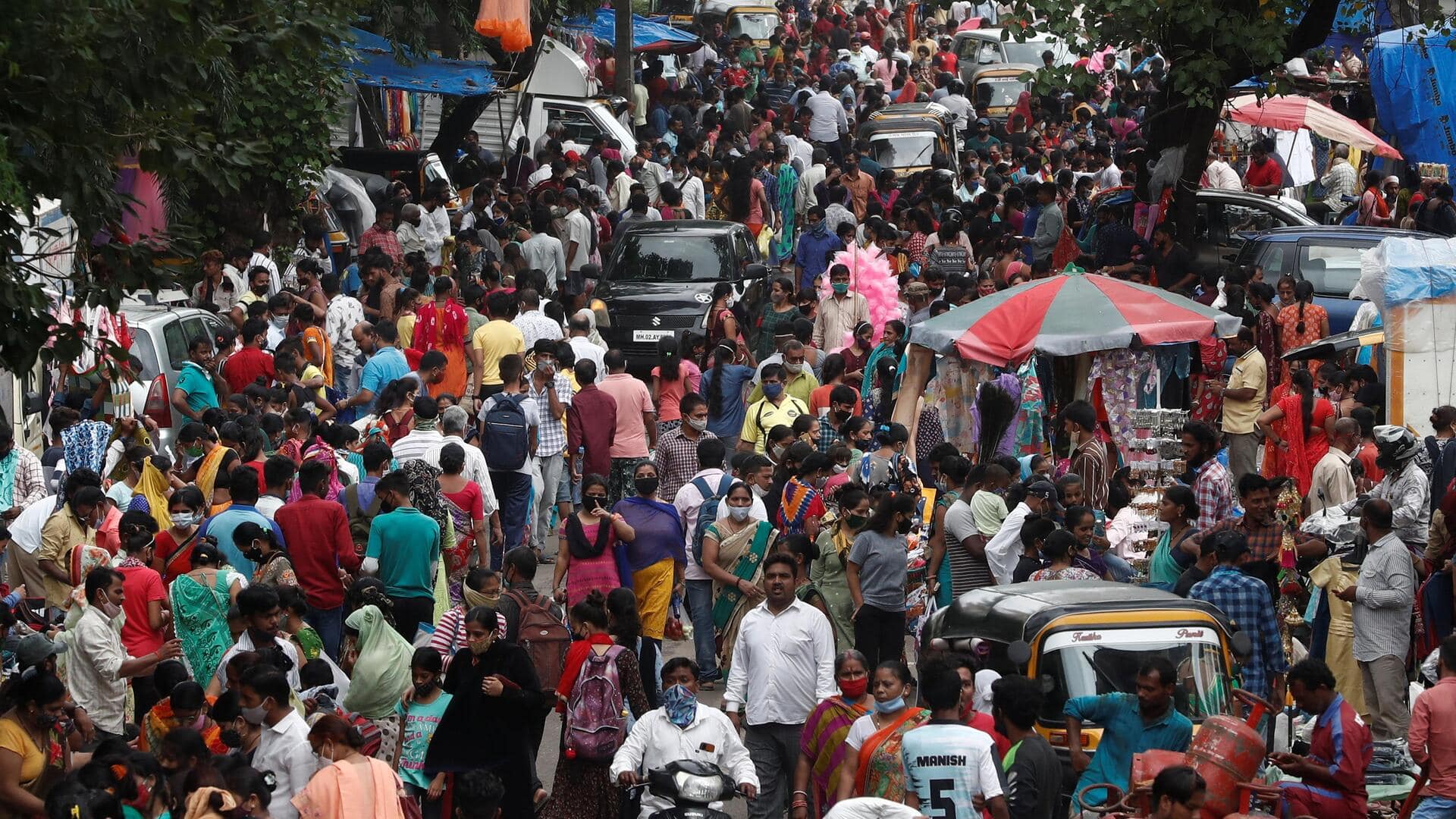
A 66-year-old prediction by physicist Heinz von Foerster has resurfaced, suggesting that humanity could face extinction due to overpopulation on November 13, 2026. The forecast was based on mathematical models and the rate of population growth at the time. Von Foerster's prediction, published in Science magazine in 1960, stated that "our great-great-grandchildren will not starve. They will be squeezed to death." He warned about the potential consequences of "infinite" overpopulation if no action was taken to control it.
Population control
Doomsday of 'infinitely crowded population'
Von Foerster's prediction was based on the observation that any population growing at an accelerating rate, like humans, is headed for trouble.
He suggested that this "doomsday of infinitely crowded population" could be avoided by implementing a control mechanism or "peoplo-stat" to keep the world's population at a desired level.
He even suggested heavy taxation on families with more than two children as one way to implement such a system.
Skepticism
Critics of the theory
Despite the mathematical basis of his prediction, not everyone agreed with von Foerster.
Critics argued that biological constraints like human gestation and historical patterns of exponential growth leveling off made his theory unlikely.
In 1961, demographic researcher Ansley J. Coale wrote a letter to Science, saying most demographers thought von Foerster's paper was a joke.
However, he clarified that their intention was to show human population growth cannot be simply defined by mortality and fertility rates.