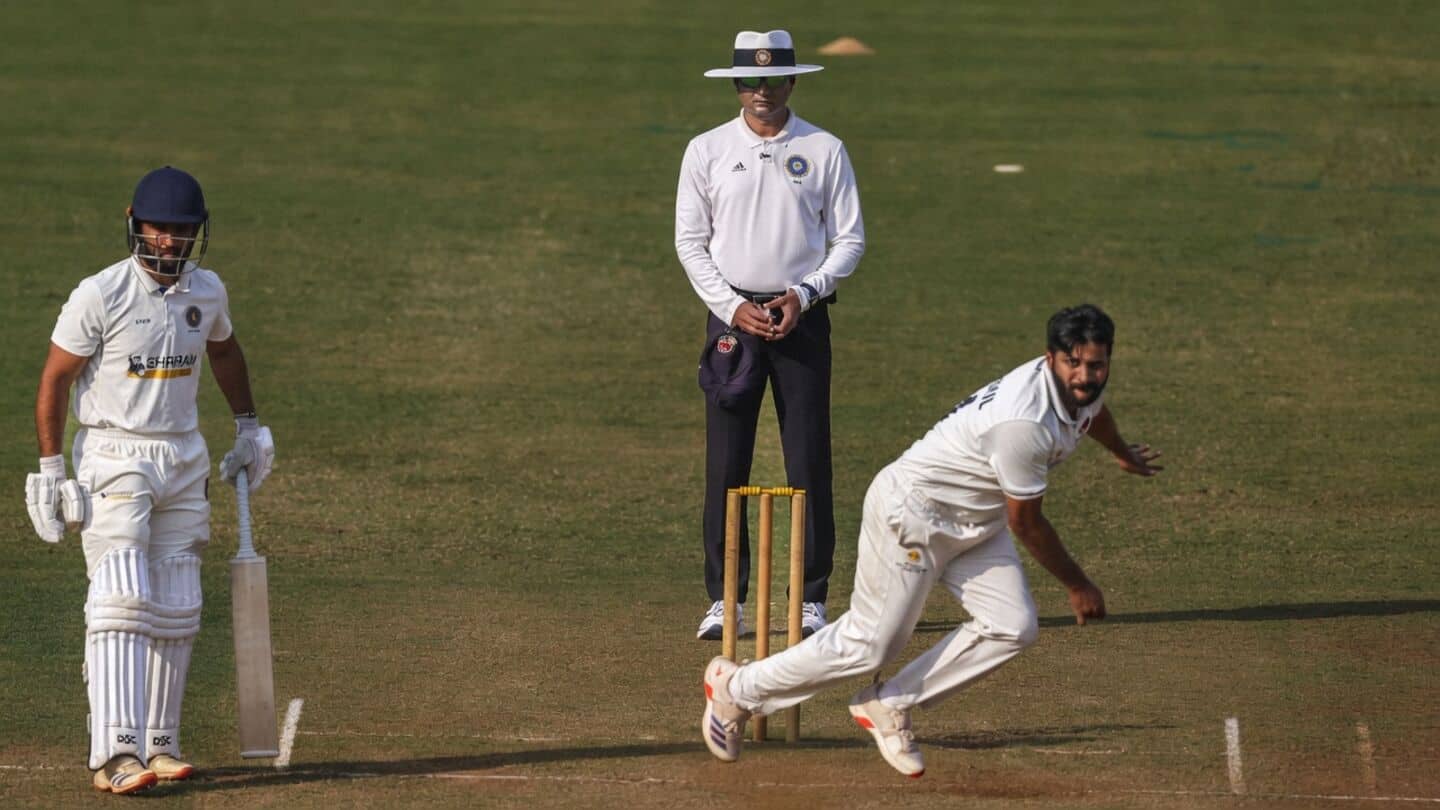
BCCI introduces major changes to domestic playing conditions: Details here
What's the story
The Board of Control for Cricket in India (BCCI) has announced a major overhaul of its domestic playing conditions. The new rules specifically target bowlers who intentionally deliver front-foot no-balls and non-landing (full toss) deliveries. Under the revised regulations, such bowlers will now be suspended for the entire match instead of just their innings, as was previously the case.
Rule change
Requirement to complete the last over of day's play
Another significant amendment is the requirement to complete the final over of a day's play, even if a wicket falls in multi-day competitions.
The change aims to stop batting teams from avoiding sending a new batter out late in the evening.
Earlier, the fall of a wicket during the last over could effectively end play for that day.
Positioning rule
Wicketkeeper's position during delivery
The BCCI has also adopted a new rule from the Marylebone Cricket Club (MCC) regarding the positioning of the wicketkeeper at the time of delivery.
According to this, instead of being fully behind the stumps from the moment the ball comes into play, they just need to be correctly positioned from the instant of delivery.
This change prevents wicketkeepers from being penalized for having their gloves slightly in front of stumps during bowler's run-up.
Overthrow clarification
Definition of an overthrow
The BCCI has also clarified the definition of an overthrow, now defined as a throw made with the intention of breaking stumps, preventing runs or effecting a run-out.
This change is aimed at aligning the law with "conventional thinking" on misfield versus overthrows.
The revised playing conditions will come into effect from August 1, two months ahead of MCC's Laws which are scheduled to take effect from October 1.
Crease marking
Additional crease marking for wides in ODIs and T20s
For limited-overs games, the BCCI has introduced an additional crease marking to judge leg-side wides in ODIs and T20s.
An extra line will be drawn on the leg side, which should be in a "clearly visible" color.
The guideline for judging wides has also been revised, removing the earlier wording that specifically referred to the off side.