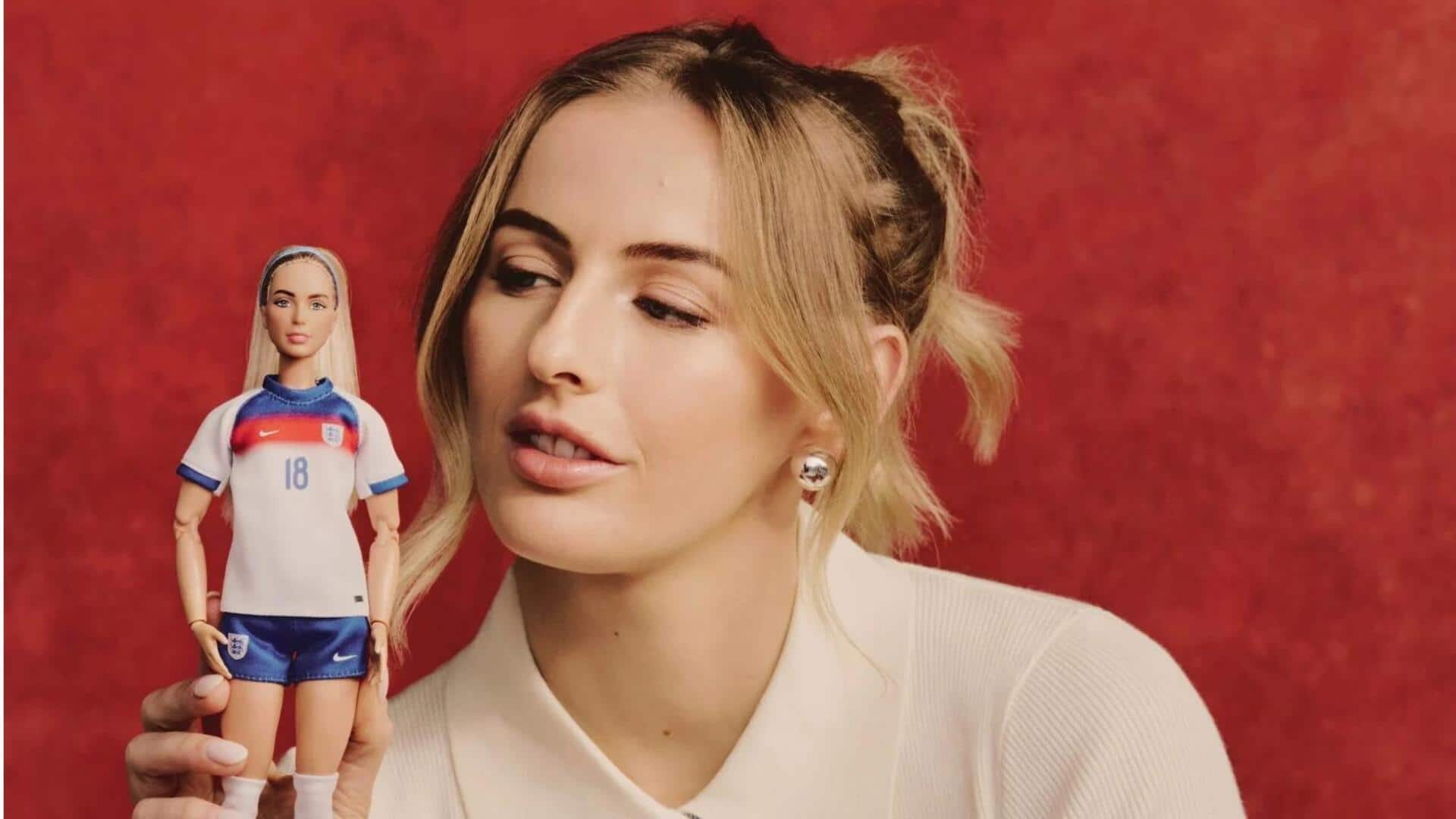
Barbie honors soccer player Chloe Kelly with a special doll
What's the story
Chloe Kelly, the forward for Arsenal and a key player in England's national women's football team, has been honored with her own Barbie doll. The move comes as part of the toy maker's initiative to celebrate women who have "brought their dreams to life" and "were the first to break boundaries." Kelly is recognized for her remarkable contributions in the field, including scoring the winning goal in UEFA Women's Euro 2022 and clinching a penalty in the 2025 Euro final.
Personal reflection
Kelly's thoughts on the campaign
Kelly expressed her pride at having a Barbie doll made in her likeness.
"To see a footballer with a Barbie doll shows that our sport is here to stay," she told CNN while shooting the campaign for Barbie in North London.
The move, she said, is "huge" as it highlights how they have inspired many on and off the pitch.
Design details
Doll dressed in England Lionesses kit
The Barbie doll of Kelly is dressed in the 2025 England Lionesses kit designed by Nike.
The home kit showcases a red-to-blue ombre stripe across the chest, paired with blue shorts featuring red and white side stripes, knee-high socks, and soccer cleats.
This design choice reflects Kelly's personal style which often alternates between high glamor and laidback pieces.
Cultural impact
Barbie's role model initiative
Barbie's role model initiative, which has been running for a decade, is part of Mattel's efforts to create a more inclusive reflection of the world.
The Kelly doll is part of this effort, expanding beyond a singular view of beauty.
Notably, Barbie has also created dolls of groundbreaking athletes like basketball player Sue Bird and tennis star Venus Williams to promote body positivity and strength.
Advocacy work
Kelly's advocacy for girls' grassroots soccer
Kelly, who made her professional debut at 17, has been an advocate for girls' grassroots soccer.
This is especially significant considering that women in the UK were once banned from playing football due to health concerns.
The 50-year ban lasted from 1921 to 1971, preventing women from playing professionally or recreationally in public parks and smaller venues.