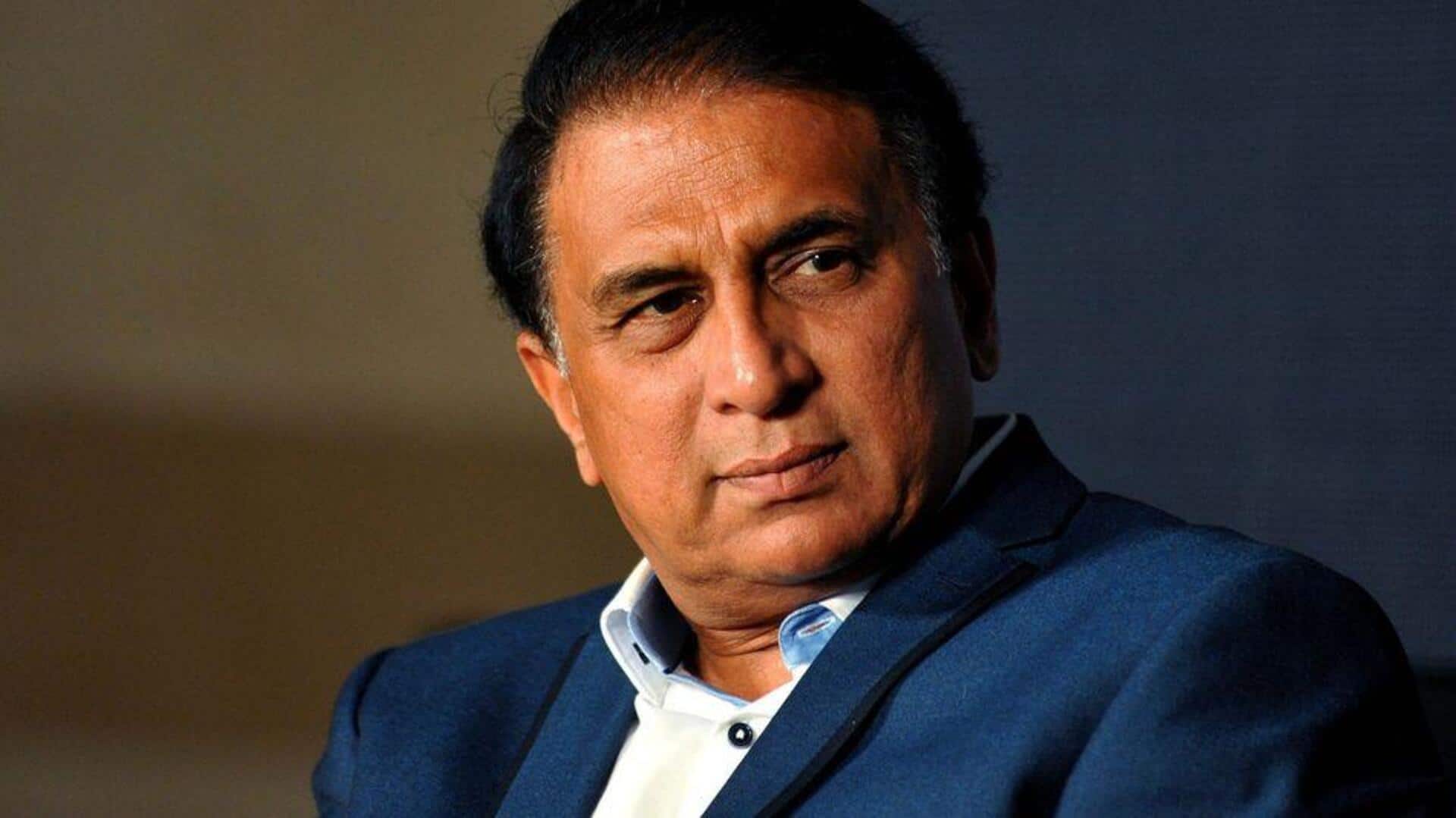
'Why bring this up...': Sunil Gavaskar defends T20 WC model
What's the story
Indian cricket legend Sunil Gavaskar has defended the International Cricket Council (ICC) against criticism over its pre-seeding model for the T20 World Cup 2026 Super 8 stage. The format has been widely criticized on social media, as it placed all four group winners into one pool and their respective runners-up into another. This arrangement has created a 'Group of Death' with top-performing teams competing against each other early on.
Critique timing
Why bring this up now? Gavaskar questions timing of criticism
Gavaskar questioned the timing of the criticism, asking why such concerns weren't raised before the tournament began.
"Why bring this up now? Why was this not brought up before the start of the tournament?" Gavaskar told India Today.
The former cricketer also highlighted that logistical challenges could be a reason for ICC's decision to pre-seed teams due to international travel and customs clearance issues.
Logistical challenges
Gavaskar highlights logistical complexities in organizing such a tournament
Gavaskar emphasized the logistical complexities involved in organizing such a tournament across two countries.
He said, "There's international travel, there's immigration, and there's customs, all those things to be taken care of."
The former cricketer also pointed out that not every team travels with the same number of people or support staff which further complicates hotel bookings and other arrangements.
ICC's stance
ICC defends pre-seeding model amid criticism
The ICC has defended its pre-seeding model as a logistical necessity, enabling broadcasters and organizers to finalize travel arrangements, venues, and "prime-time" match schedules months in advance.
However, the decision has drawn criticism for creating a competitive imbalance in the tournament.
In this edition, all four group winners (India, Zimbabwe, West Indies, and South Africa) have been placed in Group 1 while Group 2 comprises entirely of runners-up (Pakistan, Sri Lanka, England and New Zealand).