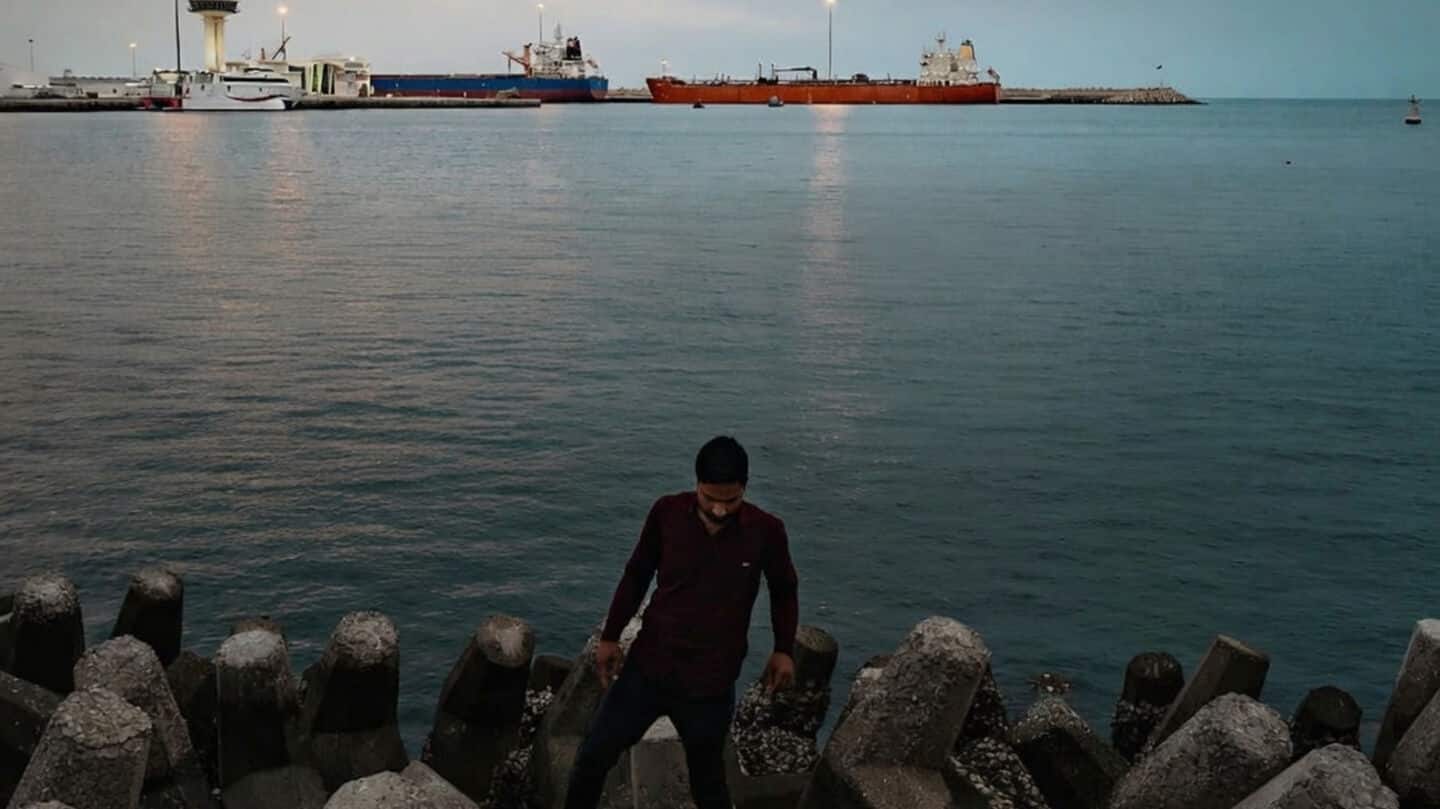
10 India-bound ships carrying crude, LPG stranded in Persian Gulf
What's the story
Ten foreign-flagged ships, carrying energy supplies headed for India, are stranded in the Persian Gulf, according to the government. This is in addition to at least 18 India-flagged ships that are stuck west of the Strait of Hormuz due to the ongoing conflict in West Asia. The vessels, carrying liquefied petroleum gas (LPG), crude oil, and liquefied natural gas (LNG), are among around 500 ships trapped in the narrow strait.
Official statement
Government taking measures for safe passage
Rajesh Kumar Sinha, special secretary in the Ministry of Ports, Shipping and Waterways, said at a media briefing that the government is focused on ensuring that Indian-flagged vessels carrying India-bound cargo can pass through the Strait of Hormuz.
Three of the 18 Indian-flagged vessels are LPG tankers, one is an LNG carrier, and four are crude oil tankers. He stated that one empty tanker is being loaded with LPG and that these ships are carrying 485 sailors.
Rising costs
Commercial premiums have skyrocketed since the war started
Commercial premiums have skyrocketed since the war started, with one case seeing a premium rise to 0.7% of the insured value from 0.04%.
The war began on February 28 when the US and Israel bombed Iran, triggering Iranian retaliation across the region and tightening access to this vital shipping route.
Despite these challenges, eight Indian-flagged vessels have safely crossed Hormuz so far.
Safe passage
Two LPG carriers among 8 vessels that crossed safely
Among the eight vessels that have crossed safely are two LPG carriers—BW TYR and BW ELM.
BW TYR is headed to Mumbai and is expected to arrive on March 31, while BW ELM is headed to New Mangalore with an expected arrival date of April 1.
India's energy security is under threat as around 40% of its crude oil and over 50% of LNG imports pass through Hormuz. The country relies heavily on these imports for its energy needs.