Asian students beat US peers as AI reshapes classroom learning
What's the story
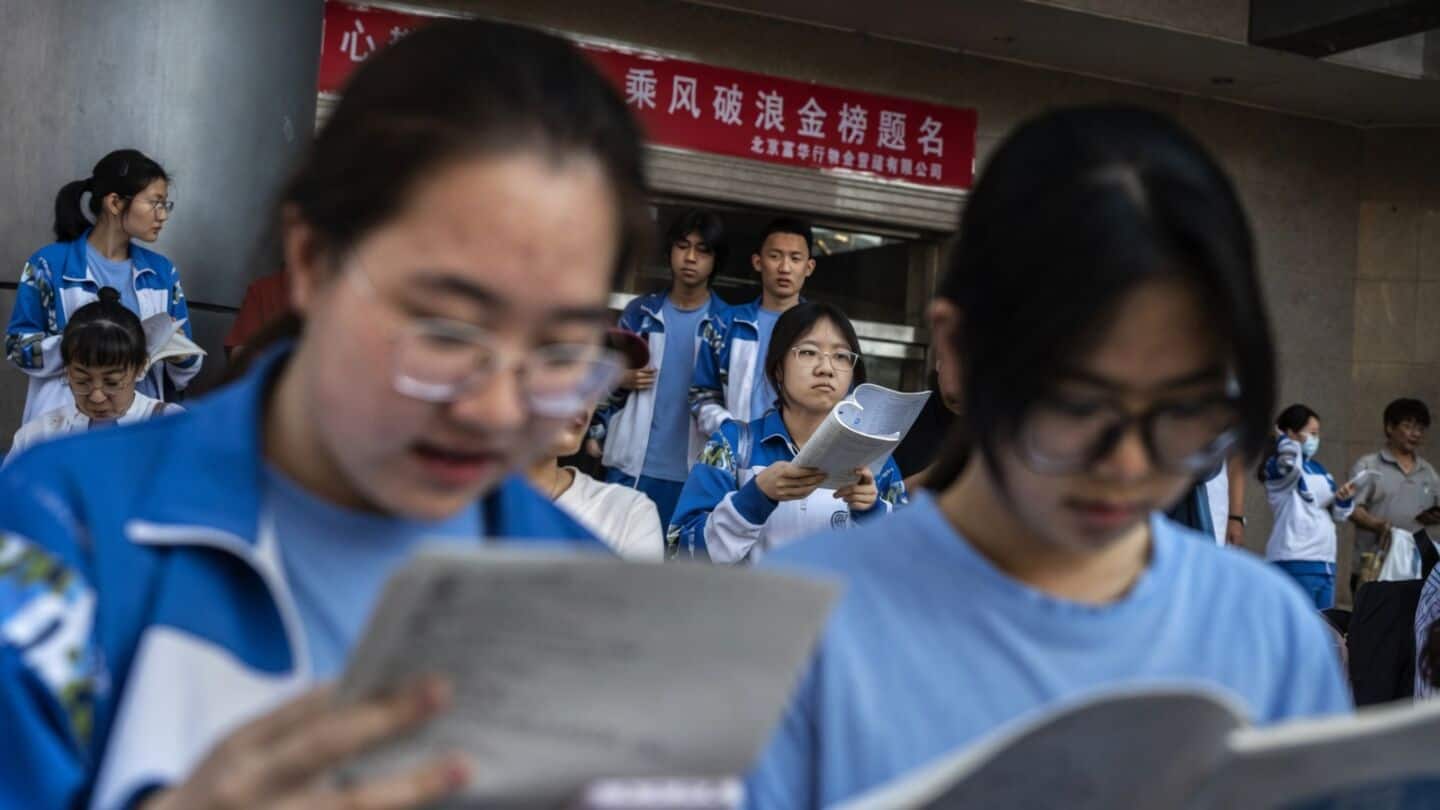
Asian high-school students have outperformed their Western counterparts in reading, science, and math, according to the 2025 Programme for International Student Assessment (PISA). The annual global assessment released by the Organisation for Economic Co-operation and Development (OECD) shows a worrying trend: a worldwide decline in these subjects among 15-year-olds. Leading the global rankings, students from Singapore and China's major economic hubs, including Beijing and Shanghai, secured the highest scores.
Performance gap
Reading scores of US students hit near 25-year low
The PISA results also show a significant decline in reading scores among US secondary students, reaching near 25-year lows.
This puts them further behind their Chinese counterparts from the four major jurisdictions that participated in the tests.
The exam results come as the US and China vie for technological supremacy, with both countries spending over $1 trillion on research in 2024.
Educational shift
AI's impact on education
The PISA report warns that the rise of artificial intelligence could have a major impact on secondary education.
Andreas Schleicher, OECD director for education and skills, highlighted a worrying decline in critical thinking skills necessary in the AI age.
He said students are less likely to think deeply and separate signal from noise due to information overload.
Distraction effect
Digital distraction in classrooms
The report also noted that student performance is becoming less linked with national or family wealth as technology progresses.
However, it highlighted digital distraction in classrooms as a challenge.
Less than 10% of students from China, Japan, and South Korea reported that their peers were distracted by digital devices during science lessons, compared to the global average of 28%.
Economic impact
Economic implications of declining student performance
The report also highlighted the economic implications of declining student performance.
A Stanford University study found that if all 15-year-old Americans met basic PISA standards, it could add over $40 trillion to the US economy over their working lives.
However, the percentage of OECD students below this baseline performance increased from 16% in 2022 to 20% last year.