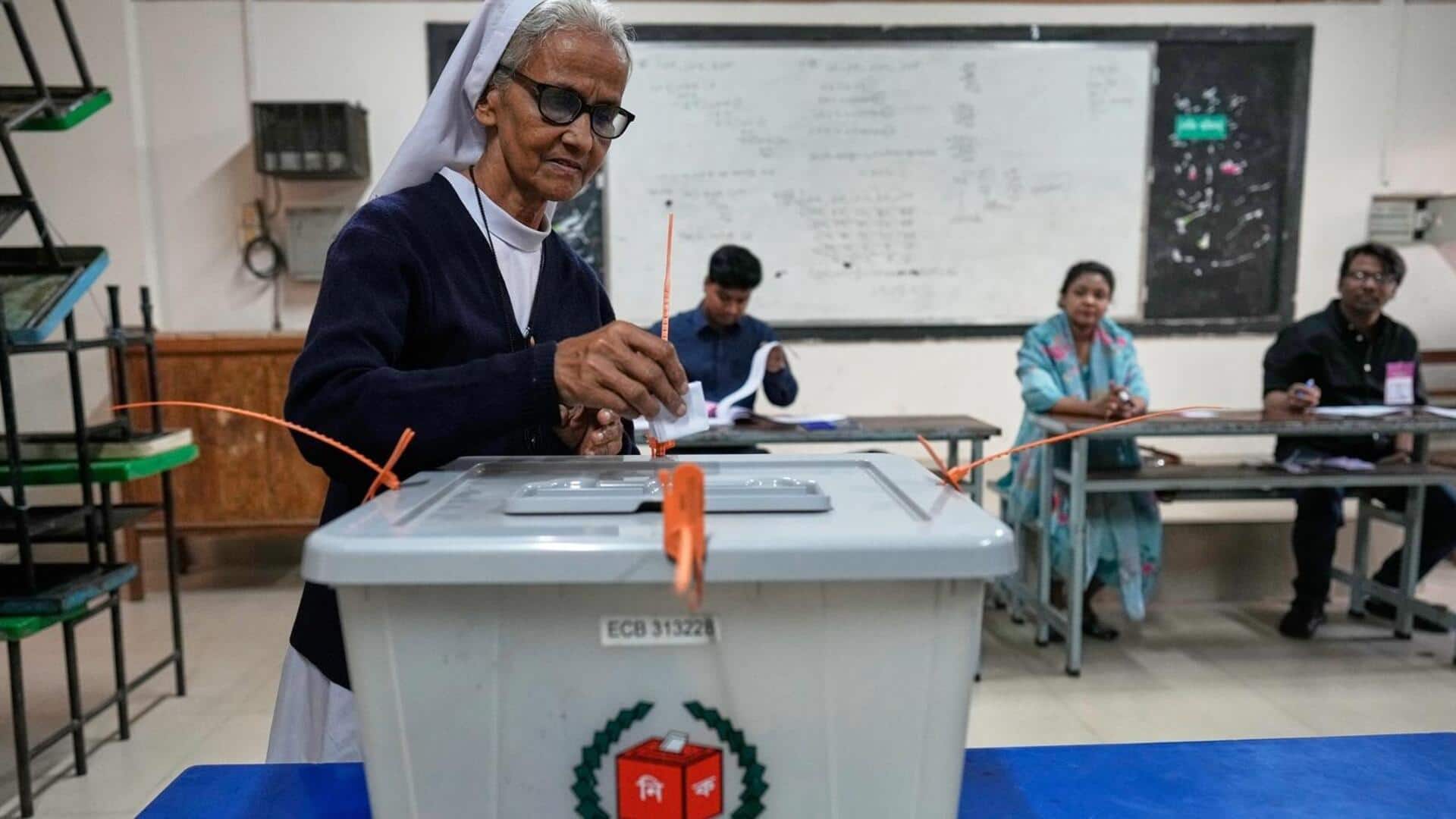
Bangladesh referendum: Voters back July Charter to replace 1972 constitution
What's the story
The Bangladesh National Party (BNP) and its allies won a two-thirds majority in the 2026 general election. Held on February 12, the election was accompanied by a constitutional referendum. The referendum sought approval for the "July National Charter (Constitutional Amendment) Implementation Order, 2025," which proposes major reforms, including a bicameral parliament and judicial independence.
Election results
BNP, Jamaat-e-Islami coalition win 212 seats
The BNP and its allies won 212 of the 299 parliamentary seats.
The Jamaat-e-Islami and its allies won 70 seats in the Jatiya Sangsad or House of the Nation.
The BNP's Tarique Rahman is expected to be sworn in as prime minister. He returned to Dhaka in December after an 18-year exile.
Referendum details
Constitutional referendum results awaited
The constitutional referendum proposed by the interim government led by Nobel laureate Muhammad Yunus asked voters if they approved the July National Charter 2025.
Reports suggest that a majority of voters supported the reform package, with some reports citing a 73% approval rate among nearly 296,000 counted votes.
However, no official results were available until Friday.
Reform proposals
Proposed reforms include bicameral parliament, judicial independence
The proposed reforms include the establishment of a bicameral parliament with an upper house of 100 seats allocated proportionally based on the vote shares of parties in the general election.
Constitutional amendments would need a two-thirds majority in the lower house and a majority vote in the upper house.
The reforms also reintroduce the caretaker government system and limit prime ministerial terms to two 10-year periods.
It proposes independent presidential powers for key institutional appointments and changes to judicial independence.
Core changes
New fundamental rights, administrative reforms proposed
The proposed amendments redefine core principles from Bengali nationalism to equality, human dignity, social justice, and religious freedom.
New fundamental rights include uninterrupted internet access and protection of personal information.
The charter also suggests administrative reforms, such as creating an independent Public Administration Reform Commission and restructuring the Public Service Commission into three bodies.
Criticism and implications
Political analysts warn of constitutional continuity end
Political analyst Iraj Ahmed described the package as described it as "uninformed" in public understanding and warned that if passed, these reforms could end Bangladesh's 55 years of constitutional continuity.
Prominent lawyer Tania Amir said the referendum risks "voiding our history."
The outcome will decide whether Bangladesh undergoes its most extensive constitutional transformation since adopting its original Constitution in 1972.