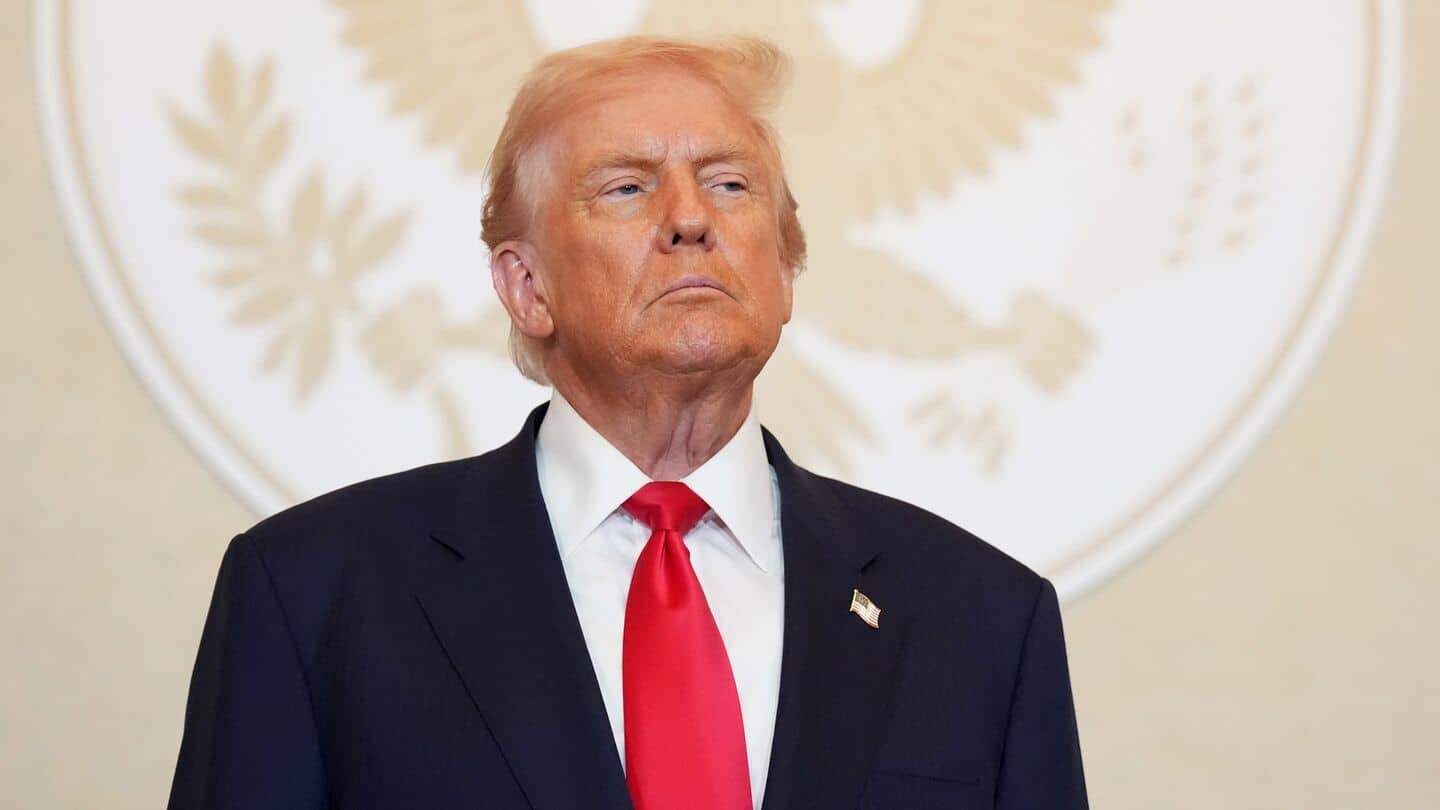
'Birthright citizenship meant for slave babies, not wealthy immigrants': Trump
What's the story
United States President Donald Trump has defended his executive order on birthright citizenship. In an interview with Politico, he argued that the original intent of birthright citizenship was for the children of slaves, not for wealthy immigrants. "That case was not meant for some rich person coming from another country, dropping ... putting a foot in our country, and all of a sudden their whole family becomes, you know, United States citizens," Trump said.
Trump
America cannot afford to house millions: Trump
Explaining the reason behind his move, he said America cannot afford to house millions who came in through birthright citizenship.
It "was meant for the...the babies of slaves, and if you look at the exact dates that it was passed, it all had to do with the Civil War and the ending of the Civil War," he said.
He added that it would be "devastating" if we lost the case, which is being reviewed by the Supreme Court.
Legal controversy
Trump's executive order sparks legal battles
In January 2025, Trump signed an executive order that ended birthright citizenship for US-born children of illegal immigrants and temporary visitors.
The decision led to a series of lawsuits, with several federal courts temporarily blocking the order.
However, in June, the Supreme Court ruled that federal district courts do not have jurisdiction to issue nationwide injunctions against such orders.
Upcoming ruling
Supreme Court to hear birthright citizenship case
On December 5, the Supreme Court agreed to hear an appeal on the matter. The court's decision is expected next summer.
The 14th Amendment has long been understood as granting citizenship to babies born in the United States.
However, the Trump administration has claimed that the provision does not grant citizenship to the children of immigrants who are in the country illegally or whose presence is legitimate but temporary, such as university students or work visa holders.
Constitutional provision
Birthright citizenship enshrined in 14th Amendment
The 14th Amendment's Citizenship Clause states that all "persons born or naturalized in the United States, and subject to the jurisdiction thereof, are citizens of the United States and of the state wherein they reside."
The amendment was ratified in 1868 following the Civil War of 1861-1865 that ended slavery in the United States.
The Trump administration has argued that the phrase "subject to the jurisdiction thereof" means that being born in the United States is not enough for citizenship.