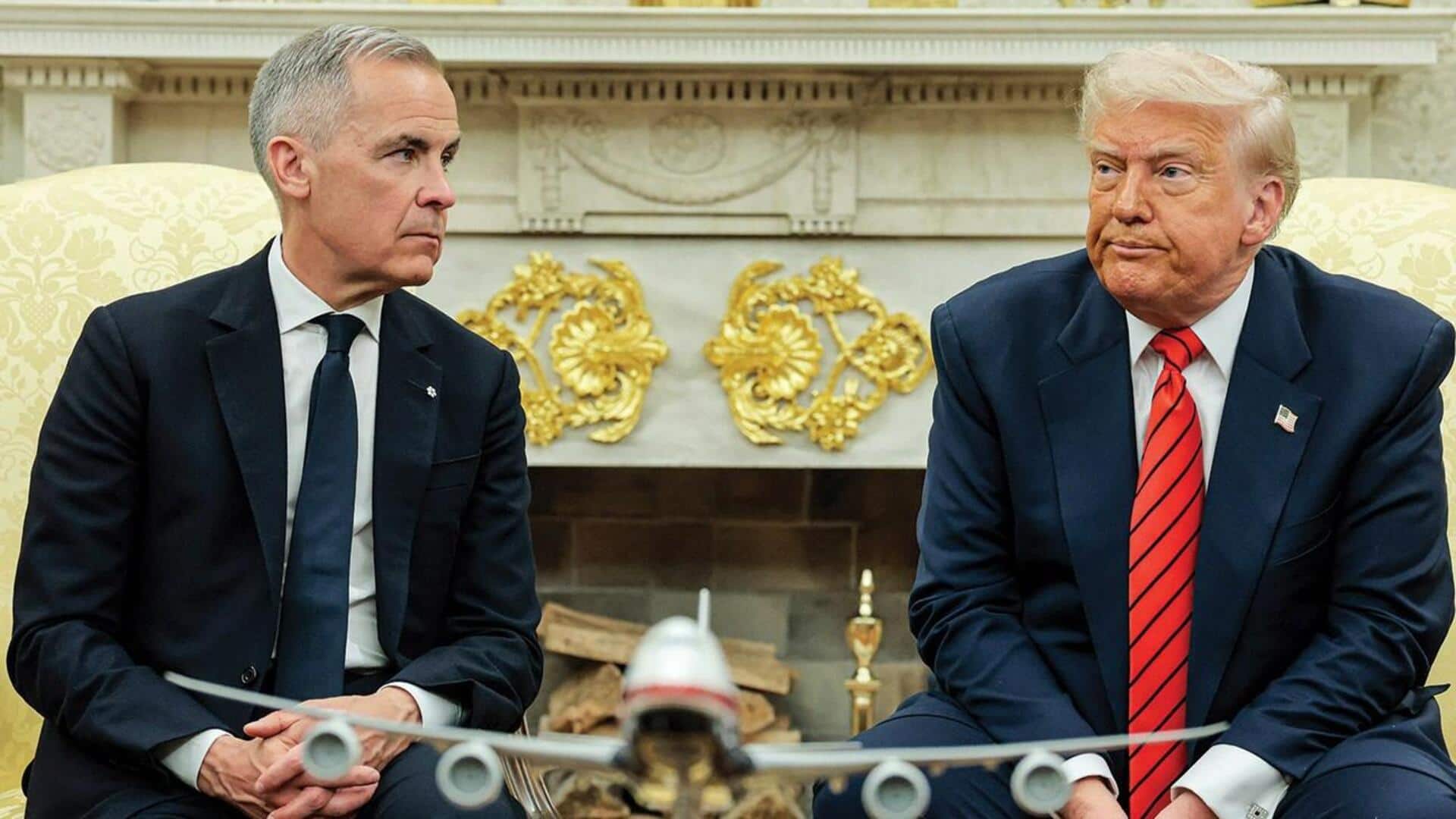
Canada retaliates against Trump with 50% tariffs on US goods
What's the story
In a tit-for-tat move, Canadian Prime Minister Mark Carney has announced a 50% tariff on United States (US) steel and aluminum products. The new tariffs will also apply to American-made milk, furniture, clothing, as well as electronics such as video game consoles and smartphones. The retaliatory measures are expected to hit $20 billion in annual US exports to Canada, closely mirroring the value of the tariffs the White House imposed on Canadian goods on Saturday.
Implementation date
Counter-tariffs to come into effect on September 8
The counter-tariffs will come into force on September 8.
This decision marks a departure from Carney's previous approach of lifting many counter-tariffs in a bid to improve relations with the US.
The move comes after trade talks between Canada and the US collapsed on Friday, with Canadian officials accusing their US counterparts of trying to destroy key Canadian industries.
Trade criticism
Canada rejects US's trade proposals
Finance Minister Francois-Philippe Champagne slammed the US's trade proposals as "uneconomic, unfair, and ultimately unacceptable."
He said they asked too much from Canada while offering too little in return.
US goods, including appliances, cheese, seafood, and specific steel and aluminum derivatives, will incur a 25% tariff at the Canadian border.
Meanwhile, a 15% duty will apply to a variety of American-made machinery, industrial tools, and agricultural equipment.
Economic support
Canadian government announces support measures for businesses
The Canadian government has also announced a C$7.5 billion package of support measures for businesses affected by the US tariffs.
These include liquidity support for small- and medium-sized enterprises and grants to accelerate projects impacted by US tariffs.
The Business Development Bank of Canada will provide C$500 million in loans to help smaller firms cope with cash flow issues due to the tariffs.
Buy local
Canada urges consumers to buy local products
Canadian officials have urged consumers to buy local products as a way to support domestic industries.
Industry Minister Melanie Joly emphasized that choosing Canadian products not only pressures the US but also protects jobs in Canada.
The new tariffs are expected to hit hardest on firms shipping products from states such as Ohio, Illinois, Pennsylvania, Michigan, and California.