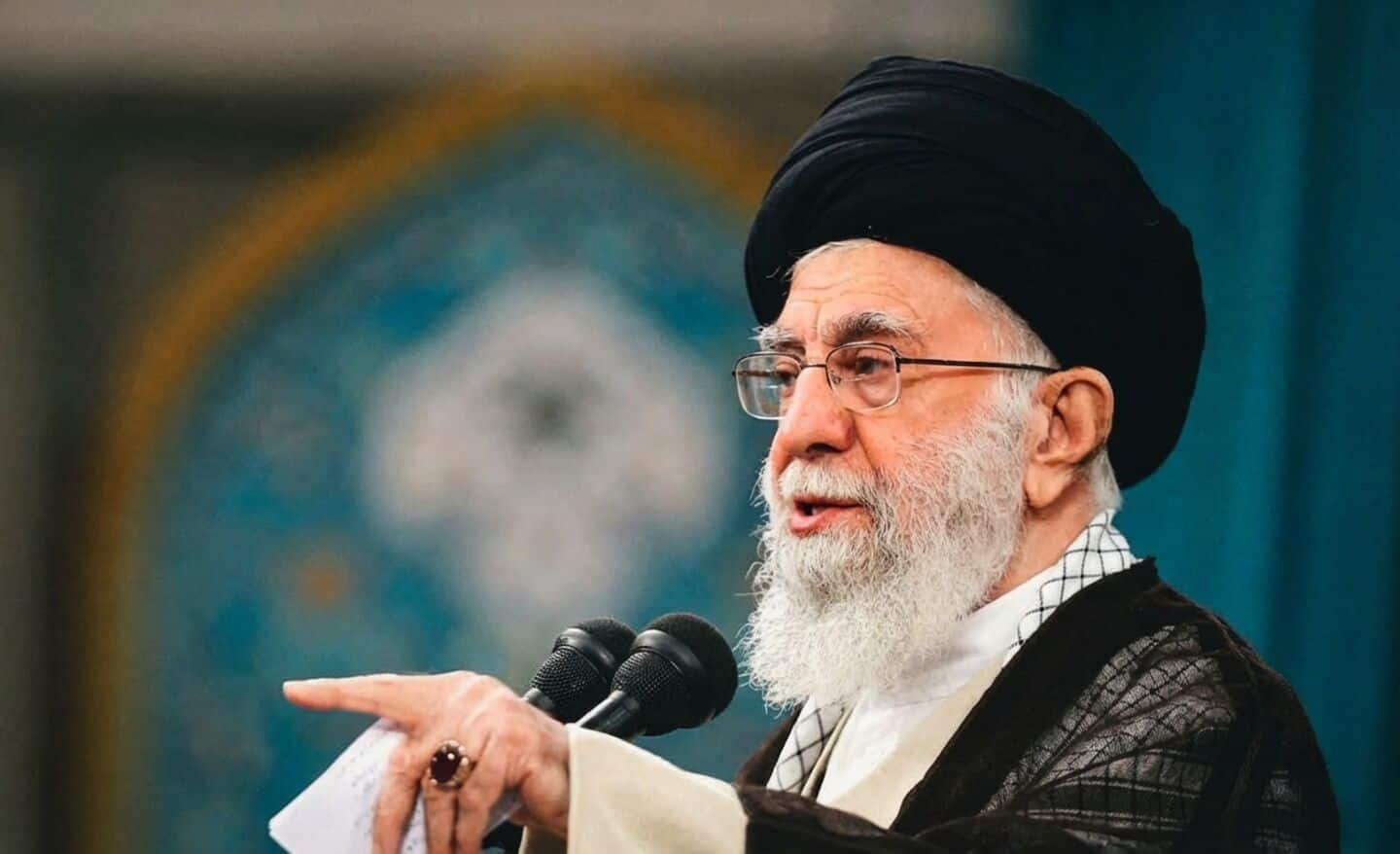
Doubted, then feared: How Ali Khamenei rose to rule Iran
What's the story
Ayatollah Ali Khamenei, the Supreme Leader of Iran, has been a controversial figure since he succeeded the charismatic Ayatollah Ruhollah Khomeini in 1989. Early in his rule, many dismissed him as an unlikely successor due to his lack of religious authority and perceived weakness. However, over time, he has consolidated power through a loyal security apparatus and a vast financial empire.
Power dynamics
Khamenei's rise to power
Khamenei's rise to power was aided by his control over the Islamic Revolutionary Guard Corps (IRGC) and Basij paramilitary force, which he has used to crush dissent.
He also controls a vast financial empire called Setad, worth tens of billions of dollars.
Despite his ideological rigidity, Khamenei has shown a willingness to make tactical compromises when necessary for the survival of the Islamic Republic.
Strategic flexibility
Recent airstrikes and deadly crackdown on protests
Khamenei has faced foreign pressure before, but his refusal to discuss giving up Iran's ballistic missiles may have invited recent airstrikes.
He has also ordered a deadly crackdown on protests this year, showing no tolerance for dissent.
Despite these challenges, Khamenei has remained firmly in control of Iran's complex clerical system, where no major policy moves happen without his approval.
Ideological flexibility
Ideological rigidity and tactical compromises
Khamenei's ideological rigidity is evident in his distrust of the West, especially the US.
He has blamed US President Donald Trump for unrest in Iran and accused America of seeking to topple him.
However, he has also shown a willingness to make tactical compromises.
This was evident when he cautiously endorsed Iran's 2015 nuclear deal with six world powers, calculating that sanctions relief was needed to stabilize the economy and strengthen his grip on power.
Power evolution
Khamenei's transformation over the years
Khamenei's rise from a weak president to one of the five most powerful Iranians in recent history is a testament to his political acumen and ruthlessness.
News agency Reuters quoted Karim Sadjadpour at the Carnegie Endowment for International Peace, who aptly described this transformation as an "accident of history."
Despite lacking Khomeini's popular appeal and clerical credentials, Khamenei has become a master of Iran's complex system of clerical rule combined with limited democracy.