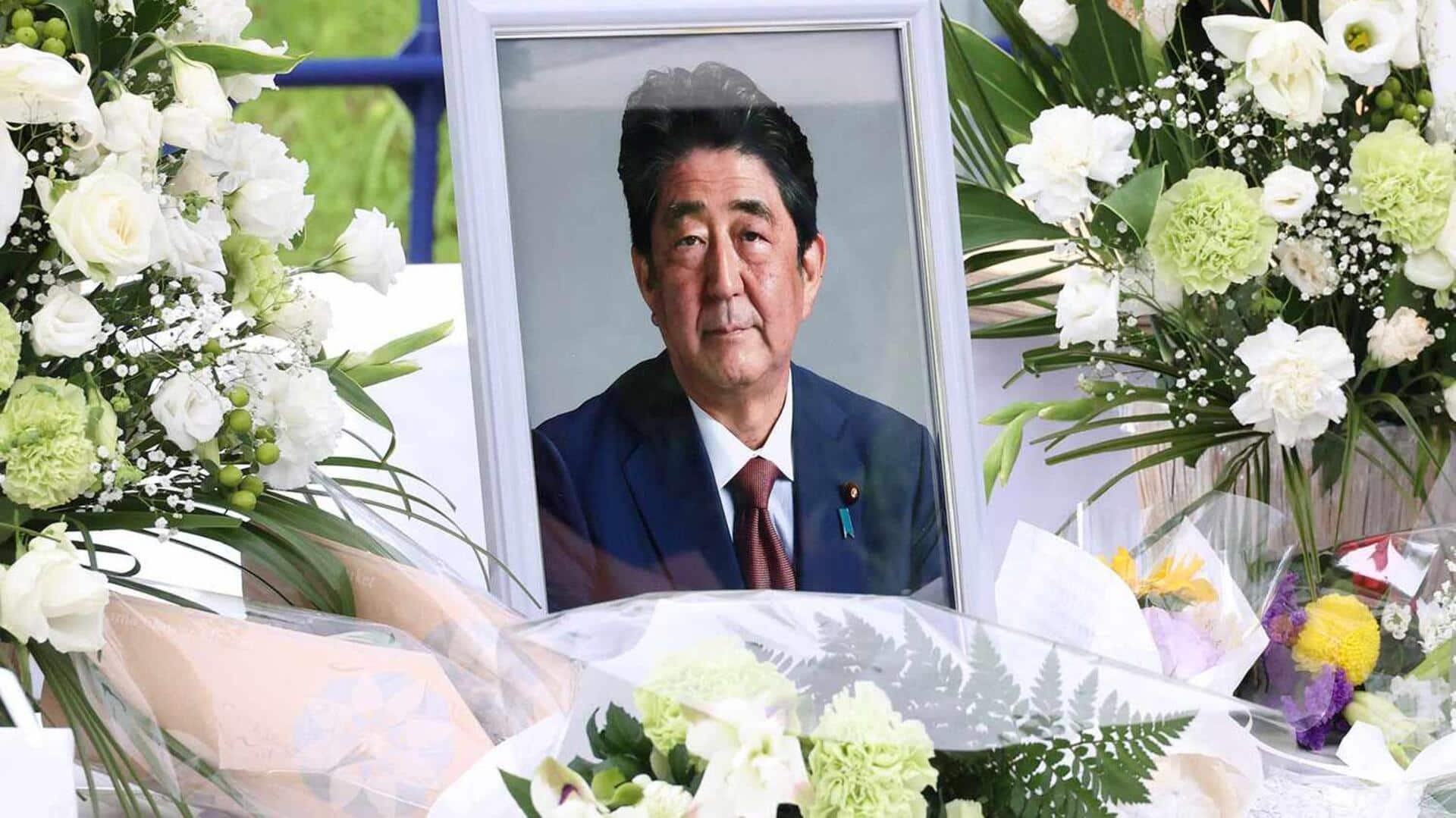
Man who assassinated Japan's ex-PM Shinzo Abe sentenced to life
What's the story
Tetsuya Yamagami, the man who assassinated former Japanese Prime Minister Shinzo Abe, has been sentenced to life in prison. The assassination took place in 2022 when Yamagami shot Abe with a homemade gun while he was giving a campaign speech in Nara city. According to the Japan Times, the Nara District Court's ruling was in line with the sentence that prosecutors had demanded.
Political impact
Abe's political legacy and its aftermath
Abe, who resigned in 2020 due to health reasons, was Japan's longest-serving prime minister. His assassination sent shockwaves through a nation with one of the lowest gun crime rates in the world. The incident also put a spotlight on the alleged ties between Abe and the Unification Church, which Yamagami blamed for his family's financial ruin through excessive donations from his mother.
Sect scrutiny
Unification Church's alleged role in Abe's assassination
He claimed he targeted Abe because he thought the former leader was involved with the church, which is based in South Korea. A government probe later found the church had violated Japanese laws by pressuring followers for large donations. This led to a court ordering the dissolution of the church last March, a decision that is currently under appeal.
Sect history
Unification Church's history and its impact on Japanese politics
The Unification Church, officially known as the Family Federation for World Peace and Unification, gained prominence in the late 1950s and became a worldwide organization by the 1980s. It is known for its mass weddings, where thousands of couples marry simultaneously. The church's alleged ties with Abe's Liberal Democratic Party (LDP) have led to public backlash against the party after an investigation revealed over half of its lawmakers had connections with the church.