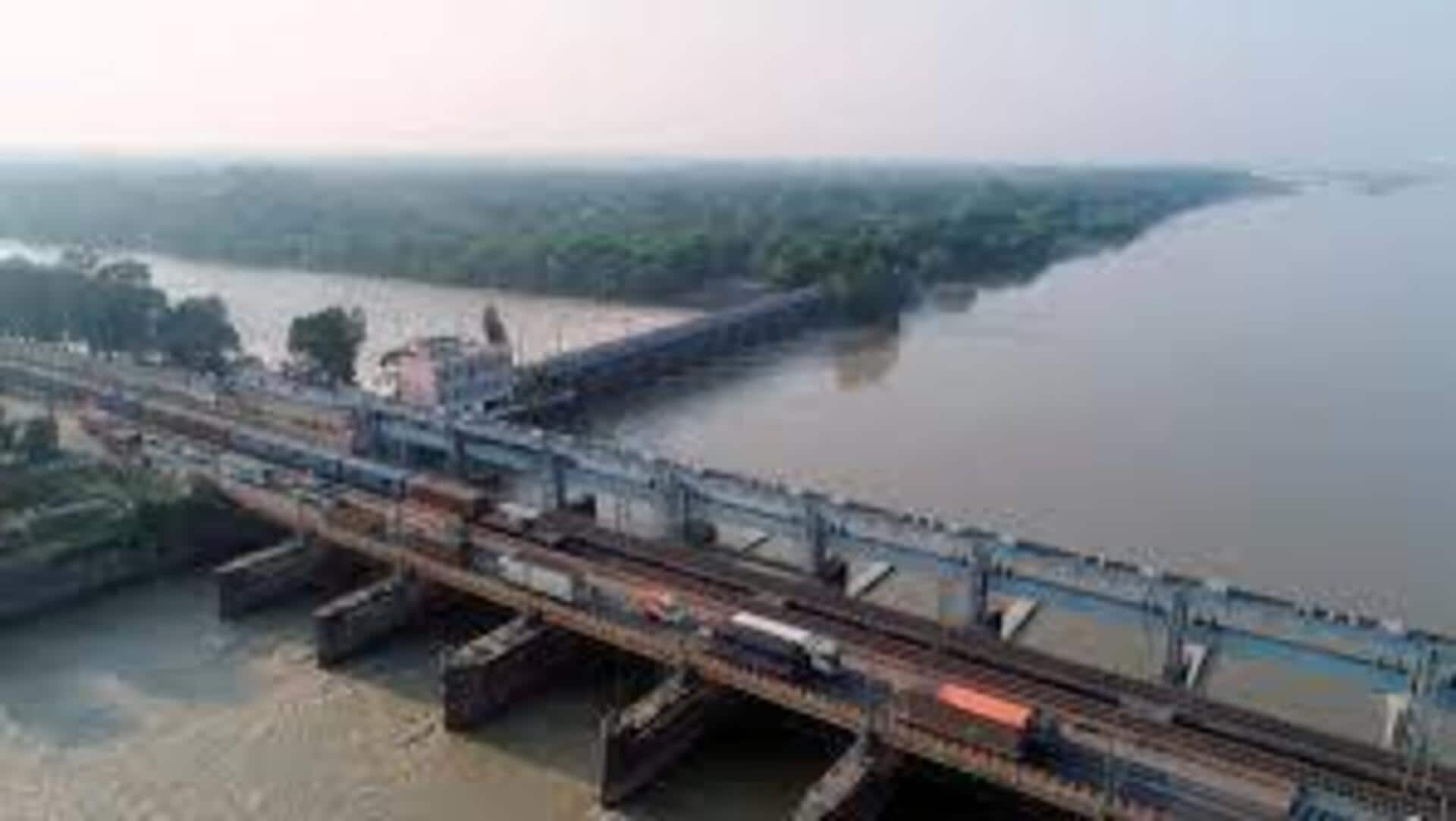
Bangladesh plans new barrage on Padma as Farrakka talks stall
What's the story
The Bangladesh Water Development Board (BWDB) is set to launch the long-awaited Padma Barrage project, with an estimated cost of 50,443.64 crore Taka (₹37,895 crore). The move comes as talks between India and Bangladesh over the renewal of the Farakka Water Treaty have stalled. The treaty, signed in 1996 for sharing the Ganga River water, is due for renewal in 2026, but has been slow amid diplomatic tensions between the two nations.
Water disputes
Bangladesh's water flow issues and treaty negotiations
The Padma River in Bangladesh is a distributary of the Ganga River.
Bangladesh has accused India of disrupting water flow in the Padma River through the Farakka Barrage.
The BWDB's documents show a significant drop in water flow in Bangladesh's southwest since the barrage started operating.
Under the existing treaty, both countries share river flow from January 1 to May 31 every year, but strained ties have complicated renegotiations.
Political response
Bangladesh Nationalist Party's stance on water issues
Bangladesh Nationalist Party Chairman Tarique Rahman has also addressed unresolved water problems at a recent rally.
He promised to revive canal construction if elected, saying, "Not Dilli, Not Pindi, No Other Country, Bangladesh Comes First."
The Padma Barrage is expected to help store monsoon season water and provide a year-round supply across Bangladesh's southwest and northwest regions.
Infrastructure development
Bangladesh's plans for water system restoration
The interim government of Muhammad Yunus is financing the project domestically, with foreign loans to be considered later.
The project aims to restore degraded water systems during dry seasons and supply water to seven to eight rivers.
China is also working with Bangladesh on the Teesta Master Plan, which has drawn India's attention due to its proximity to strategic areas near the Siliguri corridor.