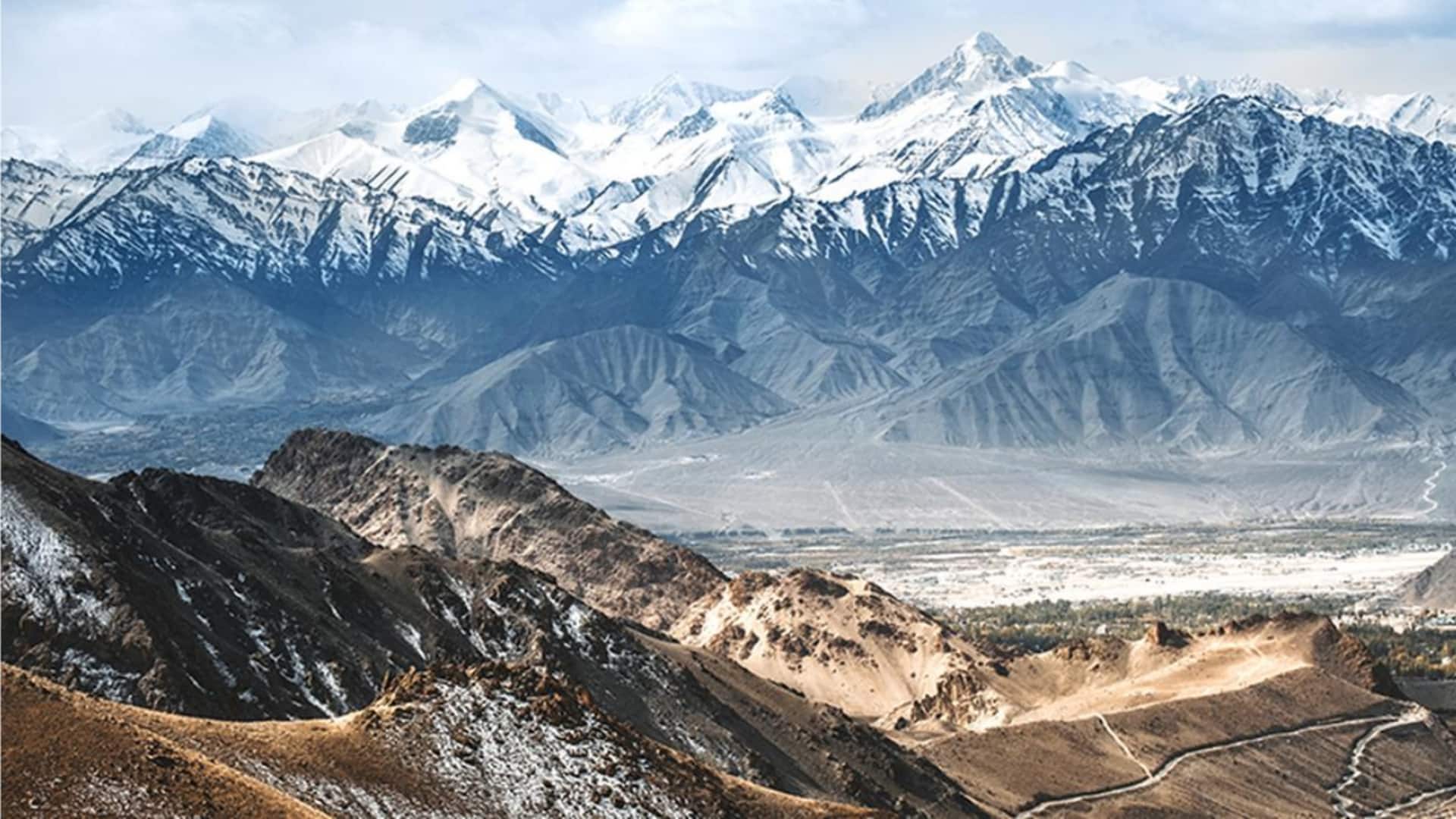
Himalayan snow hits 24-year low, threatening 2 billion people's water
What's the story
Snow cover across the Hindu Kush Himalaya (HKH) has dropped to its lowest level in over two decades, a new report has revealed. The HKH, which stretches from Afghanistan to Myanmar, is often referred to as Asia's water tower. The International Centre for Integrated Mountain Development (ICIMOD) released the HKH Snow Update 2026, which found that snow persistence from November 2025 to March 2026 was 27.8% below the long-term average, indicating a water crisis that affects around two billion people.
Water source
Mekong basin recorded largest decrease
Seasonal snow is a crucial water reservoir, supplying nearly one-fourth of the annual runoff across 12 major river basins in the HKH.
These river systems are vital for irrigation, hydropower generation, and drinking water supply from Kabul to Kolkata.
The Mekong basin witnessed the largest decrease at 59.5% below normal levels, while the Tibetan Plateau recorded a deficit of 47.4%.
Regional impact
Ganges basin recorded above normal levels
The Ganges basin, however, recorded snow persistence at a level of 16.3% above normal this winter.
This significant deviation suggests that the region has been subject to unusual climatic conditions, resulting in prolonged snowfall that exceeds the typical patterns observed in previous winters.
This provides temporary relief to parts of north India. But this is the fourth consecutive winter with below-normal snowfall in the region.
Since 2003, there have been 14 such winters with similar shortfalls.
Climate change
Glaciers melting at alarming rate
Glaciers in the region are now melting at nearly double the rate they were before 2000. This raises concerns about prolonged dry summers across the wider region.
Scientists are calling for improved early warning systems and better coordination between sectors to prevent worsening water shortages and over-extraction of groundwater resources.