India warns against non-essential Iran travel as protests intensify
What's the story
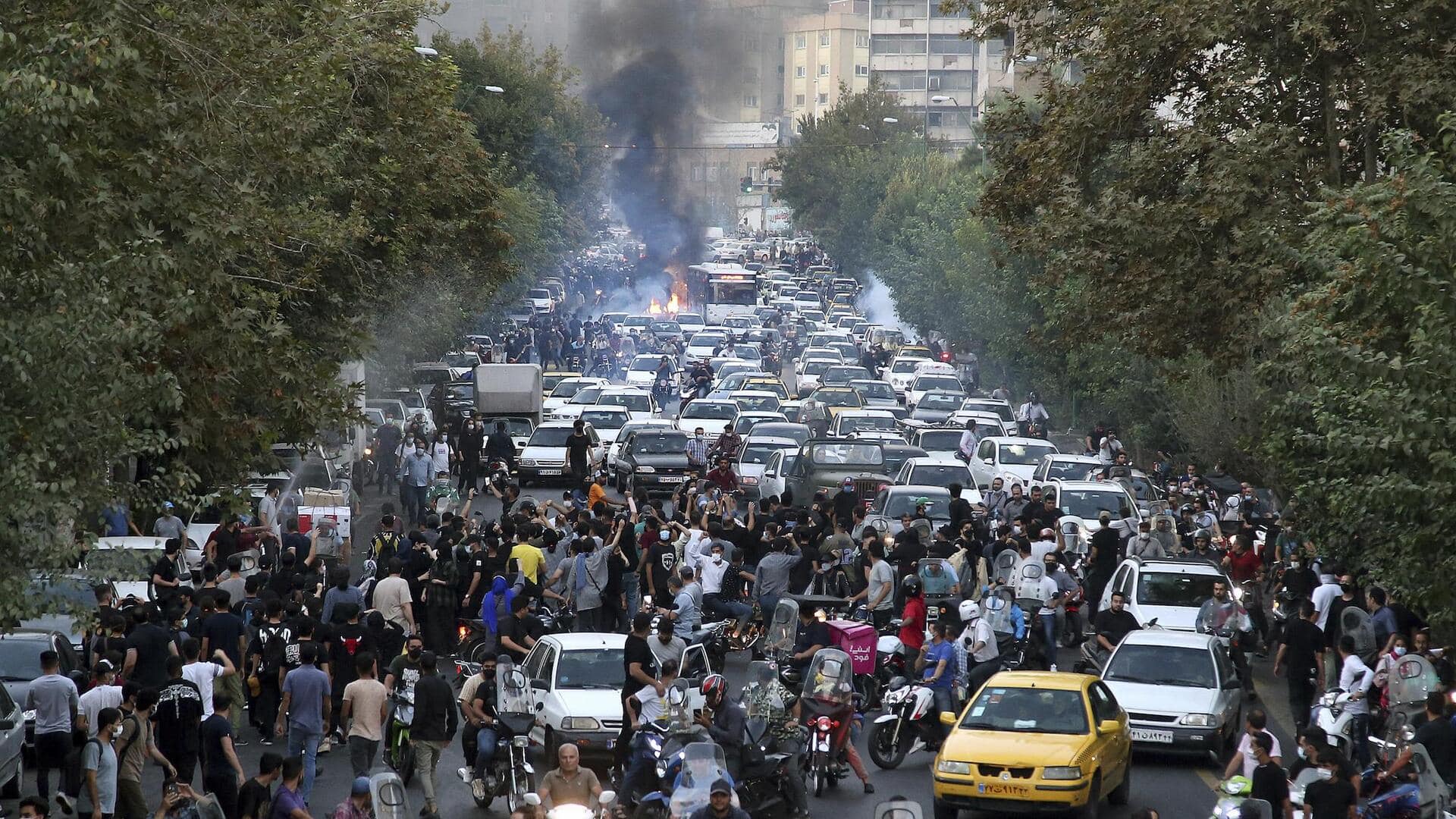
The Indian government has issued a travel advisory for its citizens against non-essential travel to the Islamic Republic of Iran. The Ministry of External Affairs (MEA) said in a statement, "In view of recent developments, Indian nationals are advised to avoid non-essential travel to the Islamic Republic of Iran until further notice." Iran is witnessing widespread protests, which were initially sparked by frustration over skyrocketing inflation (48.6% in October), rising cost of living, and severe depreciation of the Iranian rial.
Advisory specifics
Advisory details and safety precautions for Indians in Iran
In this regard, the MEA advisory also asked Indian citizens in Iran to stay away from protest sites and keep themselves updated with news.
"Indian citizens and PIOs currently in Iran should exercise due caution, avoid areas of protests or demonstrations, and closely monitor news as well as the website and social media handles of the Embassy of India in Tehran," it said.
Registration advice
Indian nationals in Iran advised to register with embassy
The advisory also asked Indian nationals living in Iran on resident visas to register with the Indian Embassy if they haven't done so already. This is a precautionary measure amid the ongoing unrest in the country.
While the protests that erupted on December 28 were initially triggered by economic grievances, they have since taken a political turn as well, with media reports stating that it has been assimilated into a broader movement demanding an end to the Islamic Republic's rule.
Twitter Post
Advisory issued by MEA spokesperson
Travel Advisory for Iran ⬇️
— Randhir Jaiswal (@MEAIndia) January 5, 2026
🔗 https://t.co/O92nERv37c pic.twitter.com/kSmSpDqbOj
Leadership response
Supreme Leader addresses protests, acknowledges economic challenges
Iran's Supreme Leader Ayatollah Ali Khamenei has also addressed the protests. He acknowledged economic challenges but warned against letting protests turn into widespread unrest.
"We talk to protesters; the officials must talk to them. But there is no benefit to talking to rioters. Rioters must be put in their place," he said.
Official reports state that the unrest has led to at least 12 deaths in clashes since December 30, including security personnel.
Economic impact
Economic pressures and international reactions to Iranian protests
Iran's economy, which has been under strict international sanctions, is also facing pressure.
Iran's currency, rial, has lost over a third of its value against the US dollar in the past year, and inflation remains high, with rial being exchanged at 42,125 against the US dollar.
To ease economic pressures, the government announced an allowance, equivalent to about 3.5% of the average monthly wage, for every citizen.
US reaction
Trump warns Iranian regime
The protests have drawn international attention, with US President Donald Trump warning Iran that it could face severe consequences if it continues suppressing demonstrators.
"If they start killing people like they have in the past, I think they're going to get hit very hard by the United States," he said on Sunday, stressing that Washington is monitoring the situation "very closely."
Regime backlash
US human rights body claims contest official death toll
The US-based news agency, Human Rights Activists News Agency (HRANA), affiliated with the non-governmental organization, Human Rights Activists in Iran, has claimed that the ongoing protests have left at least 35 people dead, contradicting official figures.
It also asserted that 1,200 people have been detained amid the unrest. According to the report, the protests have spread to over 250 locations across 27 provinces.