'We only defended ourselves': Iran hits out at 'bully' Trump
What's the story
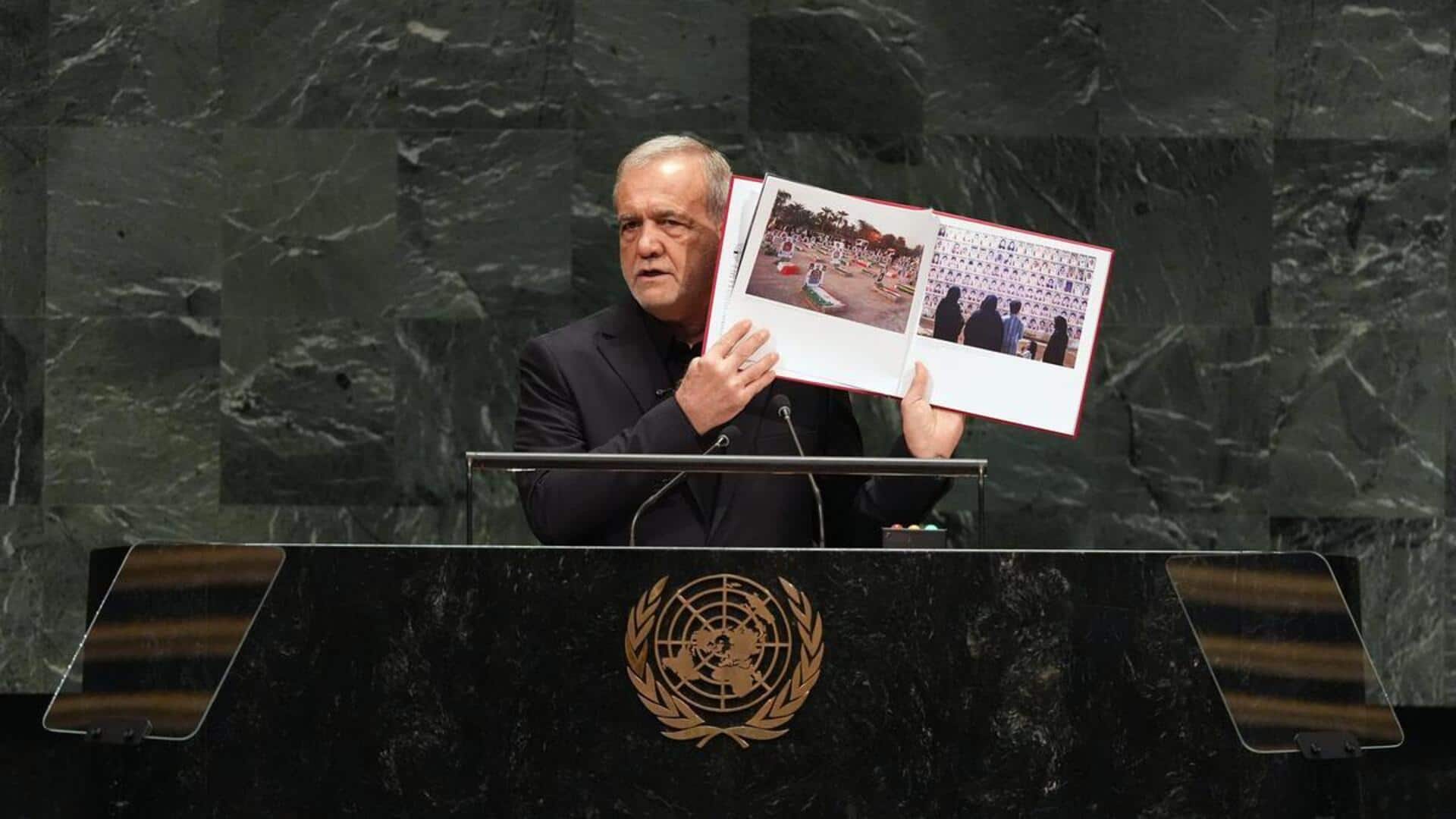
Iranian President Masoud Pezeshkian strongly criticized President Donald Trump's characterization of Iran as a source of terrorism at the United Nations General Assembly on Wednesday, saying instead that Iranians are "victims of terrorism." "We have been the victims of terrorism... Those who are terrorists and train and protect terrorists describe us as such. We have only defended ourselves. We are not terrorists," he said.
Diplomatic developments
Surprise meeting between Iranian and US officials
Pezeshkian's speech came after a surprise meeting between Iranian Foreign Minister Abbas Araghchi and US special envoy Steve Witkoff on the sidelines of the assembly the same day Trump threatened to "annihliate" Iran.
The meeting was seen as constructive but did not prevent the US delegation from leaving as Pezeshkian began his address.
He did not elaborate on these talks but focused on garnering support for proposals Tehran has drawn up for the future of the Strait of Hormuz.
Security concerns
Regional security should be settled within the region: Pezeshkian
Pezeshkian made it plain that Iran will not tolerate the strait being exploited to transfer weapons that could then be used against them, as he accused Washington of terrorism for the assassination of Supreme Leader Ayatollah Ali Khamenei.
He displayed images of the deceased leader and the 150 pupils murdered in Minab before claiming that Tehran had never started a war.
A recent UN report found "reasonable grounds to believe" the US committed a war crime in this attack.
Iran
'Israel kills, but Iran is sanctioned'
Pezeshkian, insisting that Iran was the real victim of terrorism, questioned why "Israel kills, but Iran is sanctioned." He said, "They kill, we are sanctioned. Iran did not seek special treatment but wanted equal rights."
At the same time, he hinted at willingness to talk, saying, "It must be understood by President Trump and those who seek to bully us that we are ready for dialogue and diplomacy and negotiations but without the language of force."
Negotiation terms
Talks took place through Qatari mediation
On Tuesday, US and Iranian officials held three hours of indirect talks at the UN.
President Trump called the meeting "very productive," hinting that a deal could be possible.
Iran's foreign ministry spokesperson confirmed that talks had taken place through Qatari mediation.
He said, "This interaction was aimed at conveying Iran's conditions, including the end of the war in all its dimensions, the cessation of American aggressive actions, the naval siege, and the economic war, the release of Iranian assets."
Economic impact
US under pressure to bring down oil prices
Iran has set seven preconditions for returning to talks and hinted that the Strait of Hormuz could be reopened within a week if these conditions are met.
The US is under pressure to bring down oil prices ahead of midterm elections.
The blockade in the Strait of Hormuz is compounded by uncertainty over Houthi control of the Bab al-Mandab strait.