
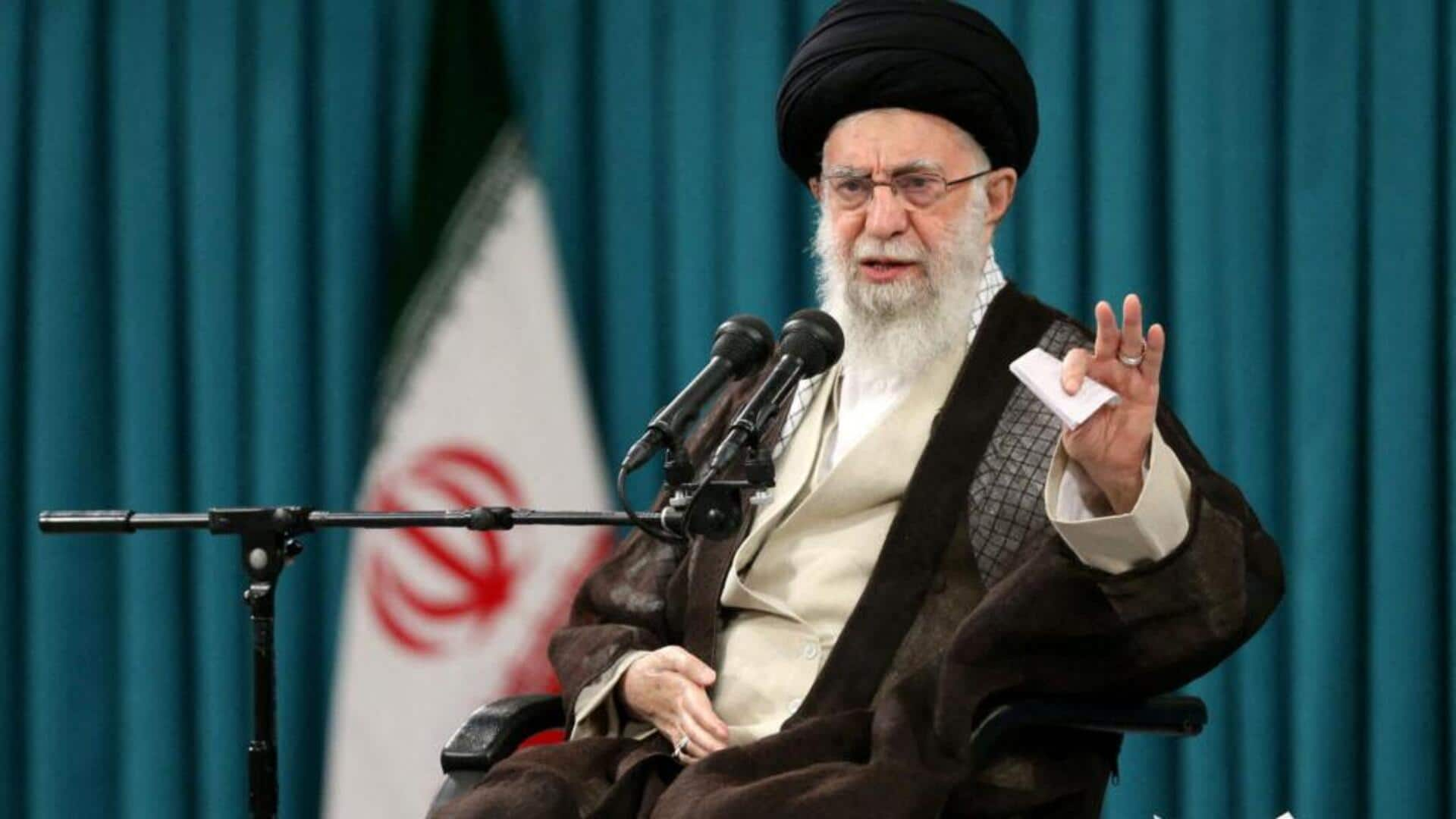
'Iran won't back down': Khamenei warns protesters, foreign powers
What's the story
Iran's Supreme Leader Ayatollah Ali Khamenei has warned that the Islamic Republic will not back down in the face of protests. "Everyone should know that the Islamic Republic will not retreat," he said, adding it would not tolerate actions on behalf of foreign powers. His remarks were aired on state television and came after Iranian authorities shut down the internet.
Khamenei
Iranian state media breaks silence
Khamenei accused the demonstrators of acting on behalf of US President Donald Trump, accusing them of damaging public property and warning that Tehran would not allow "mercenaries for foreigners." He accused Trump of having hands "stained with the blood" of Iranians. Iranian state media also broke its silence on the protests on Friday, claiming "terrorist agents" of the United States and Israel had ignited fires and sparked violence. It also stated that there were "casualties," but did not elaborate.
Protest escalation
Protests intensify in Iran amid internet blackout
The internet blackout came as calls for more protests were issued by Reza Pahlavi, the exiled son of Iran's last shah. In videos, protesters were seen calling for the overthrow of Khamenei and the return of Pahlavi. Chants of "Long live the shah" and "This is the final battle! Pahlavi will return" was also heard. He was scheduled to attend a breakfast prayer at Trump's Mar-a-Lago next Tuesday but Trump indicated that he wouldn't do so at this time.
Unrest toll
Casualties and arrests reported amid unrest
The Human Rights Activists News Agency has reported at least 34 protesters and four security personnel have died in the unrest. Over 2,200 people have been arrested during this period. Iranian president Masoud Pezeshkian on Thursday called for restraint in how the demonstrations are handled. "Any violent or coercive behavior should be avoided," said Pezeshkian, urging "utmost restraint" as well as "dialogue, engagement and listening to the people's demands."