Iran vows 'ferocious offensive operation' after Khamenei's death in attack
What's the story
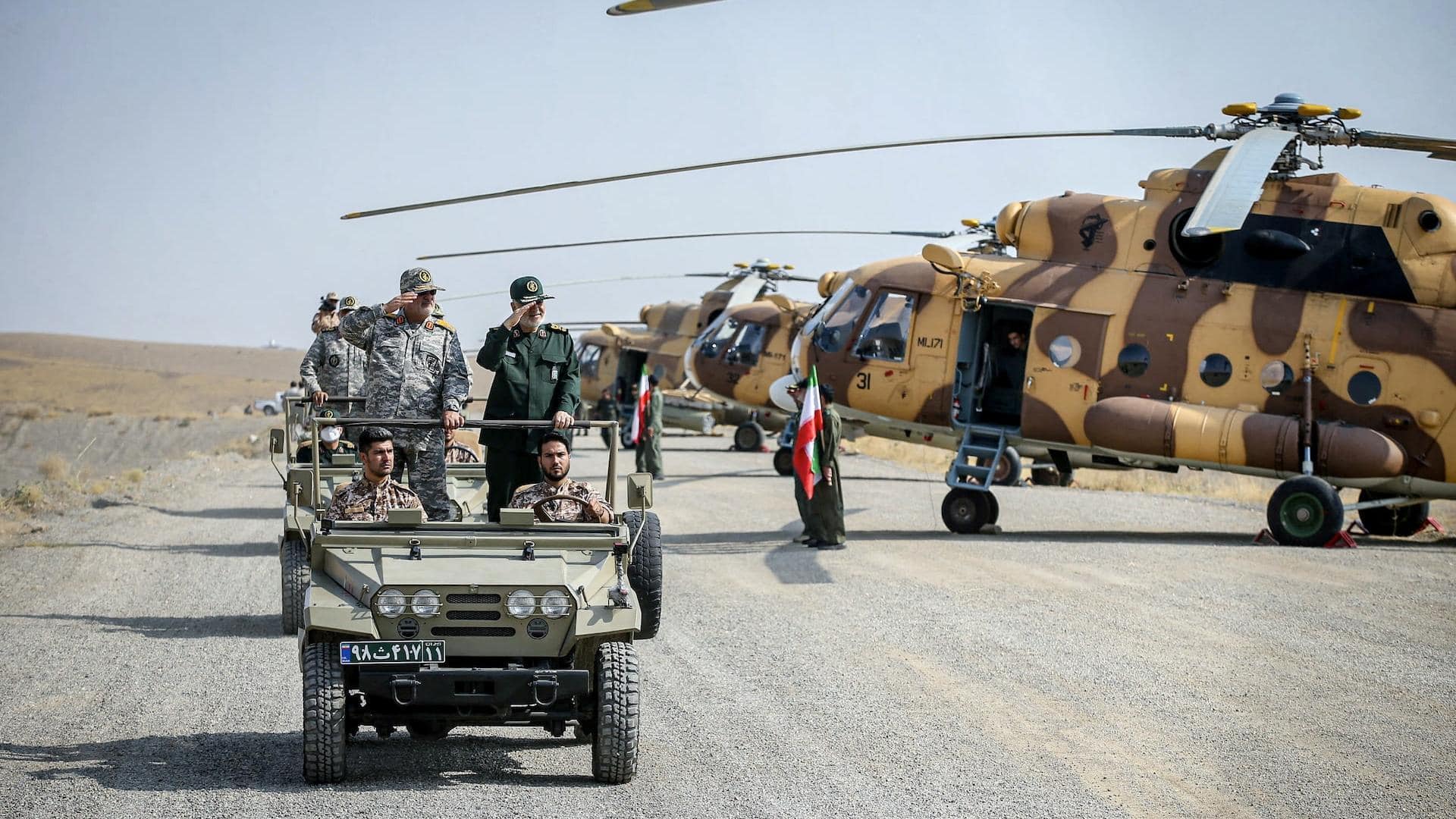
Iran's Islamic Revolutionary Guards Corps (IRGC) has vowed to launch a "ferocious offensive operation" in response to the death of Supreme Leader Ayatollah Ali Khamenei. The 86-year-old cleric was killed in a massive United States and Israeli attack on Iran, which has entered its second day. The IRGC, which reports directly to the supreme leader, promised to target "occupied territories and American terrorist bases" in the region.
Military escalation
Israel confirms 2nd wave of missile attacks
The attack on Iran is the first of its kind since the 2003 invasion of Iraq, aimed at regime change.
The Israeli military also confirmed a second wave of missile attacks, triggering air raid sirens across several regions.
Israel's army chief Lieutenant General Eyal Zamir said this operation was on a "completely different scale" compared to previous conflicts with Iran, the 12-day war it fought against Iran in June 2025.
Retaliation
Iran retaliates with missile and drone strikes
Iran has retaliated with missile and drone strikes across the Middle East, killing at least three people in Abu Dhabi and Tel Aviv.
It was reported that Ali Shamkhani, a top advisor to Khamenei, and General Mohammad Pakpour of Iran's Revolutionary Guards were also killed in the attack.
This comes after weeks of Iranian authorities quelling mass protests with deadly force.
Official statements
Trump, Netanyahu urge Iranians to rise against regime
US President Donald Trump called Khamenei "one of the most evil people in history" and vowed to continue strikes until regime change in Iran.
He urged Iranian security forces to stand down, calling it "the single greatest chance for the Iranian people to take back their Country."
Israeli Prime Minister Benjamin Netanyahu echoed this sentiment, urging Iranians to join forces against their regime.
Travel disruption
Widespread disruptions in air travel amid escalating tensions
The attacks have also led to widespread disruptions in air travel as Iran, Iraq, Kuwait, Syria, the UAE, and Israel closed their airspaces.
Meanwhile, Dubai International Airport, the world's busiest international airport, was hit by missile attacks on Saturday.
Multiple airlines canceled flights to the Middle East amid escalating tensions.
The situation remains volatile with both sides preparing for further military action.