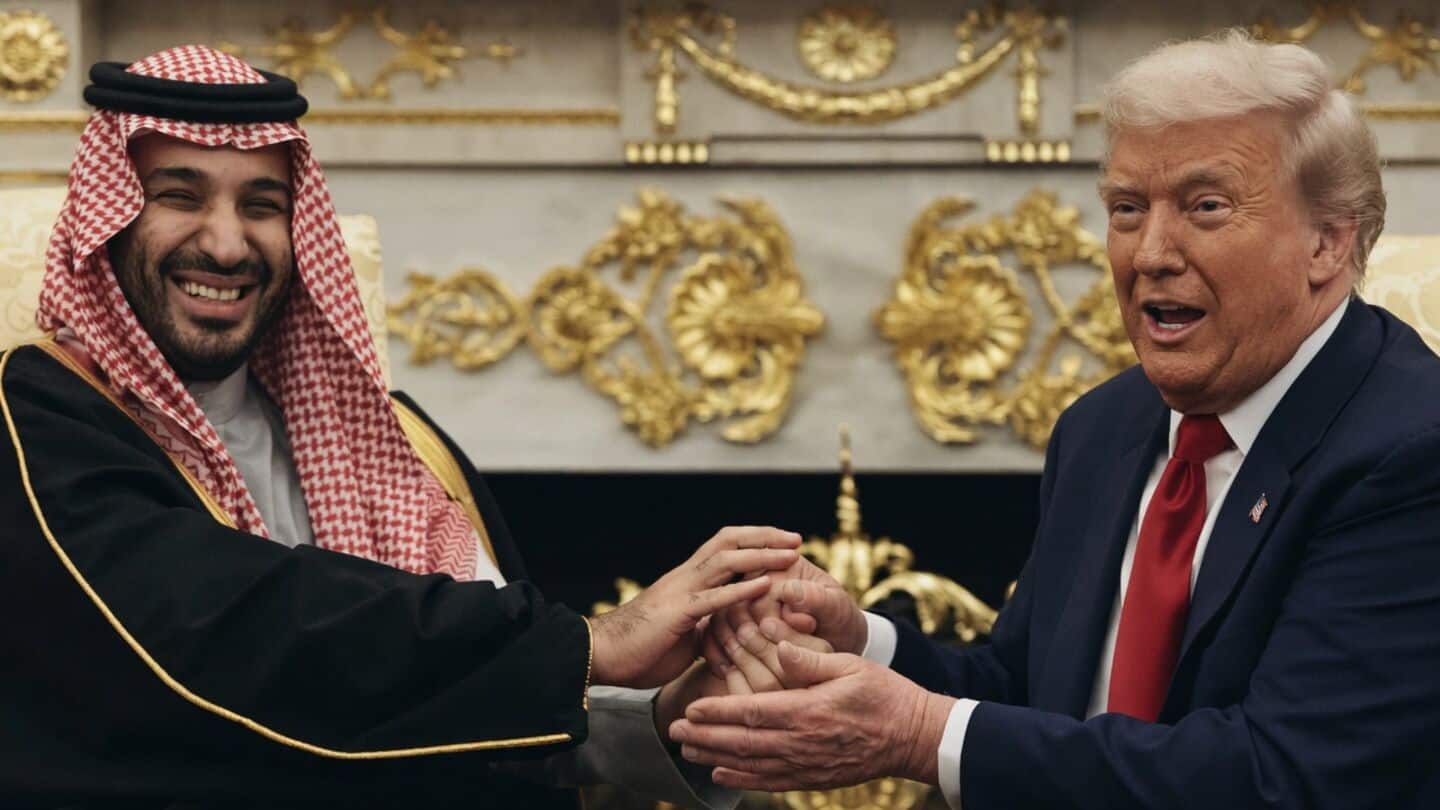
Trump approves nuclear deal with Saudi Arabia
What's the story
United States President Donald Trump has reportedly approved a 30-year civilian nuclear cooperation agreement with Saudi Arabia. The deal, negotiated under Section 123 of the US Atomic Energy Act of 1954, is expected to be worth tens of billions of dollars. It will allow US companies to build Saudi Arabia's nuclear infrastructure and potentially a uranium enrichment facility. The two had signed a preliminary agreement in Riyadh last year.
Strategic objectives
Deal to be signed by US, Saudi energy ministers
The agreement is seen as a way to deepen strategic ties between Washington and Riyadh. It also seeks to keep Russia and China from getting a foothold in Saudi Arabia's civilian nuclear program.
The deal will be signed by US Energy Secretary Chris Wright and Saudi Energy Minister Prince Abdulaziz bin Salman before being sent to Congress for review.
The agreement may be formally announced as early as Wednesday.
Controversial provision
Deal allows uranium enrichment under conditions
Unlike previous US nuclear agreements, this deal allows for the possibility of uranium enrichment in Saudi Arabia under certain conditions.
A joint US-Saudi study will determine if such a facility is commercially justified.
If deemed necessary, American companies would build the plant under a "black box" arrangement. But the sensitive enrichment technology would remain inaccessible to Saudi Arabia to prevent the transfer of critical nuclear know-how.
Economic impact
Agreement could boost US nuclear industry
Saudi Arabia is a member of the International Atomic Energy Agency (IAEA), which promotes peaceful nuclear work but also inspects nations for clandestine atomic weapons programs.
However, this agreement is not expected to include IAEA's Additional Protocol for more monitoring and verification.
Robert Einhorn, a former senior State Department official, told WSJ that it could "help revitalize the US nuclear industry" but warned that without adequate constraints, it could increase nuclear proliferation risks in the Middle East and beyond.
Strategic expansion
Nuclear agreement comes amid Iran conflict
The announcement of the nuclear deal comes amid a conflict between the United States and Israel against Iran.
The US and Israel are trying to eliminate Tehran's capacity to develop nuclear weapons, although Iran claims its program is peaceful. Both Trump and former President Joe Biden had attempted to reach a nuclear deal with Saudi Arabia in the past.
Nonproliferation experts warn that this agreement could open up possibilities for Saudi Arabia to pursue a weapons program if necessary
Congressional review
Saudi has already signed defense pact with Pakistan
Crown Prince Mohammed bin Salman has long stated that if Iran develops nuclear weapons, Saudi Arabia will follow suit.
"Without a doubt if Iran developed a nuclear bomb, we will follow suit as soon as possible," he told CBS in 2018.
Saudi has already signed a mutual defense pact with Pakistan after Israel launched an attack on Qatar targeting Hamas officials.
Pakistan's defense minister then said his nation's nuclear program "will be made available" to Saudi if needed.