Ex-IMF director fact-checks serial borrower Pakistan's 'historic milestone' leadership claim
What's the story
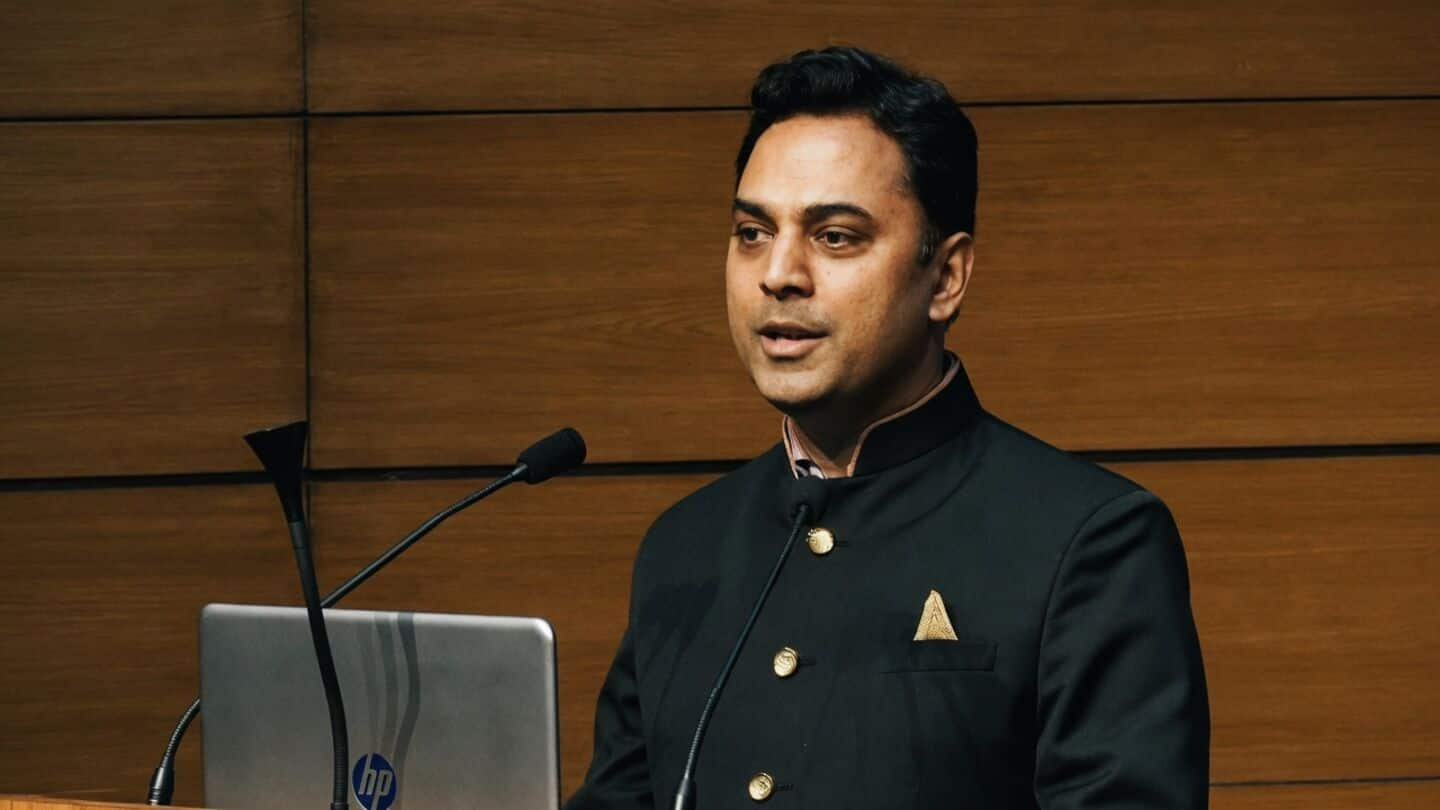
Former International Monetary Fund (IMF) executive director, Krishnamurthy V Subramanian, has countered Pakistan's claim of returning to global financial leadership as a "historic milestone," saying that Pakistan's appointment to chair the IMF and World Bank Boards of Governors is just "protocol." "Claim: 'Pakistan is heading back to the top table of global finance after 74 years! Reality: Pakistan will chair IMF-World Bank Annual Plenary in 2027. This chair is purely ceremonial & rotates annually....It's protocol, not power," he said.
Official statement
Pakistan's Ministry of Economic Affairs hails appointment as 'historic milestone'
Pakistan's Ministry of Economic Affairs had hailed the appointment as a "historic milestone."
The ministry said it would allow Islamabad to take part in global economic discussions and promote dialogue among member countries.
Subramanian also emphasized that this role is not comparable to India's G20 presidency.
"India's G20 presidency set the agenda for a major forum of global economic cooperation; its BRICS presidency drove an emerging-economies platform... Pakistan's role is to preside over an annual meeting," Subramanian added.
Chair
Ahad Khan Cheema formally announced as incoming chair
Ahad Khan Cheema, Pakistan's economic affairs minister and World Bank governor, was formally announced as the incoming chair during the plenary session of the 2026 IMF-World Bank Annual Meetings in Bangkok over the weekend.
The appointment comes as Pakistan continues to rely on financial assistance from the IMF to stabilize its economy and address external financing pressures.
Financial assistance
Pakistan engaged with IMF under $7 billion Extended Fund Facility
Pakistan is currently engaged with the IMF under a $7 billion Extended Fund Facility (EFF) and a $1.4 billion Resilience and Sustainability Facility (RSF).
The EFF loan is meant to help Pakistan meet its balance-of-payments needs and support economic reforms, while the RSF offers longer-term financing for climate-related risks.
Islamabad is also expected to receive around $1.2 billion from the IMF, pending approval by its Executive Board.