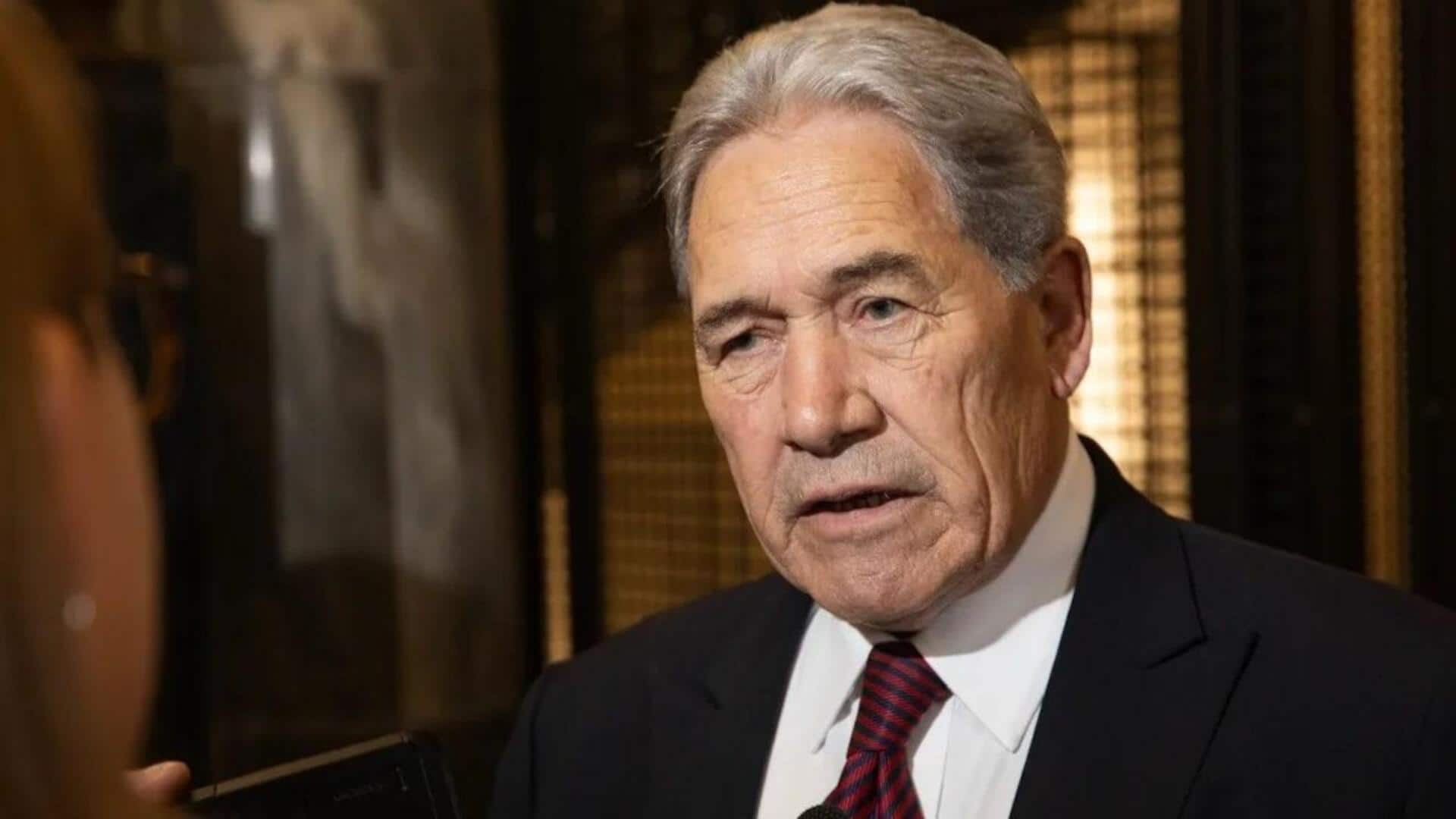
New Zealand Foreign Minister slams India FTA as 'bad deal'
What's the story
New Zealand's Foreign Minister Winston Peters has vehemently opposed the recently signed Free Trade Agreement (FTA) with India. In a post on X, he called it "neither free nor fair" and a "bad deal for New Zealand." Peters, who leads the nationalist New Zealand First party, said the agreement makes "serious concessions" on immigration and investment without securing significant benefits for key export sectors, especially dairy.
Dairy concerns
Peters criticizes FTA's impact on New Zealand farmers
Peters argued that the FTA is "impossible to defend" to rural communities in New Zealand.
He slammed the deal for making major concessions on immigration and investment while not getting enough in return, especially for dairy.
The agreement does not reduce tariff barriers for New Zealand's major dairy exports, which are worth around $24 billion annually, accounting for 30% of the country's total goods exports.
Immigration issues
Peters criticizes immigration concessions in FTA
Peters also slammed the FTA for making "serious concessions" on immigration, which he said had nothing to do with two-way trade.
He argued that on a per capita basis, New Zealand has offered India much greater access to its labor market than Australia or the United Kingdom.
This is especially concerning given the current labor market conditions in New Zealand.
Clarification
Peters clarifies opposition to FTA
Despite his opposition to the deal, Peters stressed that it is not a criticism of India or its leadership.
He said New Zealand First is committed to advancing the India-New Zealand relationship, which he called strategically important for New Zealand.
He also clarified that their opposition reflects a difference of opinion within New Zealand's Coalition Government rather than any disrespect toward India's government or negotiators.
Coalition disagreement
Peters's New Zealand First party's objections
Peters stated that his party, New Zealand First, urged its coalition partner "not to rush into concluding a low-quality deal with India."
He said the coalition government was advised to utilize all three years of the ongoing Parliamentary cycle to secure the best possible deal.
On the proposed changes on migration, he asked, "Do they protect the ability of New Zealanders to find meaningful employment as well as the integrity of our immigration system? The India deal fails that test."